
The Labor Market Is Sending a Signal That Inflation Watchers Can’t Ignore
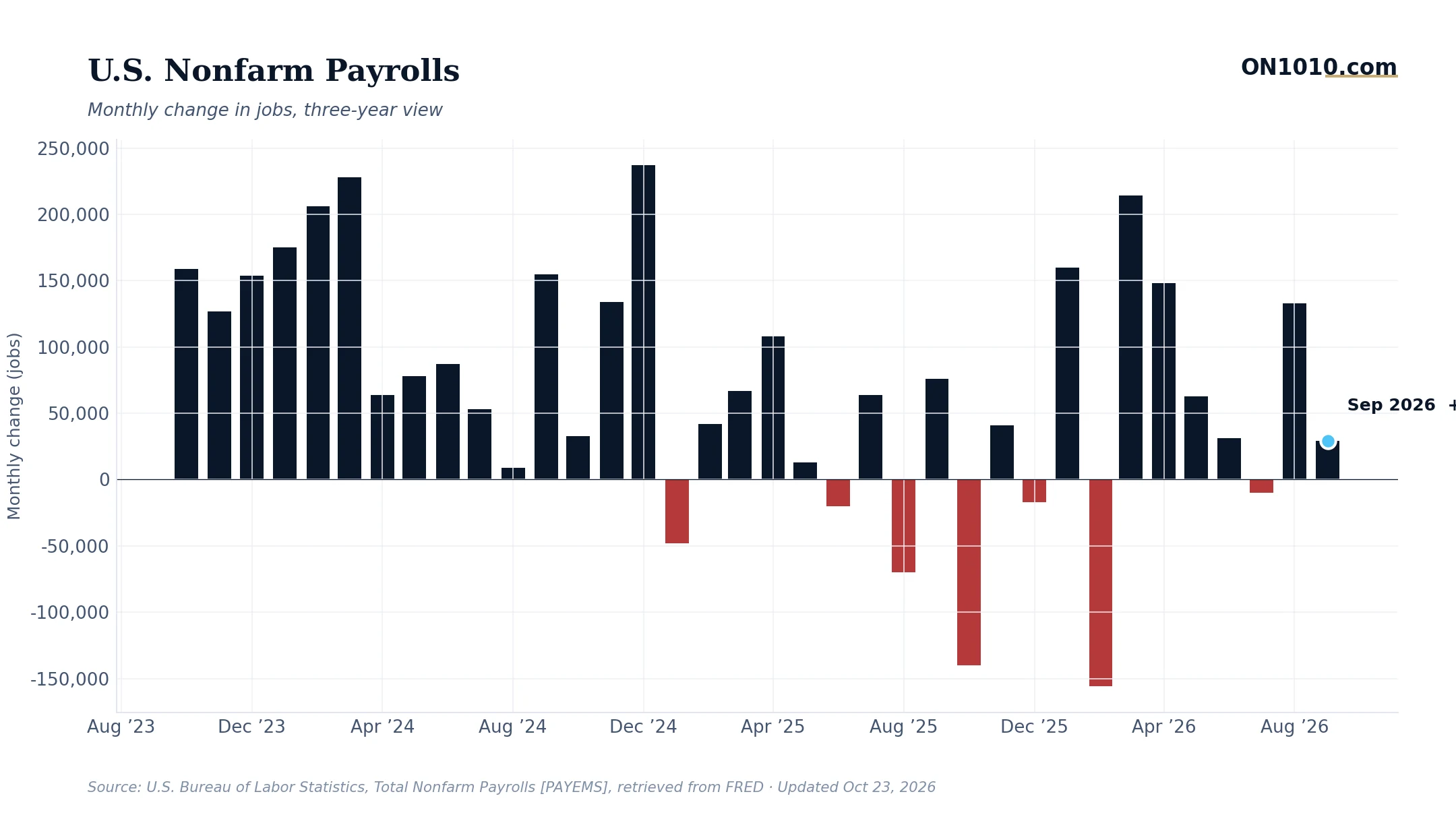
Here is the tension nobody is talking about on a Friday morning. Initial jobless claims fell to 194,000 for the week ending October 17, near the lowest in the recent trend. According to CNBC, that reading is near the lowest since the 1960s. A labor market that tight, sitting alongside core inflation that remains very high by historical standards, puts the Fed in one of its most uncomfortable spots of this cycle.
What moved. The Nasdaq dropped 2.60% Thursday while the S&P 500 shed 1.21%, with defensive sectors outperforming offensive sectors by 8.8 percentage points over the past month. Money is rotating out of technology and into staples, utilities, and health care. The 10-year Treasury yield sits at 5.13%, the 2-year at 4.81%, a spread of 31 basis points. Oil crossed $101 a barrel. The gauge for monetary policy reads restrictive by historical standards, and the base rate for a new recession beginning within 12 months from similar policy readings has historically run around 18%. That is not a prediction. It is the base rate worth knowing.
On deck today. No major scheduled releases for Friday, October 23, 2026, but the week’s data has already given markets plenty to digest before the weekend.
Why it matters. When a tight labor market keeps wage pressure alive while inflation is still running hot versus history, the Fed has fewer reasons to ease and more reasons to stay put. Long-term rates staying elevated is what follows from that math, and it filters through to everything from corporate borrowing costs to consumer spending.
Sunday’s Long View goes deeper on exactly this question: what elevated long-term rates have historically meant for the broader economic cycle. It is free, and it is worth your weekend.
ON1010 Research is an independent publisher of economic education and is not a registered investment adviser, broker-dealer, or investment company. This content is for educational and informational purposes only and is not investment advice or a recommendation to buy, sell, or hold any security. Published under the publisher exemption recognized by Section 202(a)(11)(D) of the Investment Advisers Act of 1940 (Lowe v. SEC). Always consult a qualified financial professional before making any financial decision.
Free Research
The economy moves fast. We make sure you move faster.
Economic data, policy shifts, and market signals — delivered to your inbox.
Subscribe Free