
France Dodged a Bullet. The Bond Market Isn’t Done Asking Questions.
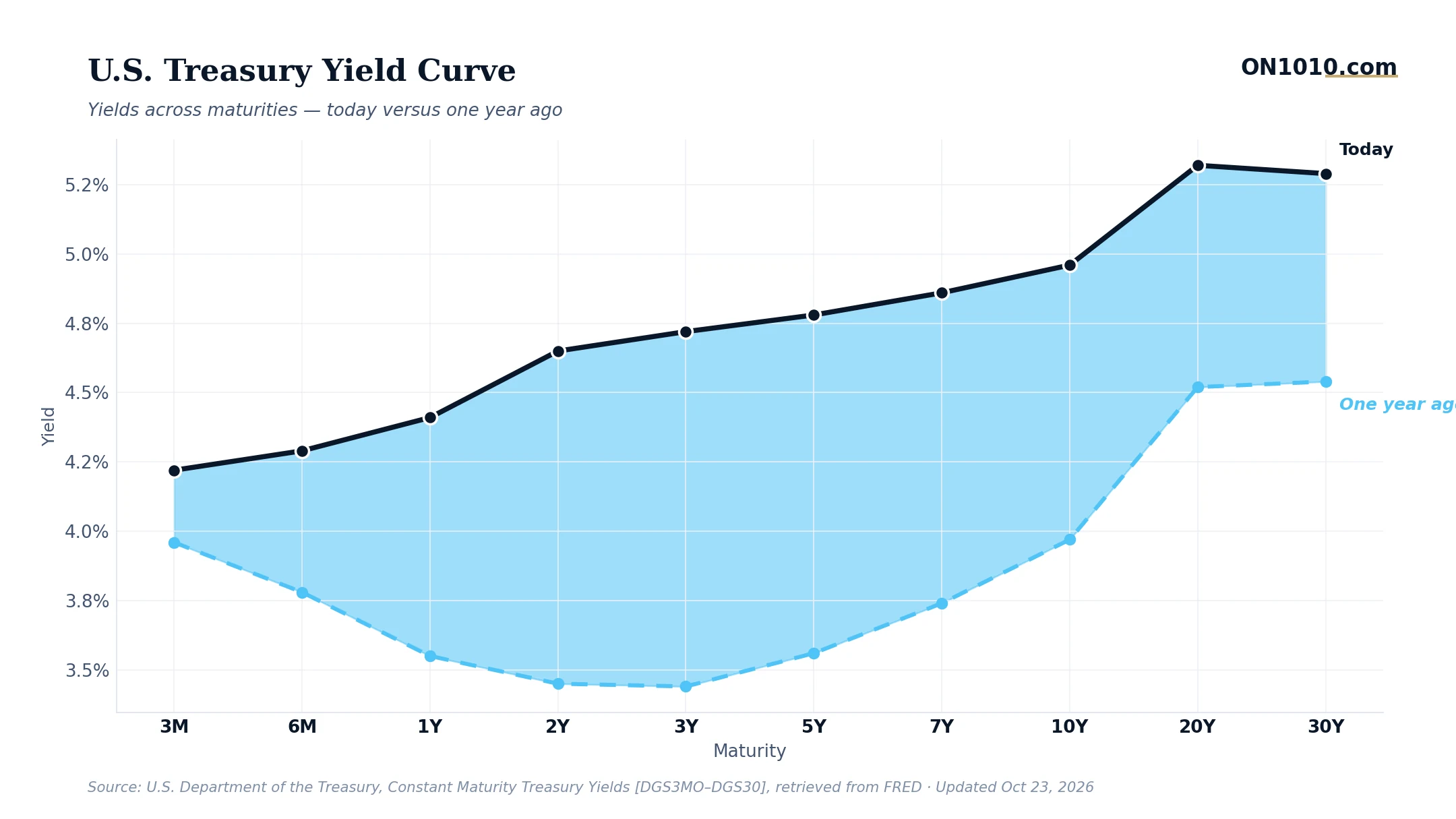
According to CNBC, Moody’s held France’s credit rating at Aa3 this week, sparing the country a downgrade during what the agency described as a period of political turmoil and rising yields. The relief is real. But a rating hold is not the same as a clean bill of health.
Credit rating agencies are, by nature, lagging indicators. They confirm what bond markets have already priced. And what French bond markets have been saying for months is that investors want more compensation to hold French debt. Higher yields on government bonds mean higher borrowing costs for the state, which means less fiscal room to maneuver at exactly the moment France needs the most flexibility. A rating hold delays the formal judgment; it does not change the underlying math.
The broader context makes this more than a French story. Long-term interest rates are historically elevated right now, and credit spreads are running wide by historical standards, both signs that bond markets globally are pricing in more risk, not less. When sovereign debt from a major eurozone economy like France starts attracting this kind of scrutiny, it sends ripples through the currency bloc’s financial architecture. The euro does not have the same backstop mechanisms a single national treasury would have, and that structural gap becomes visible precisely when one member is under pressure.
France’s situation also illustrates a dynamic that plays out across heavily indebted governments: the higher your debt load, the more sensitive your fiscal position becomes to rising rates. Every basis point increase in yields costs more when the pile of debt is larger. Historically, investors have used the spread between a country’s borrowing costs and Germany’s (the eurozone benchmark) as a real-time referendum on fiscal credibility. When that spread widens, it signals that capital is making a judgment, often faster than any rating agency will.
Bottom Line: Moody’s gave France a pass, but the bond market sets the actual price of doubt, and that price has been rising.
Read more: CNBC Top News
ON1010 Research is an independent publisher of economic education and is not a registered investment adviser, broker-dealer, or investment company. This content is for educational and informational purposes only and is not investment advice or a recommendation to buy, sell, or hold any security. Published under the publisher exemption recognized by Section 202(a)(11)(D) of the Investment Advisers Act of 1940 (Lowe v. SEC). Always consult a qualified financial professional before making any financial decision.
Free Research
The economy moves fast. We make sure you move faster.
Economic data, policy shifts, and market signals — delivered to your inbox.
Subscribe Free