
The Bond Market Is Flashing a Signal That Goes Beyond Stock Prices
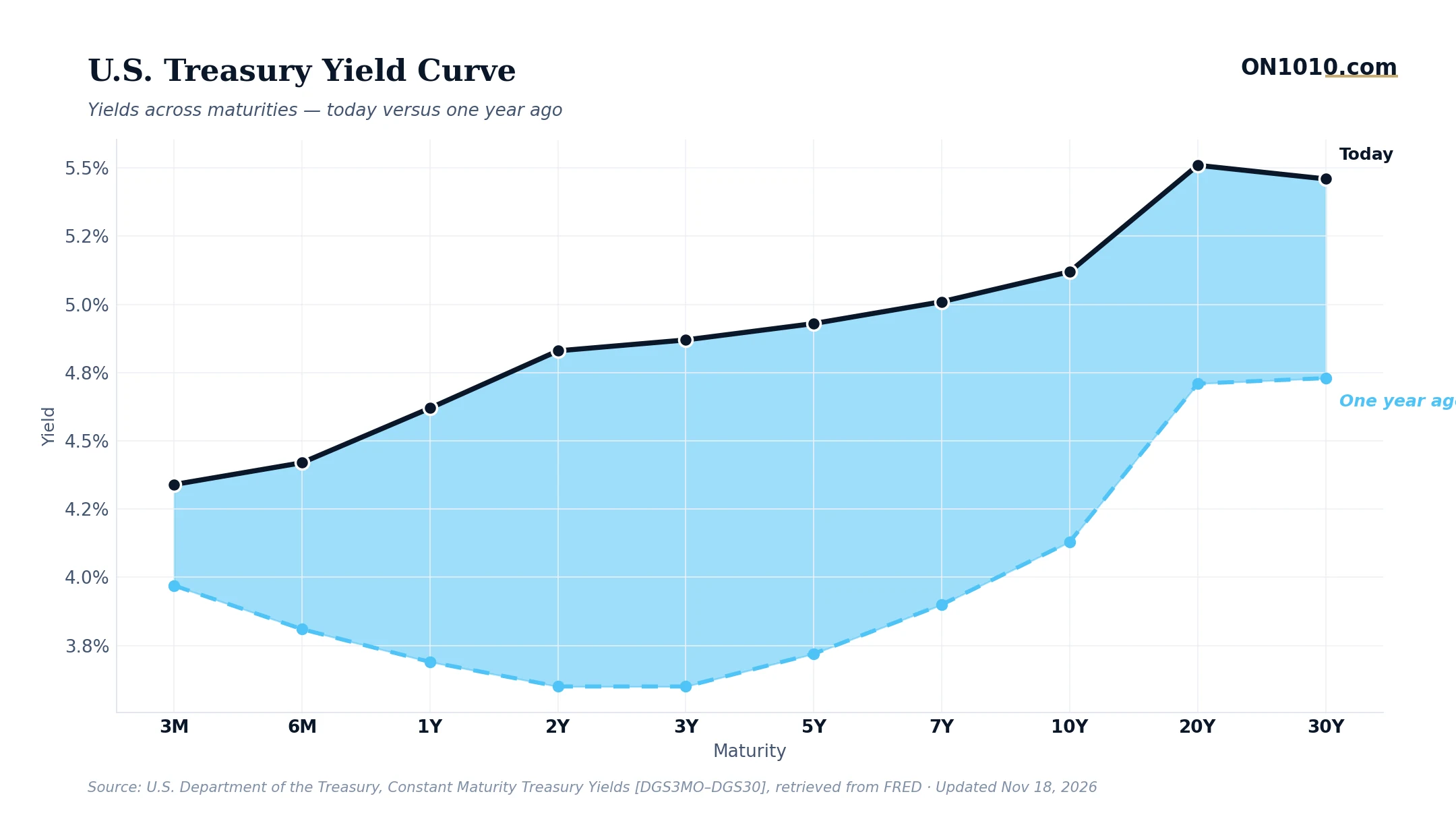
The S&P 500 dropped 1.03% Tuesday to 7,340. That gets the headlines. The bond market tells a more uncomfortable story.
The 10-year Treasury yield sits at 5.12% while the Fed’s target rate is 3.75% to 4.0%. That gap, more than a full percentage point, means the market is demanding a premium above the policy rate to hold long-term debt. When the bond market loses confidence in the inflation outlook, that is exactly what it does. The 10-year breakeven inflation rate sits at 2.21%, which on its own looks contained. But import prices jumped 1.05% in October to an 8.77% year-over-year pace, and export prices are running nearly 12% above a year ago. Those are the upstream numbers that eventually show up in everything downstream.
Credit spreads moved from high to very high in our gauges this week. The VIX rose from 18.36 on November 13 to 23.67 as of yesterday’s close. All four defensive sectors, consumer staples, health care, real estate, and utilities, are beating the S&P 500 by more than 9 percentage points over the past month. That is institutional money moving, not panicking, but moving deliberately toward safety.
On deck today: Housing starts and building permits print this morning. In a 5.12% long-rate environment, any softness in new construction would confirm that high borrowing costs are slowing one of the economy’s most rate-sensitive sectors.
Why it matters: Historically, when monetary policy is restrictive and long rates are elevated simultaneously, the combination has preceded a new recession within 12 months roughly 13% to 18% of the time. Base rates, not certainties, but worth knowing when credit stress is widening at the same time.
The five-minute version is here. Sunday’s Long View goes deeper on what high long rates, wide credit spreads, and defensive rotation mean for the economic cycle ahead, and it is free to read.
ON1010 Research is an independent publisher of economic education and is not a registered investment adviser, broker-dealer, or investment company. This content is for educational and informational purposes only and is not investment advice or a recommendation to buy, sell, or hold any security. Published under the publisher exemption recognized by Section 202(a)(11)(D) of the Investment Advisers Act of 1940 (Lowe v. SEC). Always consult a qualified financial professional before making any financial decision.
Free Research
The economy moves fast. We make sure you move faster.
Economic data, policy shifts, and market signals — delivered to your inbox.
Subscribe Free