
Bond Investors Are Quietly Telling the Fed Something Interesting
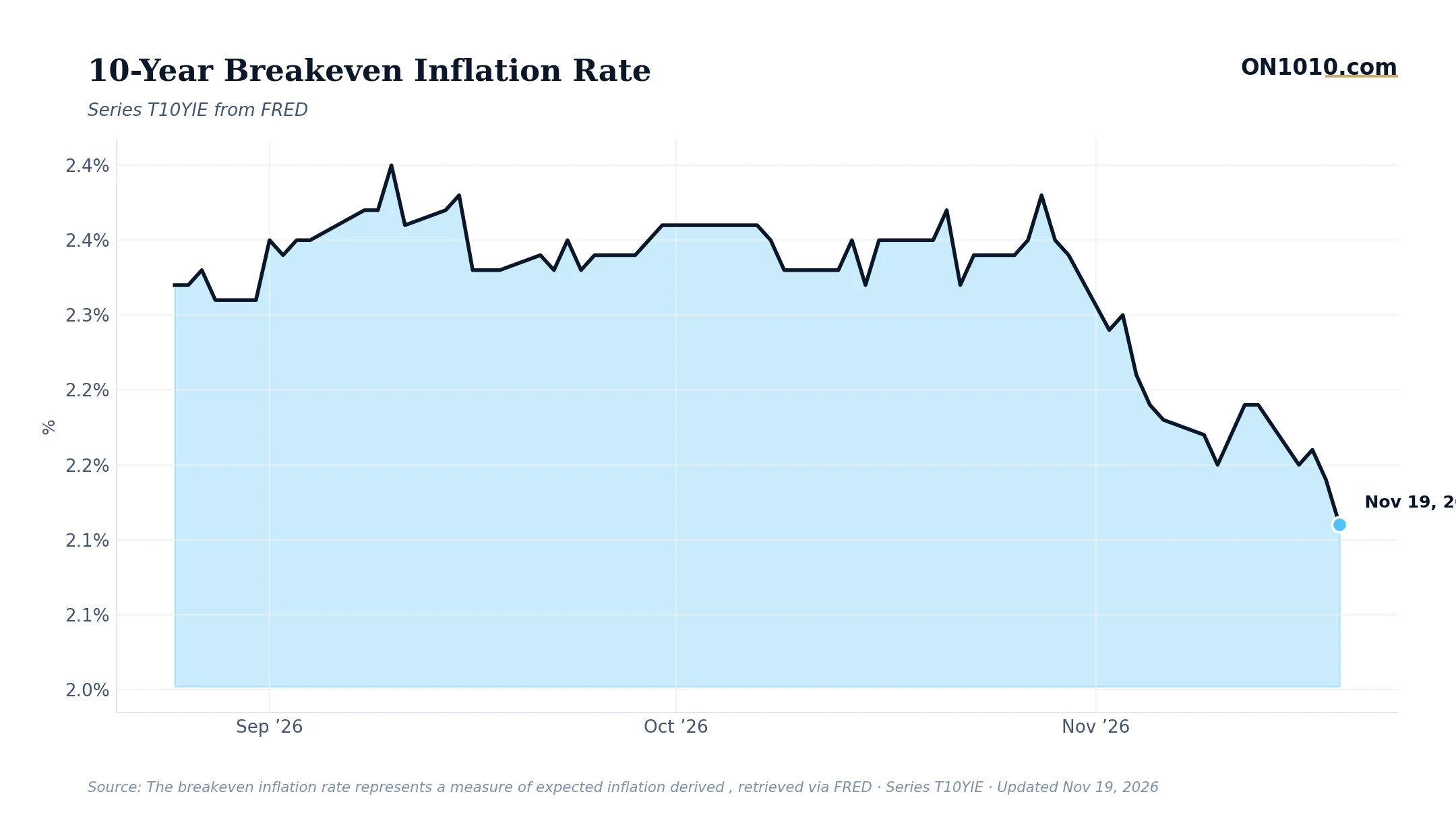
The 10-year breakeven inflation rate slipped to 2.16% on November 19, down from 2.19% the day before and down nearly 10 basis points from 2.24% a week ago. That is a steady, week-long drift lower. The bond market is not panicking about inflation. If anything, it is growing calmer about it.
That calmness deserves a second look given everything else happening around it.
Core inflation is running near the top of its historical range. The Fed’s policy rate is still restrictive by historical standards. Credit spreads are wide and widening. Consumer sentiment is near the bottom of its historical range. And defensive sectors, staples, utilities, real estate, health care, have been outperforming the broad market by nearly 7 percentage points over the past month. That is a lot of signals pointing toward economic stress. Yet bond investors are pricing average inflation over the next decade at just 2.16%, essentially within a whisker of the Fed’s 2% target. Either the bond market sees something the other signals don’t, or the other signals are telling a story the bond market hasn’t fully priced yet.
Historically, when breakeven inflation rates fall toward the low 2% range while monetary policy remains restrictive, it has often meant one of two things: either investors believe the Fed has done enough and inflation is on its way back to target, or they are starting to price in an economic slowdown that would pull prices down with it. Both readings sound optimistic on inflation. The underlying reasons are very different. For anyone thinking about financing costs, capital commitments, or long-duration obligations, the distinction matters enormously, and a qualified financial professional who knows your specific situation is the right person to work through it with.
Bottom Line: The bond market is saying inflation is under control. The question worth asking is whether that optimism reflects a soft landing or a harder one quietly building in the data underneath it.
Source: Federal Reserve Economic Data (FRED)
ON1010 Research is an independent publisher of economic education and is not a registered investment adviser, broker-dealer, or investment company. This content is for educational and informational purposes only and is not investment advice or a recommendation to buy, sell, or hold any security. Published under the publisher exemption recognized by Section 202(a)(11)(D) of the Investment Advisers Act of 1940 (Lowe v. SEC). Always consult a qualified financial professional before making any financial decision.
Free Research
The economy moves fast. We make sure you move faster.
Economic data, policy shifts, and market signals — delivered to your inbox.
Subscribe Free