
THE Fed’s Rate Hasn’t Moved. That Steadiness Is the Story.
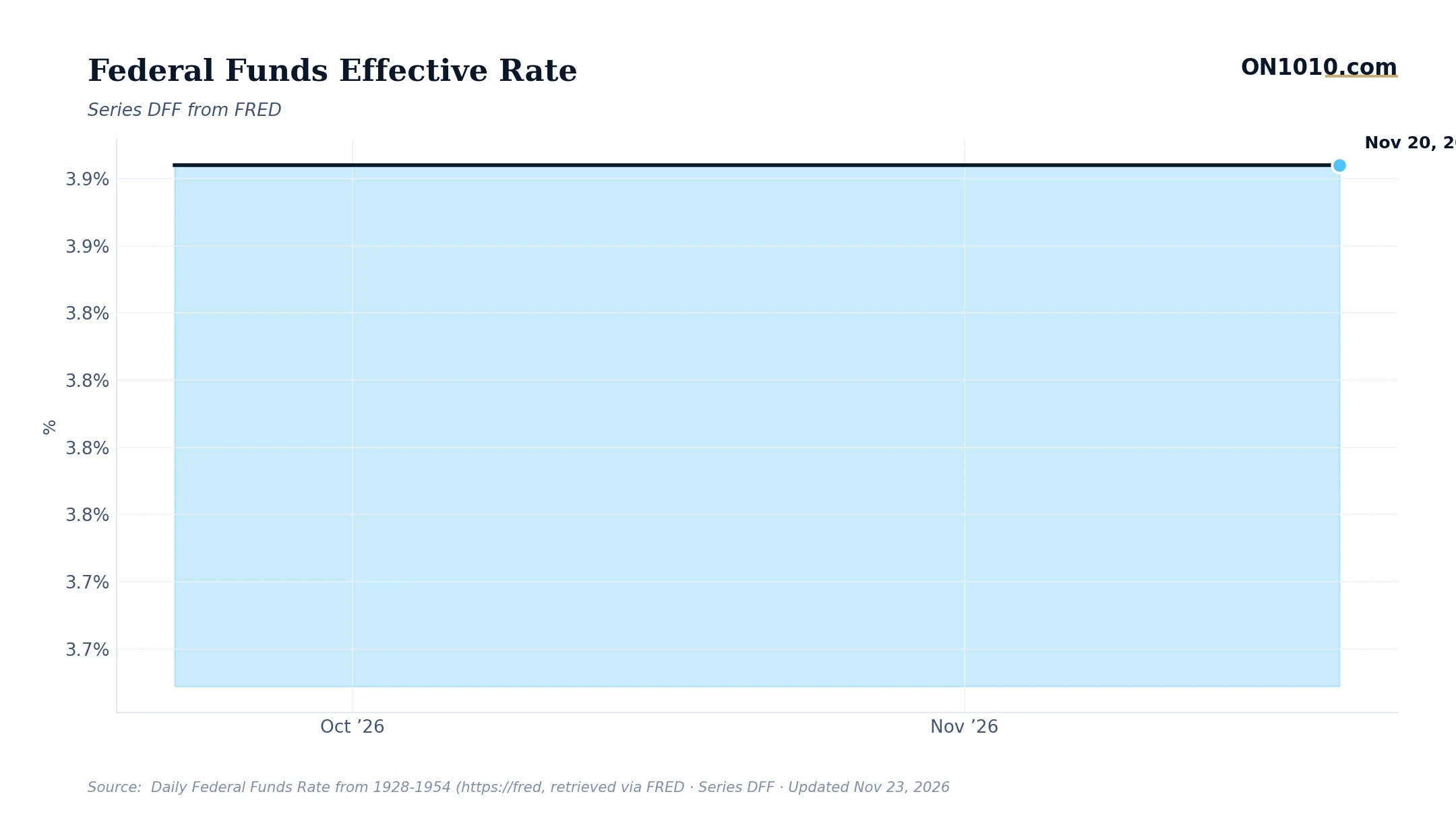
The effective federal funds rate has sat at 3.88% for six consecutive days. No drift, no surprise. The market is tracking the Fed’s target almost exactly, which means the monetary plumbing is working as intended. But a rate locked in place isn’t the same as a rate that’s comfortable.
The broader backdrop tells a more complicated story. Inflation is running near the top of its historical range and still rising. The real policy rate, meaning what you get when you subtract inflation from the nominal rate, sits in restrictive territory by the standards of the past several decades. That combination, high nominal rates plus stubborn inflation, means the Fed has less breathing room than the calm surface suggests. Monetary policy this tight, historically, has been followed by a new recession within 12 months roughly 18% of the time. That is not a forecast. It is the base rate worth knowing.
Credit markets are flashing something the funds rate doesn’t show. Spreads are wide and widening, sitting near the top of their historical range. When credit stress builds at the same time the overnight rate is steady, it usually means the strain is showing up in the riskier parts of the lending system, not in the overnight interbank market. That’s worth watching separately. In past cycles, sustained credit spread widening alongside a frozen policy rate has signaled that the cost of money, for most businesses, is quietly climbing even when the headline rate holds still.
The equity market is adding another layer. Defensive sectors are outperforming growth by over 8 percentage points in the past month alone. The VIX is above 30, well above its recent average. SPY is trading below both its 50-day and 200-day moving averages. The market is pricing in uncertainty that the funds rate, by design, doesn’t capture.
Bottom Line: 3.88% for six straight days sounds boring. What surrounds it, sticky inflation, wide credit spreads, a bruised equity market, and deteriorating consumer sentiment, raises the more important question: how much longer can the Fed afford to hold here, and what breaks first if it waits too long?
Source: Federal Reserve Economic Data (FRED), Series DFF
ON1010 Research is an independent publisher of economic education and is not a registered investment adviser, broker-dealer, or investment company. This content is for educational and informational purposes only and is not investment advice or a recommendation to buy, sell, or hold any security. Published under the publisher exemption recognized by Section 202(a)(11)(D) of the Investment Advisers Act of 1940 (Lowe v. SEC). Always consult a qualified financial professional before making any financial decision.
Free Research
The economy moves fast. We make sure you move faster.
Economic data, policy shifts, and market signals — delivered to your inbox.
Subscribe Free