
The 10-Year Yield Finally Blinked. Here’s What That Means.
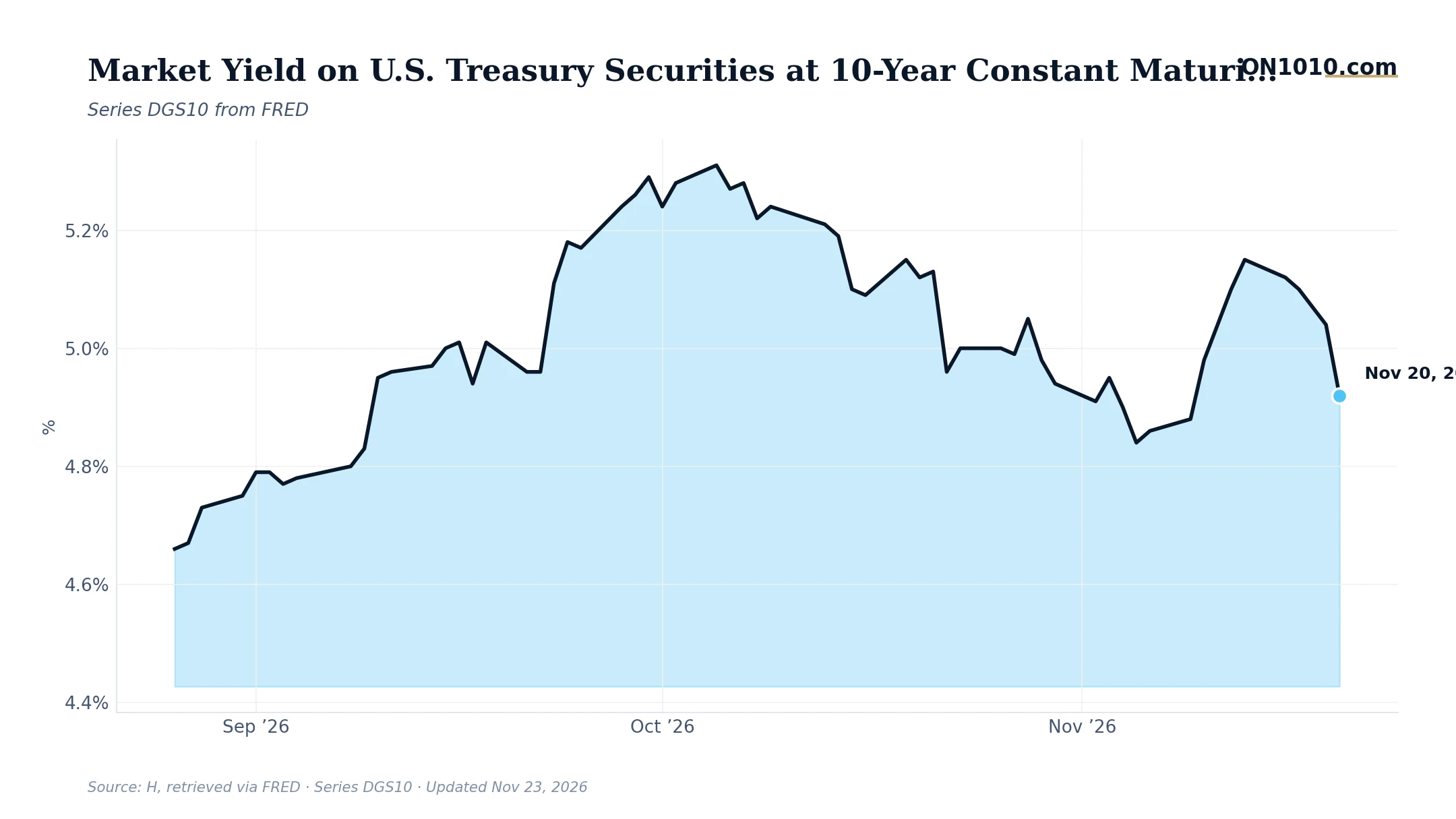
The 10-year Treasury yield dropped to 4.92% on November 20, pulling back from 5.04% the day before. That 12-basis-point single-day move is meaningful, but the context is what makes it interesting: yields had been grinding higher for weeks, sitting above 5.10% as recently as November 13, and this is the first visible break in that upward pressure.
The bigger picture is more complicated than one good day suggests. Long-term rates remain in the upper quarter of their historical range, and the broader environment is flashing multiple caution signals at once. Credit spreads are near their widest levels on record. The VIX sits above 30, well above its recent 20-day average of 22.29. Consumer sentiment is near historical lows and still falling. Meanwhile, core inflation remains well above its historical norm. That combination, high rates plus tight credit plus falling confidence plus sticky inflation, is exactly the kind of configuration that squeezes profit margins across the economy over time, since borrowing costs stay elevated for businesses that need to roll over debt or fund expansion.
Historically, when long-term rates have held in this elevated zone, a new recession began within the following 12 months about 20% of the time. That is not a prediction. It is a base rate worth knowing before you read the next wave of “soft landing” headlines. In past cycles, business operators and capital allocators have paid close attention to whether a rate pullback like this one holds and broadens, or simply reflects a one-day technical move in a continuing uptrend.
The question that matters now is whether this 12-basis-point dip is the beginning of a genuine reversal or just the bond market catching its breath before another push higher.
Bottom Line: One day of falling yields in a weeks-long uptrend is a data point, not a trend. Rates remain historically high, credit stress is elevated, and the equity market is already rotating hard into defensive names. The next few sessions will tell us whether November 20 was a turning point or a head fake.
Source: Federal Reserve Economic Data (FRED)
ON1010 Research is an independent publisher of economic education and is not a registered investment adviser, broker-dealer, or investment company. This content is for educational and informational purposes only and is not investment advice or a recommendation to buy, sell, or hold any security. Published under the publisher exemption recognized by Section 202(a)(11)(D) of the Investment Advisers Act of 1940 (Lowe v. SEC). Always consult a qualified financial professional before making any financial decision.
Free Research
The economy moves fast. We make sure you move faster.
Economic data, policy shifts, and market signals — delivered to your inbox.
Subscribe Free