
Bond Markets Are Saying Something Interesting About Inflation. Listen Closely.
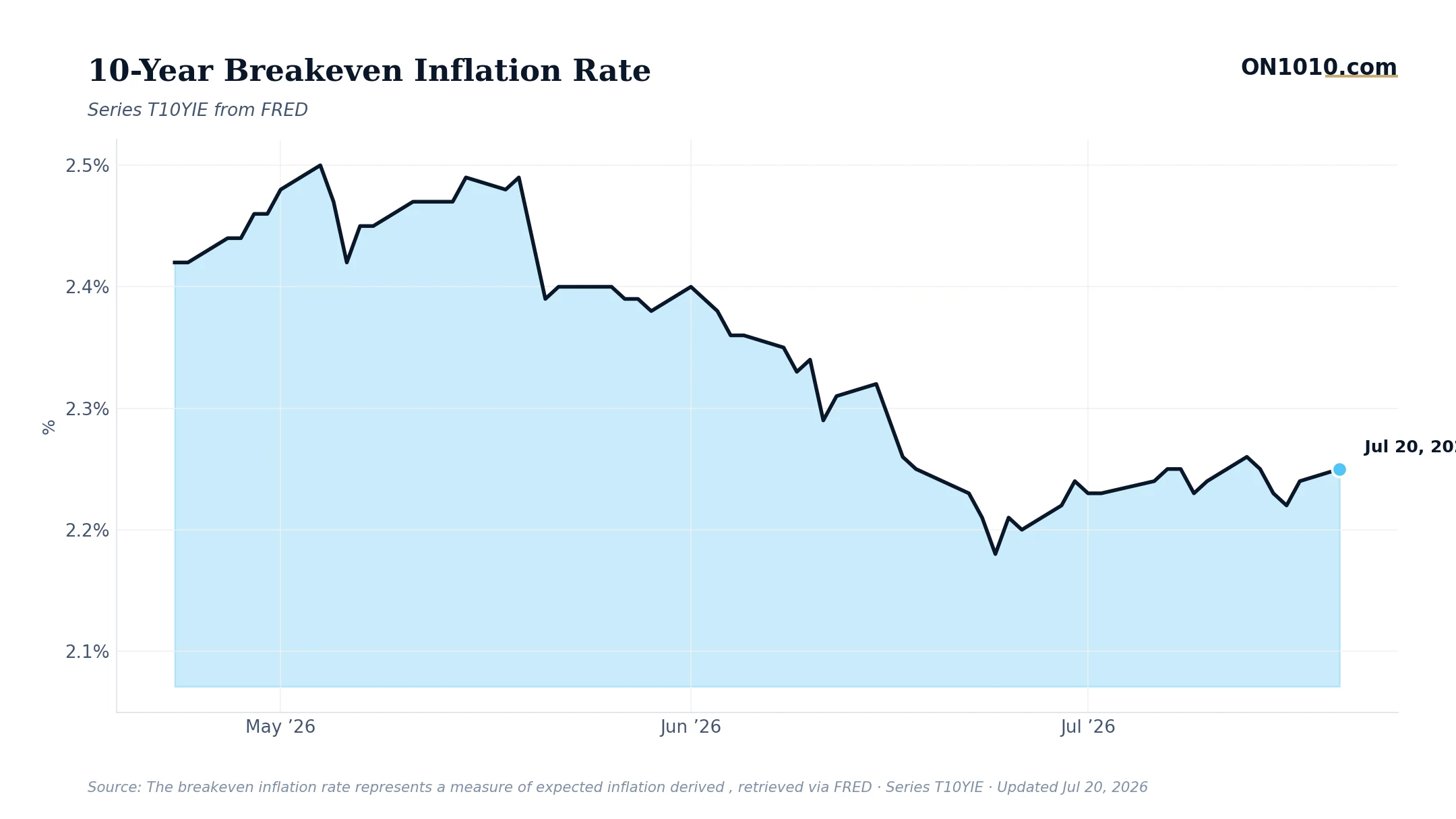
The 10-year breakeven inflation rate ticked up to 2.25% on July 20, from 2.24% on July 17. That’s barely a rounding error on its own. But zoom out to the past week, and you see something worth paying attention to: breakevens have been drifting in a tight band between 2.22% and 2.26%, holding remarkably steady.
The Bigger Picture
That steadiness is the story. Bond markets are essentially saying: “We believe inflation will average 2.25% per year for the next decade.” That’s close enough to the Fed’s 2% target to suggest no panic, but consistently above it for long enough to suggest no one is convinced the job is fully done. In past cycles, when breakevens have parked themselves just above the Fed’s target, it has signaled a market that believes the central bank’s credibility is intact but inflation risks haven’t fully dissolved.
What makes this interesting today is the broader market backdrop. Institutional money has been rotating toward defensive sectors, with Health Care and Consumer Staples outpacing cyclicals. That kind of positioning often reflects a quiet anxiety about growth, not just inflation. A breakeven sitting comfortably at 2.25% says the market isn’t bracing for an inflation surge, but it isn’t fully relaxed either.
Why It Matters
Historically, breakeven rates in the 2.2% to 2.5% range have been associated with a Fed that is on hold, watching and waiting. In past cycles, businesses and capital allocators have used this range as a signal that real interest rates are the more important variable to watch, not nominal ones. The question worth sitting with: if real rates stay elevated and inflation expectations stay anchored, what does that mean for the cost of carrying debt, expanding payrolls, or funding long-term projects?
Bottom Line: The breakeven is whispering, not shouting. Inflation expectations are anchored just above target, which historically has meant the Fed stays patient. The real question is whether that patience gets tested by whatever’s driving defensive money out of technology and into hospitals and grocery stores.
Source: Federal Reserve Economic Data (FRED)
ON1010 Research is an independent publisher of economic education and is not a registered investment adviser, broker-dealer, or investment company. This content is for educational and informational purposes only and is not investment advice or a recommendation to buy, sell, or hold any security. Published under the publisher exemption recognized by Section 202(a)(11)(D) of the Investment Advisers Act of 1940 (Lowe v. SEC). Always consult a qualified financial professional before making any financial decision.
Free Research
The economy moves fast. We make sure you move faster.
Economic data, policy shifts, and market signals — delivered to your inbox.
Subscribe Free