
The Job Market Just Sent Its Clearest All-Clear Signal in Months
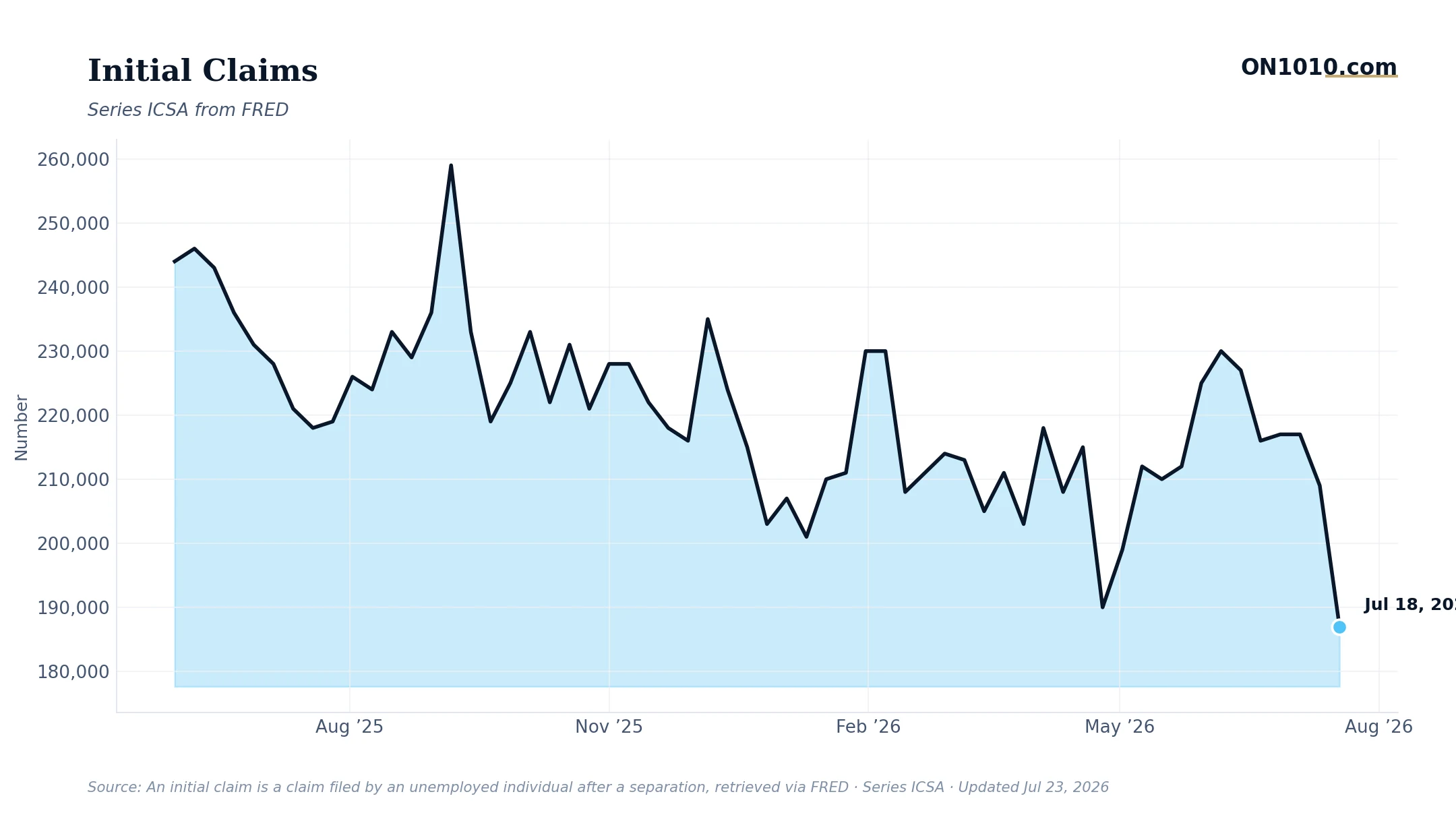
Initial jobless claims dropped to 187,000 for the week ending July 18, a fall of 22,000 from the prior week and the lowest reading in the recent trend. That’s not a small move. A 10.5% single-week decline cuts through the noise.
Look at the trend over the past six weeks and the story gets even cleaner. Claims have fallen from 227,000 in mid-June to 187,000 now, a steady, uninterrupted march lower. That kind of directional consistency is more meaningful than any single print.
The Bigger Picture
Initial claims are one of the most real-time reads we have on the labor market. Unlike the monthly jobs report, which arrives weeks after the fact, claims data lands every Thursday and reflects what’s happening right now. At 187,000, claims are sitting at historically tight levels. For context, readings below 200,000 have typically characterized the healthiest stretches of labor market expansion in modern economic history. The signal here is that layoffs remain exceptionally low, which means employers are holding on to their workers even as uncertainty around trade policy and borrowing costs has kept some hiring plans cautious.
Why It Matters
In past cycles, persistently low claims have supported consumer spending by keeping income flowing and confidence relatively stable. Historically, this type of reading has also given businesses more confidence to invest, since low layoffs tend to signal that demand is still solid enough to justify keeping headcount. The question worth sitting with: if employers are this reluctant to cut workers, what does that tell us about the profit picture underneath the surface?
One honest tension to flag: sector rotation in equity markets has shifted decidedly defensive over the past month, with healthcare and utilities outperforming while technology lags. Markets are looking at something the labor data isn’t yet showing. That gap is worth watching.
Bottom Line: The labor market is telling one story. Equity positioning is telling another. When they disagree, the interesting question is which one is right.
Source: Federal Reserve Economic Data (FRED)
ON1010 Research is an independent publisher of economic education and is not a registered investment adviser, broker-dealer, or investment company. This content is for educational and informational purposes only and is not investment advice or a recommendation to buy, sell, or hold any security. Published under the publisher exemption recognized by Section 202(a)(11)(D) of the Investment Advisers Act of 1940 (Lowe v. SEC). Always consult a qualified financial professional before making any financial decision.
Free Research
The economy moves fast. We make sure you move faster.
Economic data, policy shifts, and market signals — delivered to your inbox.
Subscribe Free