
The 10-Year Yield Is Creeping Higher. Here’s Why That Matters Right Now.
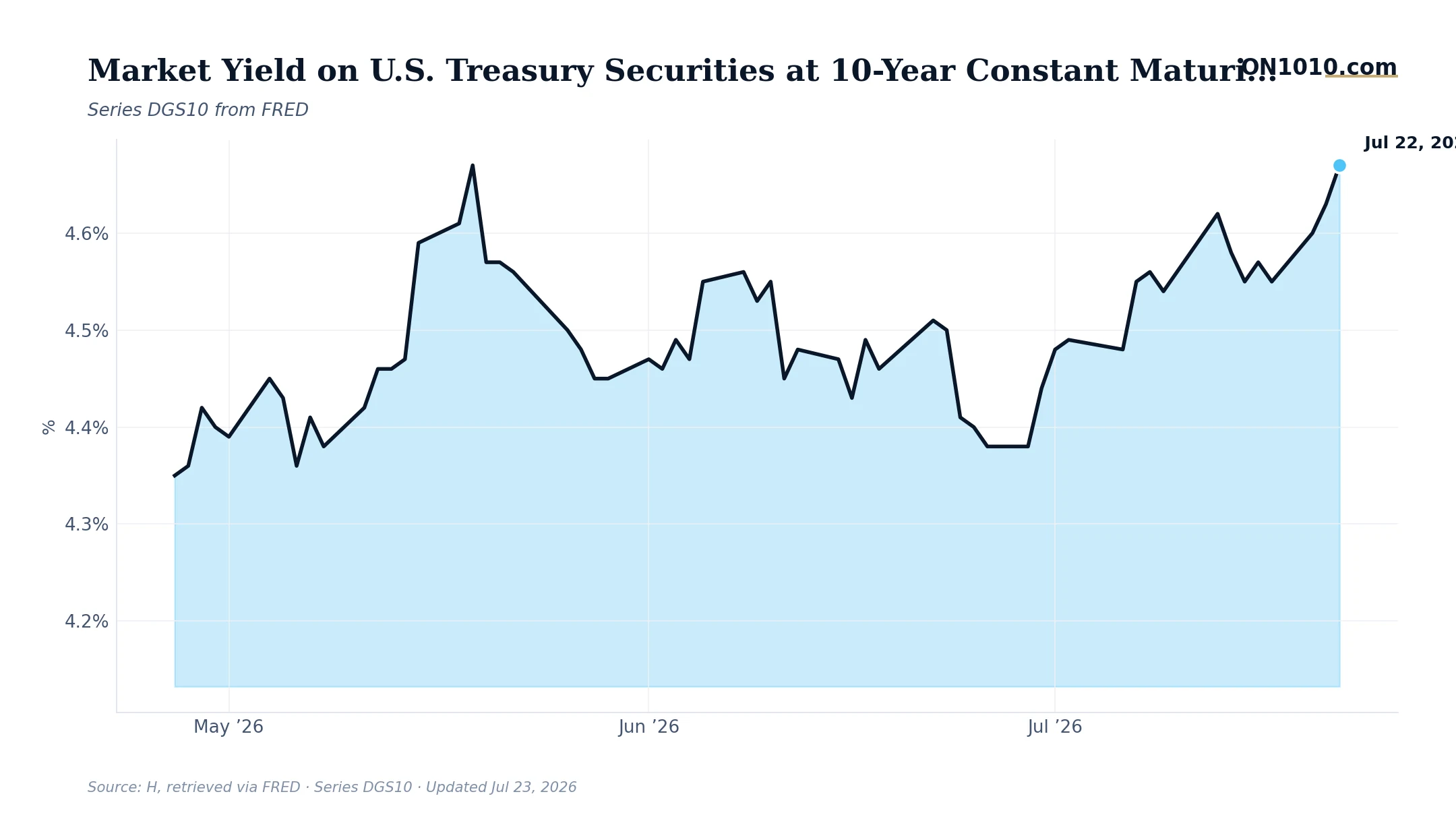
The 10-year Treasury yield rose to 4.67% on July 22, up from 4.55% just a week earlier. That’s a steady, quiet climb, not a spike, but a trend that’s building.
Look at the last six trading days and the picture gets clearer. The yield has moved higher every single session since July 15, adding 12 basis points in a week. In bond market terms, that’s not noise. That’s a direction.
The Bigger Picture
Rising long-term yields tell you something about what the bond market is pricing in: either stronger growth ahead, stickier inflation, or both. At 4.67%, the 10-year is sitting at levels that have historically made life harder for borrowers across the board, from homeowners financing a purchase to CFOs deciding whether to issue debt for a new plant or acquisition. The mechanism is simple: higher yields mean higher borrowing costs, which raises the hurdle rate for any investment that gets financed with debt.
What makes this particularly interesting is the contrast with what equity markets are signaling. Defensive sectors, health care, utilities, staples, real estate, are all outperforming the broad market right now, while technology is lagging by 6.6 percentage points over the past month. That’s a classic flight-to-safety rotation. The stock market is telling one story (caution), and the bond market is telling another (upward rate pressure). Those two signals don’t always resolve cleanly, and when they diverge, it’s worth paying attention.
Why It Matters
Historically, a persistent rise in the 10-year yield has compressed price-to-earnings multiples on equities, because higher “risk-free” rates make future earnings worth less in today’s dollars. In past cycles, businesses have also found that capital project economics get harder to justify when financing costs keep moving against them.
Bottom Line: The yield curve is sending a steady signal here, and the equity market is already repositioning defensively. The question worth sitting with: is the bond market right that rates stay higher for longer, or is this move a brief repricing that fades?
Source: Federal Reserve Economic Data (FRED)
ON1010 Research is an independent publisher of economic education and is not a registered investment adviser, broker-dealer, or investment company. This content is for educational and informational purposes only and is not investment advice or a recommendation to buy, sell, or hold any security. Published under the publisher exemption recognized by Section 202(a)(11)(D) of the Investment Advisers Act of 1940 (Lowe v. SEC). Always consult a qualified financial professional before making any financial decision.
Free Research
The economy moves fast. We make sure you move faster.
Economic data, policy shifts, and market signals — delivered to your inbox.
Subscribe Free