
The 50% Canada Auto Tariff Isn’t Just a Trade Story. It’s a Margin Math Problem.
According to CNBC, President Trump announced the U.S. will raise tariffs on cars, trucks, and auto parts from Canada to 50%, effective January 1, 2027. The headline sounds like a trade war escalation. The real story is what happens inside the income statement of every automaker and supplier that runs a cross-border supply chain.
The North American auto industry was literally engineered around open borders. A single truck built in Michigan might cross the U.S.-Canada border eight times as components move between plants before final assembly. A 50% tariff on parts doesn’t just add a cost at the end. It compounds at every crossing. That is a fundamentally different cost structure than what automakers modeled when they built their supply chains, and there is no quick fix. Reshoring a stamping plant or an engine facility takes years and billions of dollars of capital investment that competes directly with R&D spending on EVs and software. The industry faces a genuinely difficult allocation problem: redirect capital toward tariff-proofing existing products, or stay the course on the next generation of vehicles.
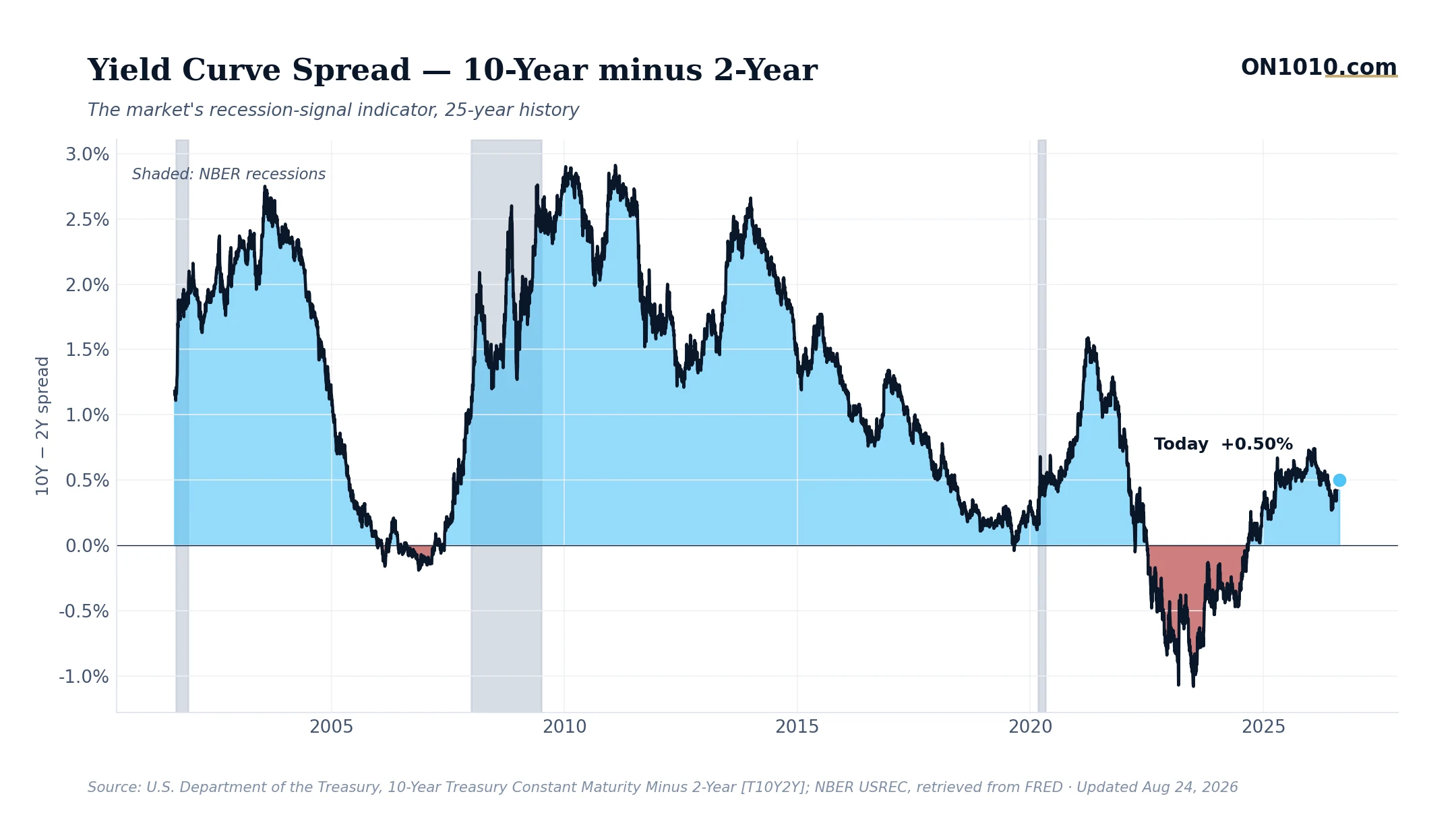
The margin math gets worse when you layer in the macro backdrop. Core inflation is running hot against history, long-term interest rates are elevated, and consumer sentiment sits near the bottom of its historical range. Automakers facing rising input costs in that environment have limited ability to pass price increases through to buyers who are already stretched. Historically, investors have watched auto sector margins closely as an early warning system, because compression there tends to ripple into supplier layoffs and capital spending cuts well before it shows up in broader employment data. The question worth sitting with is whether a tariff this large, announced with a five-month runway, prompts enough retaliatory response from Canada to widen the damage beyond autos.
Bottom Line: A 50% tariff on Canadian auto parts is a cost shock that compounds with every border crossing, lands in an industry already under margin pressure, and arrives with no easy escape route for producers or consumers.
Read more: CNBC Top News
ON1010 Research is an independent publisher of economic education and is not a registered investment adviser, broker-dealer, or investment company. This content is for educational and informational purposes only and is not investment advice or a recommendation to buy, sell, or hold any security. Published under the publisher exemption recognized by Section 202(a)(11)(D) of the Investment Advisers Act of 1940 (Lowe v. SEC). Always consult a qualified financial professional before making any financial decision.
Free Research
The economy moves fast. We make sure you move faster.
Economic data, policy shifts, and market signals — delivered to your inbox.
Subscribe Free