
Mortgage Rates Tick Back Up, Right When the Market Was Starting to Hope
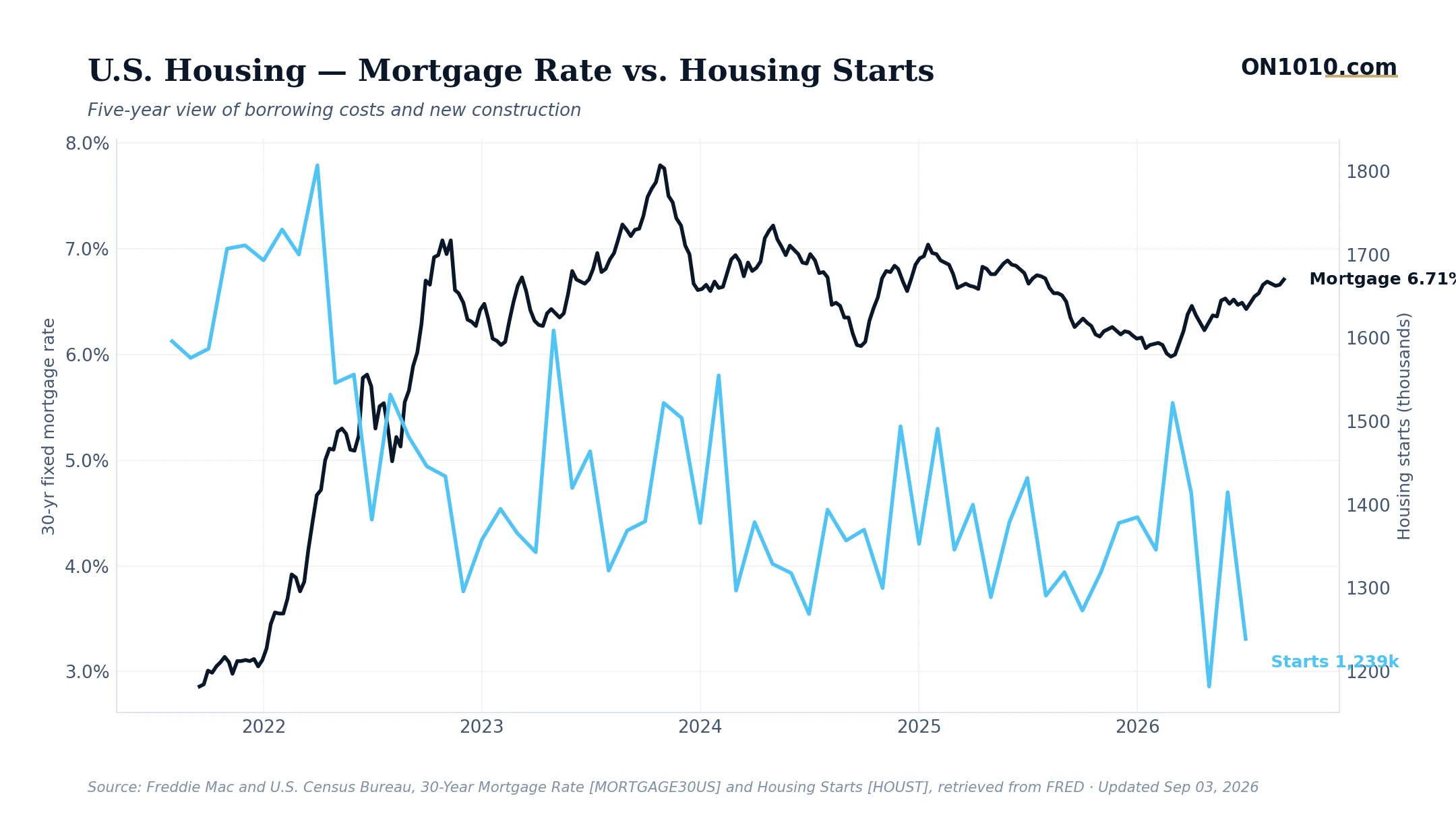
The 30-year fixed mortgage rate edged up to 6.71% this week, from 6.66% the week before. The move itself is small. The story behind it is more interesting.
For the past six weeks, the 30-year rate had been quietly drifting in a tight range between 6.65% and 6.69%. That kind of sideways action is exactly what a would-be homebuyer holds their breath through, waiting for a break lower. This week, rates broke the wrong direction.
The Bigger Picture
The mortgage rate doesn’t set itself. It follows the 10-year Treasury yield, which is itself a bet on where inflation and growth are heading. Right now, the economic gauges are telling a complicated story: inflation remains hot by historical standards, long-term interest rates are elevated compared to most of the past several decades, and yet credit spreads are very tight, meaning bond markets are pricing almost no stress into the system. That combination tends to put a floor under mortgage rates. The Fed can manage the short end of the yield curve; the bond market sets the long end, and bond investors right now appear to believe that higher-for-longer is the right frame.
Why It Matters
The housing market is uniquely sensitive to this because of what economists call the “lock-in effect.” Millions of homeowners are sitting on mortgages from 2020 and 2021 at rates between 2.5% and 3.5%. Moving to a new home at 6.71% would mean doubling their interest cost overnight. Historically, when the gap between existing mortgage rates and market rates is this wide, home sales volume stays suppressed even when overall economic conditions are solid. It freezes inventory, keeps prices elevated, and makes affordability a structural problem rather than a cyclical one.
In past cycles, rate environments like this have prompted homebuilders to offer rate buydowns as an incentive, effectively absorbing some of the rate cost to move inventory. Whether that dynamic expands or recedes depends heavily on where the 10-year yield goes from here.
Bottom Line: The real question is whether mortgage rates can fall meaningfully without inflation coming down first, and right now, the inflation data says that relief may still be a ways off.
Source: Federal Reserve Economic Data (FRED)
ON1010 Research is an independent publisher of economic education and is not a registered investment adviser, broker-dealer, or investment company. This content is for educational and informational purposes only and is not investment advice or a recommendation to buy, sell, or hold any security. Published under the publisher exemption recognized by Section 202(a)(11)(D) of the Investment Advisers Act of 1940 (Lowe v. SEC). Always consult a qualified financial professional before making any financial decision.
Free Research
The economy moves fast. We make sure you move faster.
Economic data, policy shifts, and market signals — delivered to your inbox.
Subscribe Free