
The Jobs Market Just Blew Past Every Forecast. Here’s the Catch.
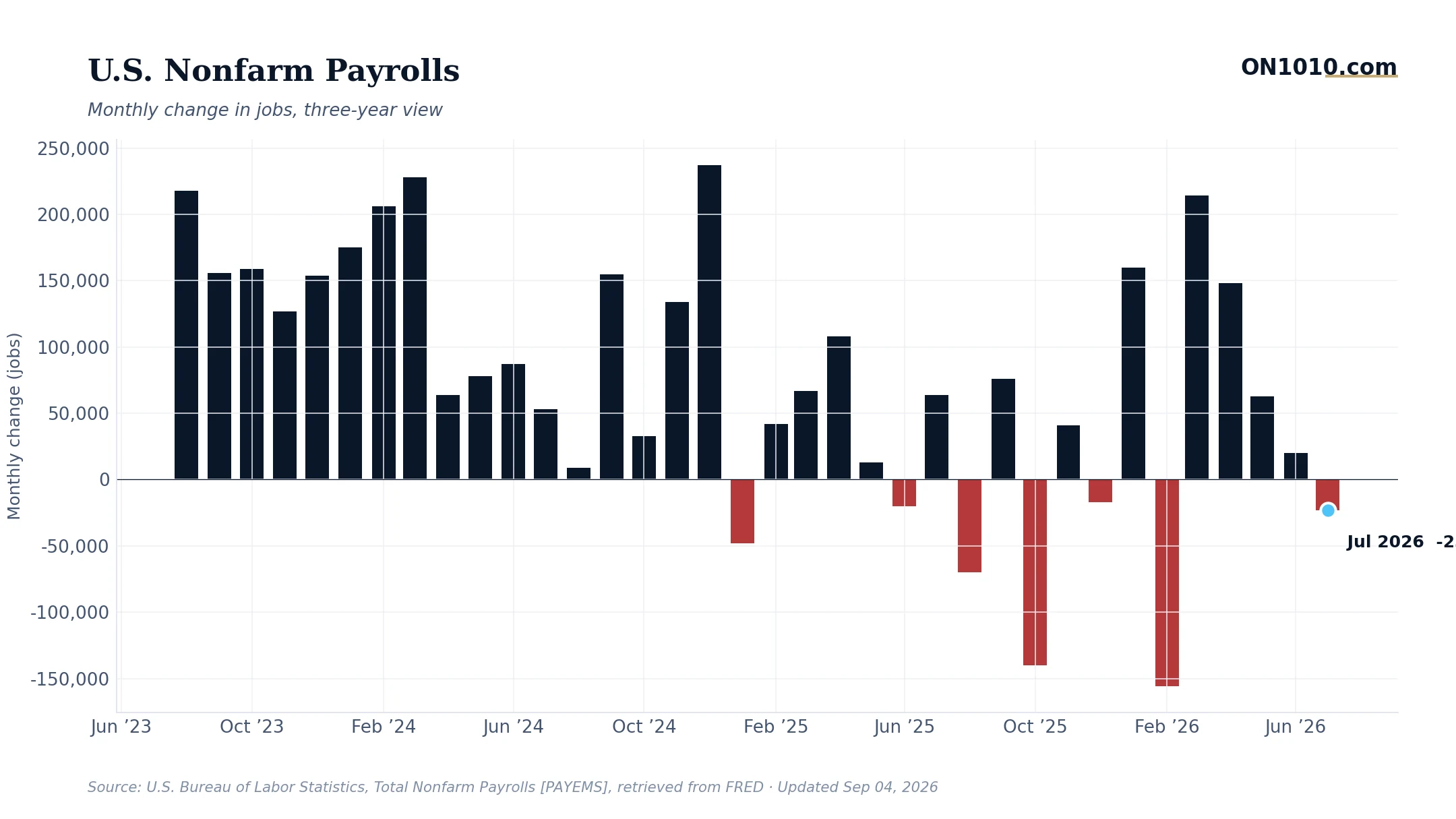
According to CNBC, nonfarm payrolls rose 162,000 in August, more than three times the 53,000 consensus estimate, while the unemployment rate held steady at 4.1%. On the surface, that looks like a clean win for the labor market. The catch is that a blowout number like this cuts both ways.
When hiring runs this far ahead of expectations, the instinctive reaction is relief. But the question worth sitting with is what it means for the Federal Reserve. Core inflation is already running hotter than roughly nine of every ten months in the historical record. A labor market that refuses to slow down adds fuel to that fire, because more employed workers earning paychecks means more spending, which makes the Fed’s job of cooling prices considerably harder. The bond market, which tends to tell the truth faster than the equity market, will be the one to watch for the real verdict on what this print means for rate expectations.
There is also a composition question that the headline number cannot answer. A 162,000 gain spread across high-productivity, high-wage sectors like technology and professional services carries different economic weight than the same gain concentrated in lower-wage services. Wage growth running above inflation is what actually lifts living standards; wage growth that merely matches inflation is largely a wash in real terms. That breakdown matters before drawing any conclusions about whether this is a genuinely strong economy or a labor market running on cyclical momentum.
Historically, investors have viewed labor market surprises through the lens of what they imply for corporate margins. Strong hiring that outpaces productivity gains can compress margins over time, because labor costs rise faster than output. The question for business operators allocating capital right now is whether their revenue growth is running fast enough to absorb it.
Bottom Line: A jobs number three times the forecast is not automatically good news when inflation is already elevated and long-term interest rates are sitting near the high end of their historical range. The data is strong; the implications are genuinely two-sided.
Read more: CNBC Economy
ON1010 Research is an independent publisher of economic education and is not a registered investment adviser, broker-dealer, or investment company. This content is for educational and informational purposes only and is not investment advice or a recommendation to buy, sell, or hold any security. Published under the publisher exemption recognized by Section 202(a)(11)(D) of the Investment Advisers Act of 1940 (Lowe v. SEC). Always consult a qualified financial professional before making any financial decision.
Free Research
The economy moves fast. We make sure you move faster.
Economic data, policy shifts, and market signals — delivered to your inbox.
Subscribe Free