
Bond Market’s Inflation Verdict: Anchored, But the Ceiling Keeps Creeping Up
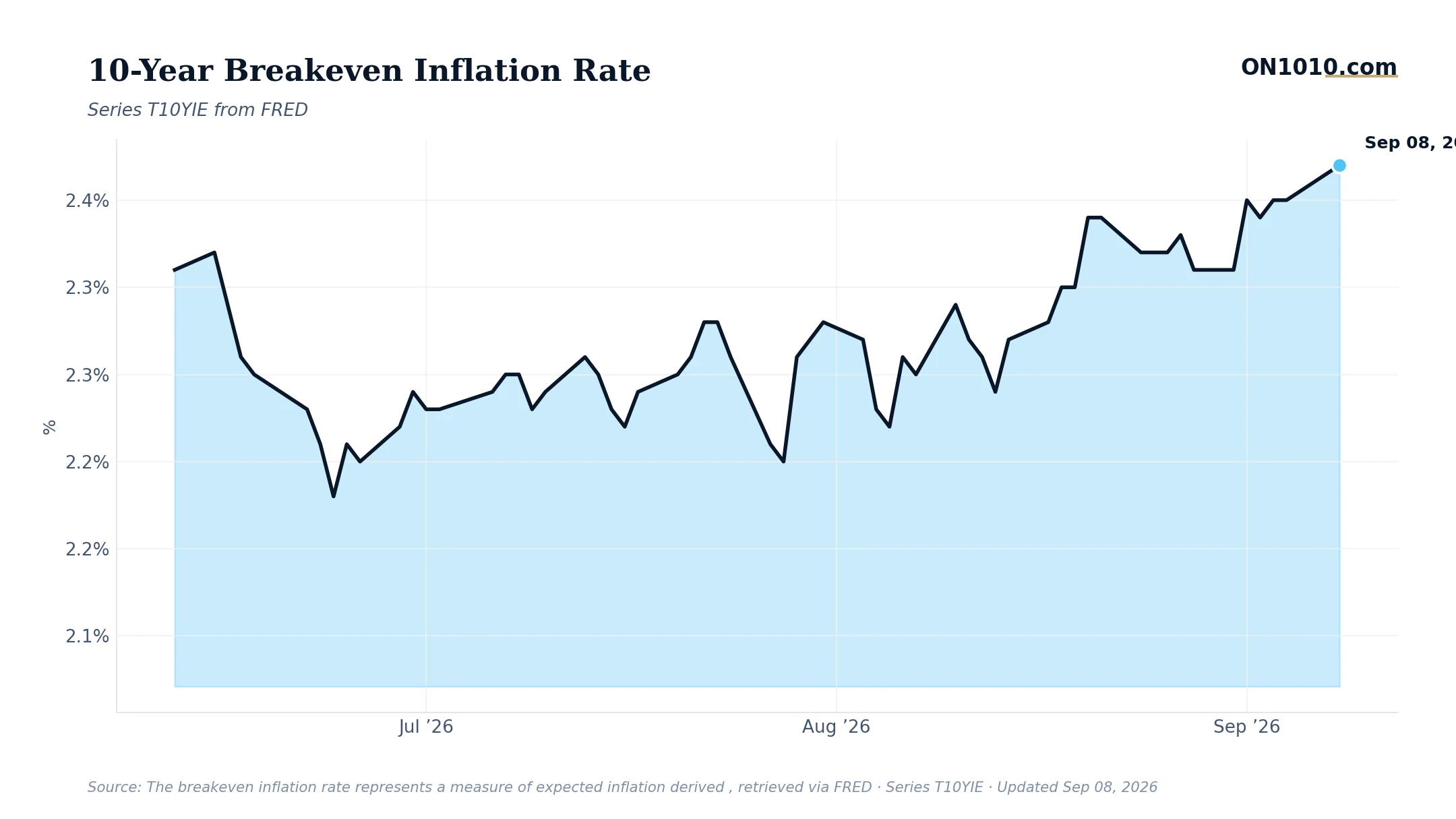
The 10-year breakeven inflation rate ticked up to 2.37% as of September 8, 2026, rising 0.02 percentage points from the prior reading. The number itself is quiet. The direction is worth a closer look.
What catches the eye is the pattern. The breakeven moved from 2.31% at the end of August to 2.37% in less than two weeks, a slow but steady drift higher. Bond markets are still pricing inflation close to the Fed’s 2% target over the long run. But they are drifting away from it, not toward it.
This matters because breakeven rates are the bond market’s collective bet on where inflation lands over the next decade. They are calculated by comparing regular Treasury yields to inflation-protected TIPS yields. When the gap widens, it means investors are demanding more compensation for inflation risk. The current reading sits against a backdrop of inflation that is historically very high compared to the post-2000 norm, long-term interest rates above their historical midpoint, and credit spreads unusually tight. That combination tells a story of an economy where the bond market is calm about credit risk but quietly watchful on inflation.
Historically, when breakeven rates climb steadily even as they remain nominally “anchored,” it has signaled that the market is testing whether the Fed’s credibility will hold. In past cycles, prolonged periods of above-target breakevens kept long-term rates elevated, which compressed margins in rate-sensitive businesses and raised the hurdle rate for capital investment. Business operators and capital allocators have historically used breakeven trends as one of several lenses for thinking about the real cost of borrowing and the durability of pricing power over multi-year horizons. The choice of how to act on that, as always, belongs with a qualified financial professional who knows your situation.
Bottom Line: The bond market is not sounding an alarm, but it keeps nudging the thermostat up. The question worth watching is whether this drift stabilizes or becomes a trend.
Source: Federal Reserve Economic Data (FRED)
ON1010 Research is an independent publisher of economic education and is not a registered investment adviser, broker-dealer, or investment company. This content is for educational and informational purposes only and is not investment advice or a recommendation to buy, sell, or hold any security. Published under the publisher exemption recognized by Section 202(a)(11)(D) of the Investment Advisers Act of 1940 (Lowe v. SEC). Always consult a qualified financial professional before making any financial decision.
Free Research
The economy moves fast. We make sure you move faster.
Economic data, policy shifts, and market signals — delivered to your inbox.
Subscribe Free