
Bond Markets Just Raised the Inflation Bar, Quietly
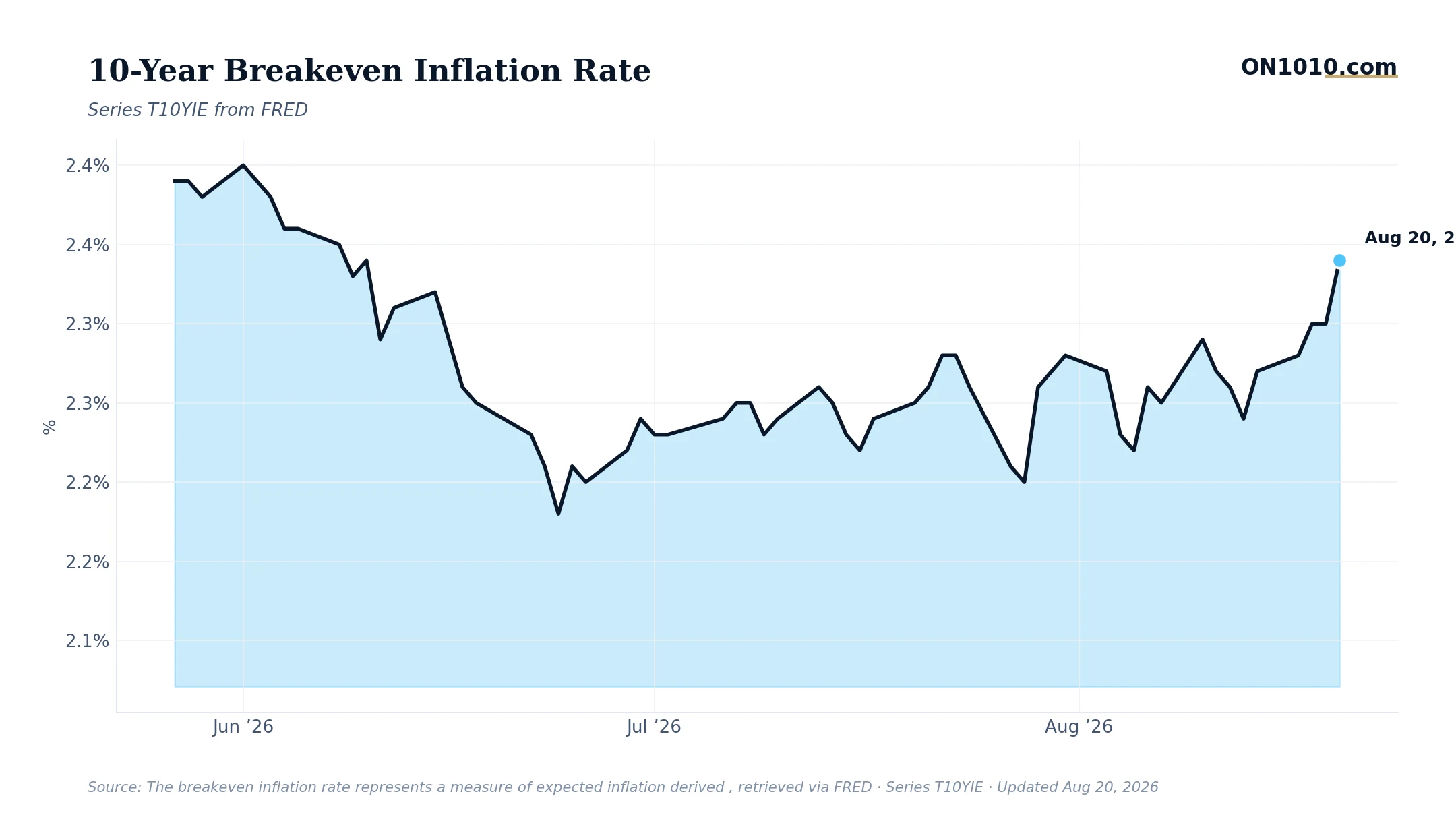
The 10-year breakeven inflation rate ticked up to 2.34% on August 20, its sixth consecutive daily increase and the highest reading in this recent run. That’s a small move in isolation. String six of them together and the bond market is telling you something worth paying attention to.
The breakeven rate is derived by comparing regular Treasury yields to TIPS (Treasury Inflation-Protected Securities) yields. The gap between them is what bond investors collectively demand as compensation for expected inflation over the next decade. When that number rises, it means the market is pricing in more inflation ahead, not less.
Here’s the tension worth sitting with. Core inflation is already running hot relative to most of the modern historical record, and long-term interest rates are elevated. Yet credit spreads remain remarkably tight, meaning corporate borrowers aren’t being penalized for the inflation risk that bond markets are quietly pricing in. Those two things don’t always coexist comfortably for long.
The Fed’s informal target is 2%. At 2.34%, the breakeven sits meaningfully above that level and has been drifting higher all week. Historically, when long-run inflation expectations creep upward in an environment where the Fed is already in a neutral-to-tight policy stance, the pressure tends to build in one of two directions: the Fed leans harder on rates, or markets start repricing the duration of everything from mortgages to corporate debt. In past cycles, business operators and capital allocators have used the breakeven as a real-time read on whether fixed-rate financing looks attractive relative to where inflation expectations are heading.
A small drift in breakeven rates is normal noise. A week-long trend moving in one direction, against a backdrop of hot core inflation and tightening credit conditions, is the kind of signal worth watching.
Bottom Line: The bond market is quietly repricing inflation expectations upward even as equity markets stay relatively calm. The question is whether this drift represents a new floor for inflation expectations or just a temporary bump.
Source: Federal Reserve Economic Data (FRED)
ON1010 Research is an independent publisher of economic education and is not a registered investment adviser, broker-dealer, or investment company. This content is for educational and informational purposes only and is not investment advice or a recommendation to buy, sell, or hold any security. Published under the publisher exemption recognized by Section 202(a)(11)(D) of the Investment Advisers Act of 1940 (Lowe v. SEC). Always consult a qualified financial professional before making any financial decision.
Free Research
The economy moves fast. We make sure you move faster.
Economic data, policy shifts, and market signals — delivered to your inbox.
Subscribe Free