
The Real Question Behind the Bond Yield Panic: Is the Textbook Still Right?
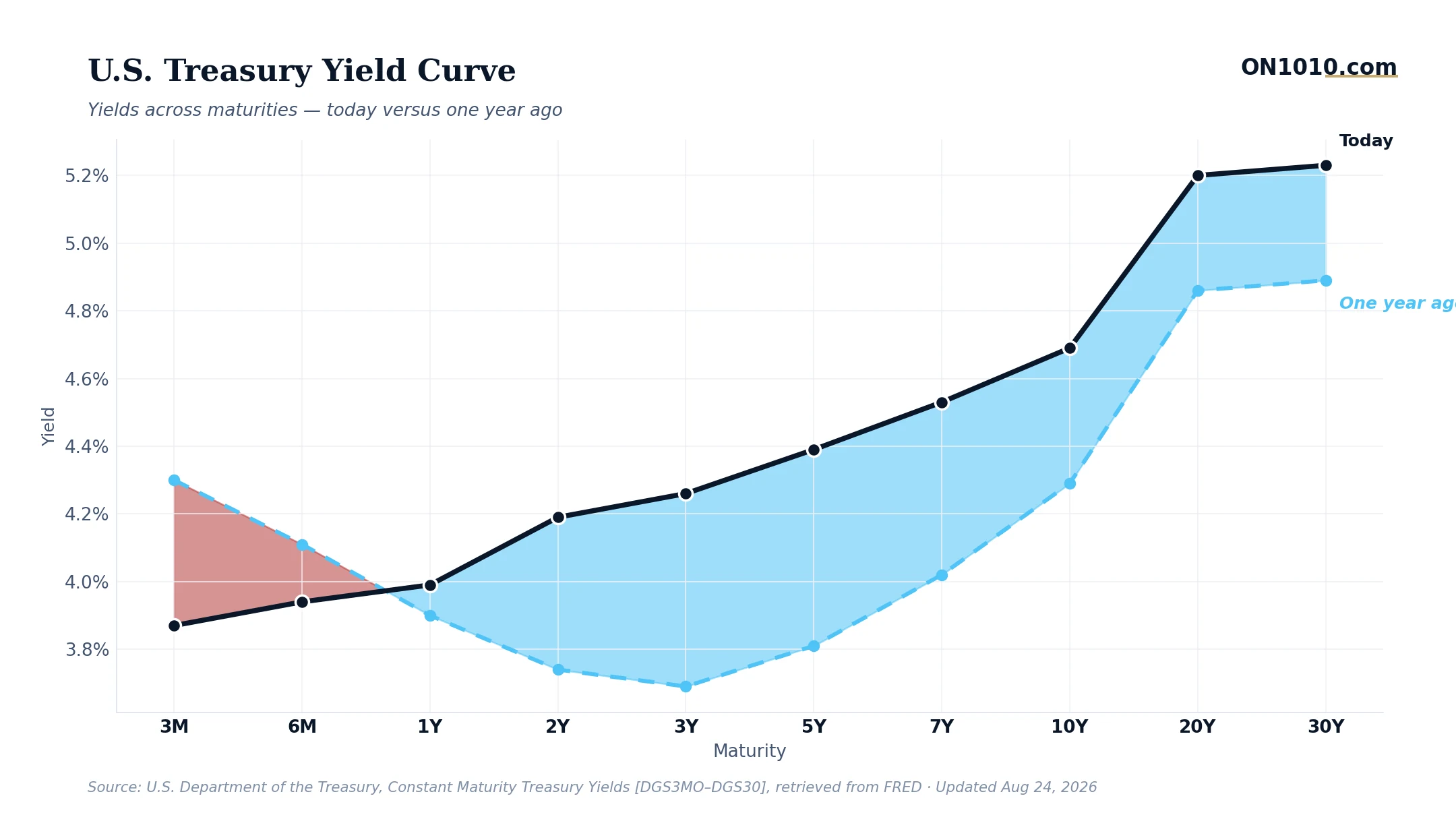
According to CNBC, the surge in real yields, the return on bonds after subtracting inflation, is raising fresh questions about whether the economy and equity markets can sustain current valuations. The textbook answer is straightforward: high real yields act like gravity on growth and stock prices. But the more interesting question is whether that textbook was written for a different economy than the one we’re living in.
Real yields matter because they represent the true cost of money. When the rate you earn on a “safe” government bond, after inflation, is genuinely high, the math changes for everyone who borrows to invest, from homebuilders to private equity to the CFO deciding whether to greenlight a new factory. Capital flows to where it is treated best, and high real yields raise the bar that risky investments must clear to attract dollars.
Here is the tension worth sitting with. Credit spreads, the premium investors demand to hold corporate debt over safe Treasuries, remain historically tight. That is the bond market saying corporate borrowers look healthy, not stressed. If real yields were truly throttling the economy, you would expect spreads to be widening as companies struggled to service debt. They are not. The bond market is simultaneously saying rates are high and that corporate balance sheets are fine. Both things can be true in a productivity-driven expansion, where output per worker rises fast enough that companies generate cash without needing to borrow heavily.
Historically, investors have treated the cycle high in real yields as a meaningful inflection point, watching whether equity valuations begin to compress as the discount rate rises. The question worth sitting with now is whether AI-driven productivity gains are genuinely shifting that ceiling higher, or whether the market is simply ahead of the adjustment that textbook mechanics eventually deliver. With long-term rates still high by historical standards and consumer sentiment near multi-decade lows, the divergence between credit calm and rate pressure is a contradiction that deserves watching, not explaining away.
Bottom Line: Real yields at cycle highs and credit spreads at cycle lows is a split verdict from the bond market, and when two parts of the same market disagree, that contradiction usually resolves, one way or the other.
Read more: CNBC Top News
ON1010 Research is an independent publisher of economic education and is not a registered investment adviser, broker-dealer, or investment company. This content is for educational and informational purposes only and is not investment advice or a recommendation to buy, sell, or hold any security. Published under the publisher exemption recognized by Section 202(a)(11)(D) of the Investment Advisers Act of 1940 (Lowe v. SEC). Always consult a qualified financial professional before making any financial decision.
Free Research
The economy moves fast. We make sure you move faster.
Economic data, policy shifts, and market signals — delivered to your inbox.
Subscribe Free