
The Treasury Has a $1 Trillion Lever. Here’s What It’s For.
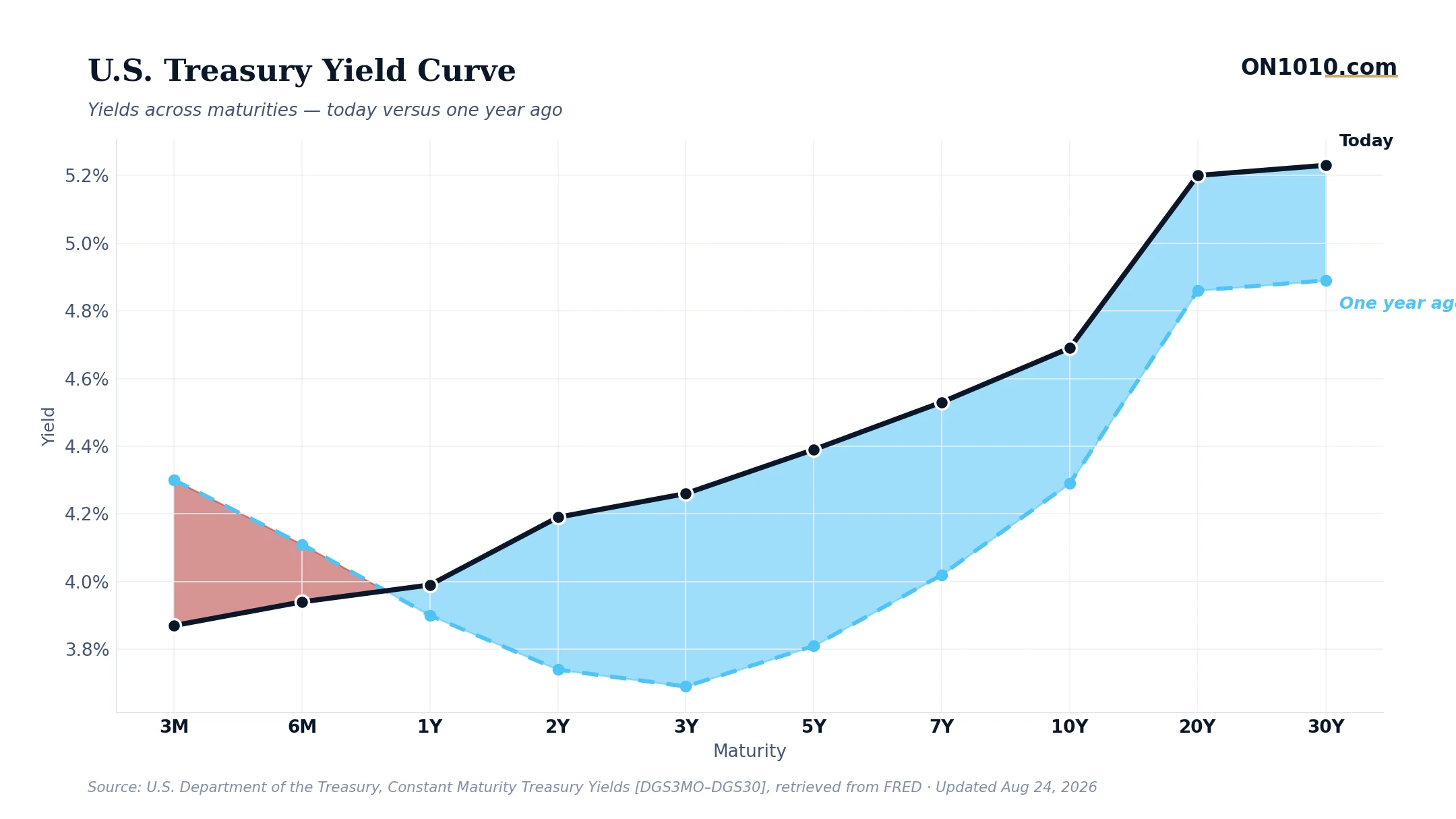
According to CNBC, Treasury Secretary Bessent is considering tapping the Treasury General Account, a government cash reserve that currently holds close to $1 trillion, to fund bond buybacks in the open market. The headline sounds technical. The implication is enormous.
The TGA is essentially the federal government’s checking account at the Fed. When Treasury draws it down, that cash flows back into the financial system, adding liquidity the same way a Fed balance sheet expansion would. Bond buybacks, meanwhile, target longer-dated Treasuries specifically, pulling supply out of the market and pushing long-term yields lower. Done at this scale, you are talking about a deliberate, coordinated attempt to bring down the 10-year and 30-year yields without the Fed cutting rates at all.
That is the tension worth sitting with. Long-term interest rates are historically elevated right now, and with core inflation still running hot by historical standards, the Fed has limited room to move. The TGA maneuver would be a way to ease financial conditions through the back door, using fiscal tools instead of monetary ones. It is creative. It is also not without cost. Drawing down the TGA means Treasury will eventually need to replenish it by issuing new debt, which puts upward pressure on yields later. The short-term relief could carry a long-term price.
Historically, investors in rate-sensitive sectors, real estate, utilities, long-duration bonds, have watched maneuvers like this closely, because lower long-term yields directly affect how those assets are valued. When the gap between short rates and long rates shifts, it changes the calculus for borrowing costs, corporate capital expenditure decisions, and the relative attractiveness of equities versus fixed income. The right questions here are about sequencing: how much gets deployed, over what timeline, and whether the Fed’s posture shifts in response.
Bottom Line: The Treasury is exploring a tool that could move long rates without the Fed doing anything, which is exactly the kind of structural wrinkle that markets reprice before most economists finish writing about it.
Read more: CNBC Economy
ON1010 Research is an independent publisher of economic education and is not a registered investment adviser, broker-dealer, or investment company. This content is for educational and informational purposes only and is not investment advice or a recommendation to buy, sell, or hold any security. Published under the publisher exemption recognized by Section 202(a)(11)(D) of the Investment Advisers Act of 1940 (Lowe v. SEC). Always consult a qualified financial professional before making any financial decision.
Free Research
The economy moves fast. We make sure you move faster.
Economic data, policy shifts, and market signals — delivered to your inbox.
Subscribe Free