
Bond Markets to the Fed: “We Believe You”
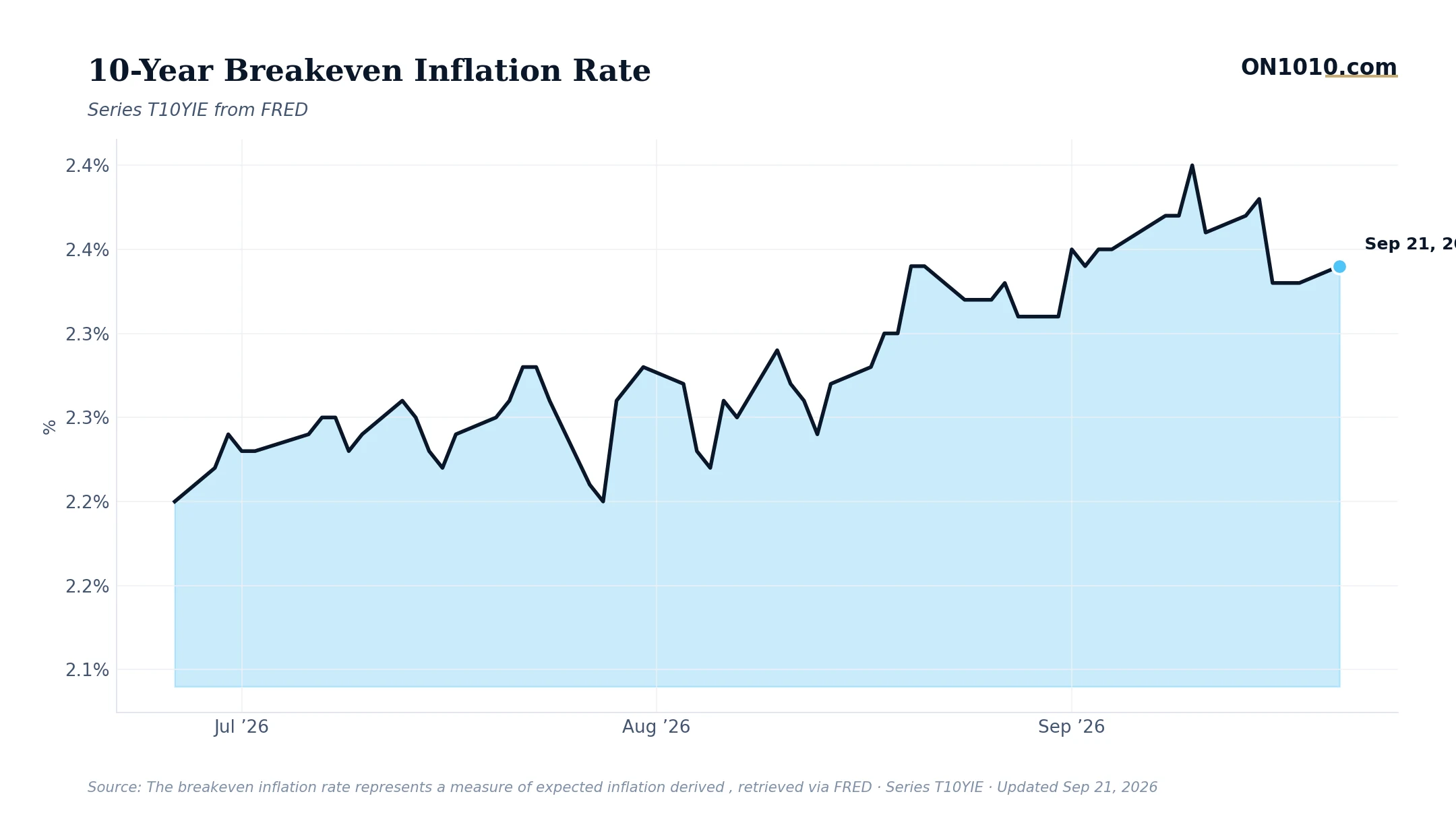
The 10-year breakeven inflation rate, the bond market’s best estimate of average inflation over the next decade, ticked up to 2.34% on September 21, from 2.33% the day before. That move is too small to matter on its own. The bigger story is where it’s sitting: comfortably anchored just above 2%, right where the Fed wants it.
After spending much of 2022 and 2023 fighting a market that didn’t believe inflation would ever come back down, the Fed has largely won the credibility battle. Breakevens in the low-to-mid 2% range signal that bond investors expect the Fed to keep inflation near its 2% target over the long run.
But “anchored” doesn’t mean “problem solved.” Our economic gauges show core inflation still running historically high in actual data, hotter than roughly nine out of every ten months on record. The gap between what the bond market expects inflation to do and what inflation is actually doing right now is the tension worth watching. Breakevens tell you about the future; CPI tells you about the present. Right now, they’re telling different stories.
Historically, when long-term inflation expectations have stayed anchored while near-term inflation ran hot, markets have generally given the Fed room to hold rates steady rather than hike further. In past cycles, business planners and capital allocators have used the breakeven as a floor for long-term cost assumptions, a 2.34% reading suggests the market doesn’t see a 1970s-style inflation re-acceleration as a serious base case. Whether today’s structural conditions (reshoring, AI-driven productivity, elevated debt loads) make that confidence well-placed is a question worth pressure-testing with anyone managing long-duration commitments.
Bottom Line: The bond market is telling the Fed it’s doing its job. The question is whether today’s still-elevated actual inflation eventually drags those long-run expectations higher, or whether the Fed’s credibility holds the line.
Source: Federal Reserve Economic Data (FRED)
ON1010 Research is an independent publisher of economic education and is not a registered investment adviser, broker-dealer, or investment company. This content is for educational and informational purposes only and is not investment advice or a recommendation to buy, sell, or hold any security. Published under the publisher exemption recognized by Section 202(a)(11)(D) of the Investment Advisers Act of 1940 (Lowe v. SEC). Always consult a qualified financial professional before making any financial decision.
Free Research
The economy moves fast. We make sure you move faster.
Economic data, policy shifts, and market signals — delivered to your inbox.
Subscribe Free