
Confidence Just Fell Off a Cliff. The Stock Market Hasn’t Noticed Yet.
According to CNBC, the Conference Board’s Consumer Confidence Index dropped to 81.9 in September, a decline of 6.7 points and nearly 7 points below what economists had forecast. The miss isn’t the story. The gap between how consumers feel and how markets are behaving is.
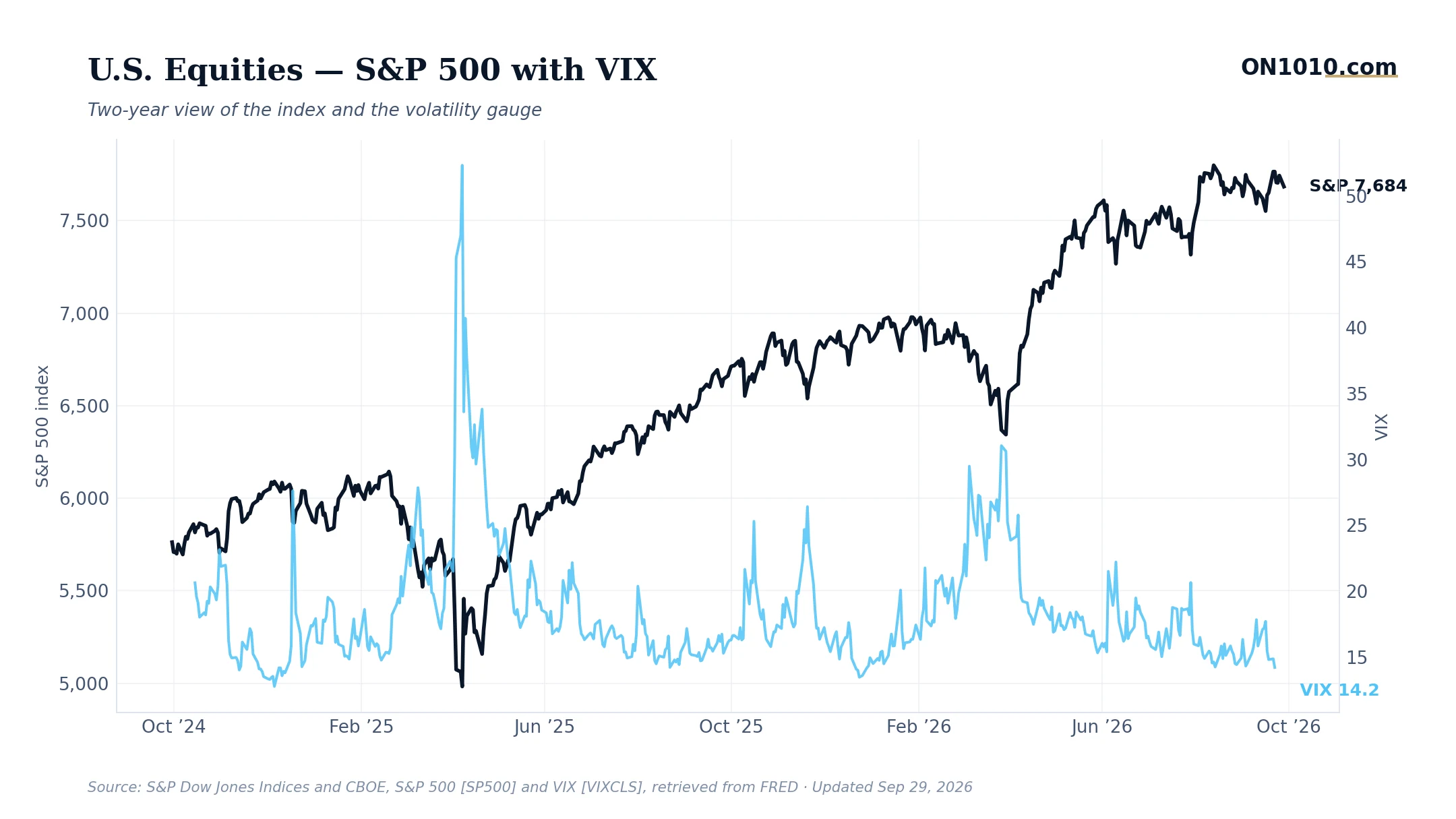
SPY is sitting above both its 50-day and 200-day moving averages, volatility is calm, and technology stocks are leading the tape higher. Meanwhile, consumer confidence is near the very bottom of its historical range. Those two things can coexist for a while, but they can’t coexist forever. One of them is reading the moment wrong.
Here’s the tension worth examining. Consumer confidence surveys measure fear, and fear is heavily colored by what people see at the gas station and grocery store. With inflation still running historically hot, the lived experience of prices eroding purchasing power is real, even if the aggregate data looks manageable. The survey captures that pain directly. Markets, meanwhile, are pricing a different story: that earnings hold, that the Fed threads the needle, that AI-driven productivity gains eventually show up in margins. Both narratives have data behind them.
What makes this particular drop meaningful is the direction of the fear. Respondents cited rising prices AND job security, which is the more dangerous combination. Price anxiety alone is uncomfortable. Price anxiety paired with job anxiety changes spending behavior. When households get defensive, they cut discretionary purchases first, which flows directly into the revenue line for consumer-facing businesses, and eventually into margins.
Historically, investors have watched consumer confidence closely as a leading signal for retail sales and consumer discretionary earnings, while noting that sentiment at these depressed levels has not reliably predicted recessions on its own. The base rate on that is clear: from similarly low sentiment readings, a new recession began within a year about 0% of the time in the historical record. The more useful question to sit with is whether the confidence gap between Main Street and Wall Street eventually closes upward (sentiment recovers) or downward (markets reprice).
Bottom Line: Consumer confidence is flashing yellow at the same moment equity markets are flashing green. History says the sentiment can recover from here, but the specific combination of price fear and job fear is the one worth watching closely.
Read more: CNBC Top News
ON1010 Research is an independent publisher of economic education and is not a registered investment adviser, broker-dealer, or investment company. This content is for educational and informational purposes only and is not investment advice or a recommendation to buy, sell, or hold any security. Published under the publisher exemption recognized by Section 202(a)(11)(D) of the Investment Advisers Act of 1940 (Lowe v. SEC). Always consult a qualified financial professional before making any financial decision.
Free Research
The economy moves fast. We make sure you move faster.
Economic data, policy shifts, and market signals — delivered to your inbox.
Subscribe Free