
Core Inflation Slows to 2.22%, But the Fed Isn’t Done Yet
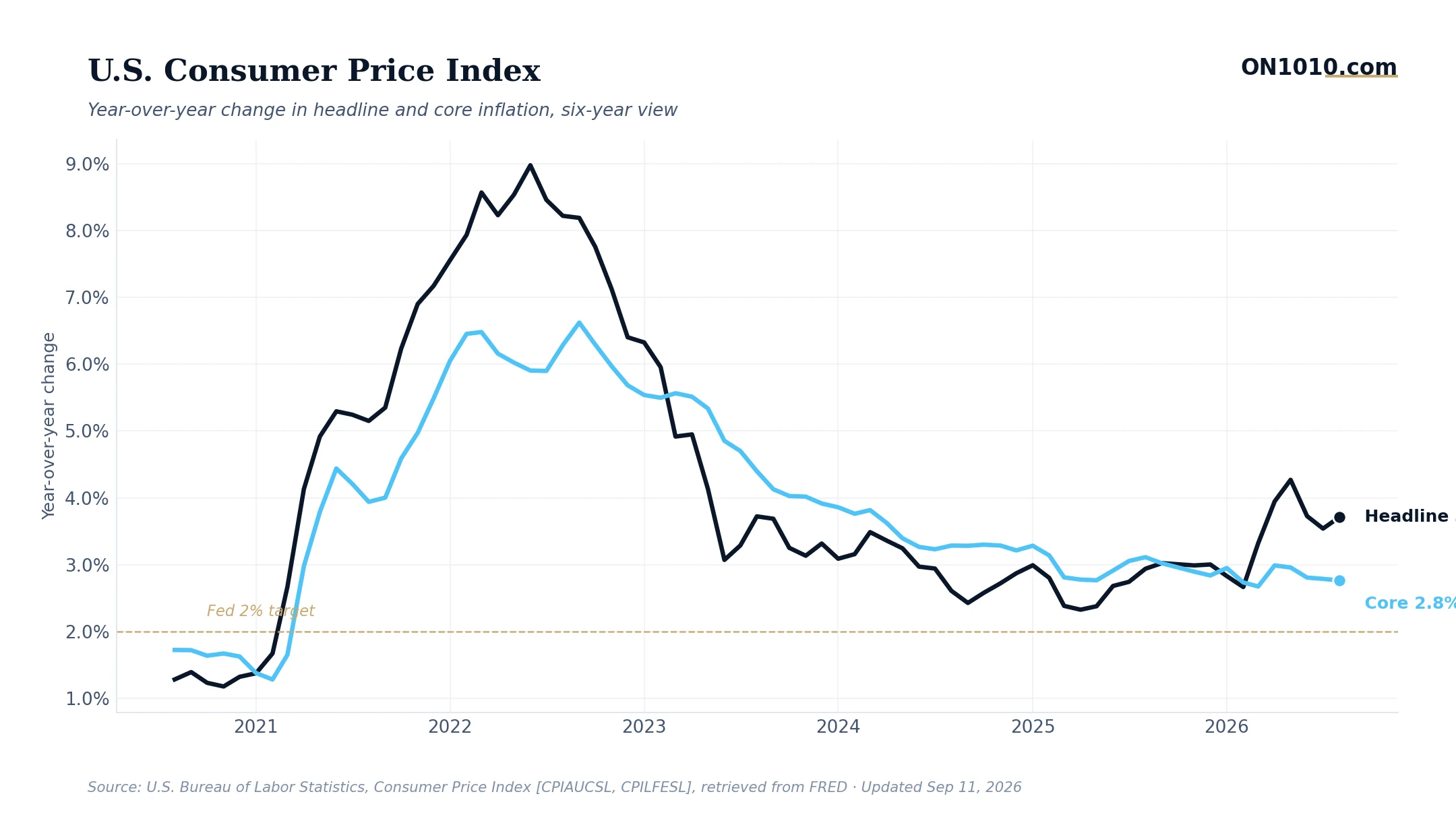
Core CPI rose just 0.29% in August, the smallest monthly gain in over a year. Year over year, the measure now sits at 2.22%, its lowest reading since the post-pandemic inflation surge began. The direction is unmistakably right. The pace, though, is where things get complicated.
Look at the six-month trend and you see something worth noting. After stalling in the April-to-June window (three consecutive readings that barely moved), August snapped the streak in the wrong direction with a modest uptick from July’s 336.789 to 337.765. Monthly progress has been grinding rather than gliding. The last mile of disinflation, getting from “low” to “done”, has historically been the hardest.
Here’s the broader context. Core inflation remains higher than roughly nine of every ten months in the historical record, even at 2.22% year over year. Long-term interest rates are elevated and now rising. Consumer sentiment sits near historical lows. Credit spreads are tight. Those four gauges together describe an economy where the financial cost of doing business is high, households feel squeezed, but credit markets haven’t yet priced in serious stress. That combination tends to compress profit margins over time, because companies face higher borrowing costs but can no longer pass price increases to consumers who are already worn down.
Historically, when core inflation has been this close to the Fed’s 2% target but still above it, central banks have faced a genuine dilemma: cut too early and risk reigniting price pressure, hold too long and slow growth unnecessarily. In past cycles, business operators with refinancing needs or variable-rate debt have found this window particularly consequential for planning purposes. A qualified financial professional who knows your specific situation is the right person to work through those timing questions with.
Bottom Line: Core inflation is heading in the right direction, but the last 0.22 percentage point may take longer to close than the prior two points did. Watch whether monthly gains continue to drift below 0.3% or reaccelerate before drawing any conclusions about what the Fed does next.
Source: Federal Reserve Economic Data (FRED)
ON1010 Research is an independent publisher of economic education and is not a registered investment adviser, broker-dealer, or investment company. This content is for educational and informational purposes only and is not investment advice or a recommendation to buy, sell, or hold any security. Published under the publisher exemption recognized by Section 202(a)(11)(D) of the Investment Advisers Act of 1940 (Lowe v. SEC). Always consult a qualified financial professional before making any financial decision.
Free Research
The economy moves fast. We make sure you move faster.
Economic data, policy shifts, and market signals — delivered to your inbox.
Subscribe Free