
Economic Wire: 10-year Treasury yield is little changed as Fed’s Waller say
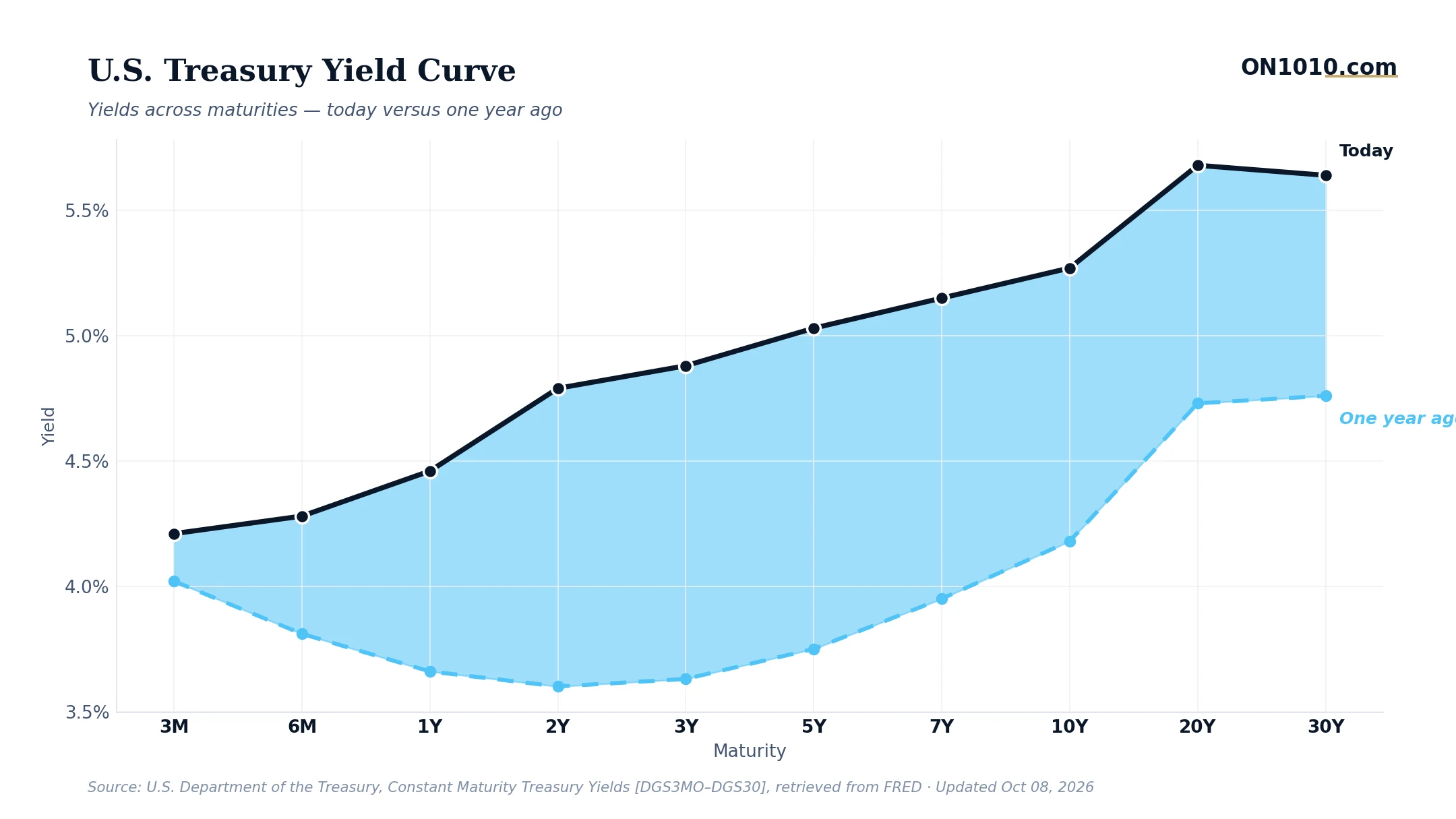
The Bond Market Is Asking a Question the Fed Hasn’t Answered Yet
According to CNBC, Federal Reserve Governor Christopher Waller signaled this week that more rate hikes are likely needed, even as the 10-year Treasury yield held relatively steady and markets braced for a 30-year bond auction. The quiet in yields masks a growing tension underneath.
Here’s the setup worth understanding. The 10-year yield sits at 5.27%, a level that falls in the upper quarter of its entire recorded history. The Fed’s policy rate is already restrictive by historical standards, and core inflation remains hot compared to its long-run norm. That combination puts the Fed in an uncomfortable spot: the traditional levers are deployed, but the inflation gauge isn’t fully cooperating. Waller’s message, that more tightening is on the table, means the real policy rate (the nominal rate minus inflation) is being pushed further into positive territory. That squeezes borrowing costs for businesses and households who need to refinance or take on new debt.
The 30-year auction adds a layer to this. When the government issues long-dated debt at elevated rates, it competes directly with every other asset for capital. Historically, when long-term rates run this high relative to their own history, investors in longer-duration bonds have had to weigh a simple tradeoff: lock in a high nominal yield or wait to see if rates rise further and prices fall. Poor auction demand pushes yields higher, which tightens conditions further. Strong demand suggests the market sees this as near the ceiling. The auction result is a live read on that debate.
One signal worth watching here is that credit conditions, which had been steady, are now falling. Historically, tightening credit and high long-term rates arriving together have created friction for corporate margins, since the cost of capital rises while revenue growth must accelerate just to keep profitability flat.
Bottom Line: When the Fed says “more hikes” and the 10-year is already at a generational high, the question for business operators and investors is the same: at what point does the cost of money start showing up in earnings?
Read more: CNBC Top News
ON1010 Research is an independent publisher of economic education and is not a registered investment adviser, broker-dealer, or investment company. This content is for educational and informational purposes only and is not investment advice or a recommendation to buy, sell, or hold any security. Published under the publisher exemption recognized by Section 202(a)(11)(D) of the Investment Advisers Act of 1940 (Lowe v. SEC). Always consult a qualified financial professional before making any financial decision.
Free Research
The economy moves fast. We make sure you move faster.
Economic data, policy shifts, and market signals — delivered to your inbox.
Subscribe Free