
Economic Wire: Inflation on many everyday items was entirely due to tariffs
The New York Fed Just Put a Number on Tariff Inflation. It’s Bigger Than Most People Realize.
According to CNBC Economy, researchers at the New York Federal Reserve found that tariffs added 2.9 percentage points to inflation across 67 categories of consumer goods by February 2026. For those categories, that means the price increases were not driven by demand running hot, or wages rising too fast, or supply chains still healing from Covid. The tariff was the inflation.
That distinction matters more than it might seem. Standard inflation is the economy running warm. Supply outstrips demand, money chases goods, and the Fed can cool things by raising rates. Tariff-driven inflation works differently: it’s a one-time price shift baked in by policy, not a symptom of an overheating economy. Raising interest rates to fight it is a bit like taking aspirin for a broken arm. It treats the fever, not the fracture. Meanwhile, the broader inflation picture from the economic gauges shows core inflation already in the upper range of its historical reading, meaning this tariff layer landed on a foundation that was already warm.
Here’s where corporate margins enter the picture. Businesses absorbing tariff costs face a fork in the road: pass the cost to consumers, squeeze their own margins, or find a supplier who isn’t subject to the tariff. Each path has consequences. Passing costs through sustains margins but risks losing price-sensitive customers. Absorbing costs protects volume but compresses profits, which historically has preceded slower hiring and reduced capital investment. The 67 affected categories are a wide net covering everyday household goods, and if margin compression becomes the dominant response, the spending slowdown tends to follow with a lag of several quarters.
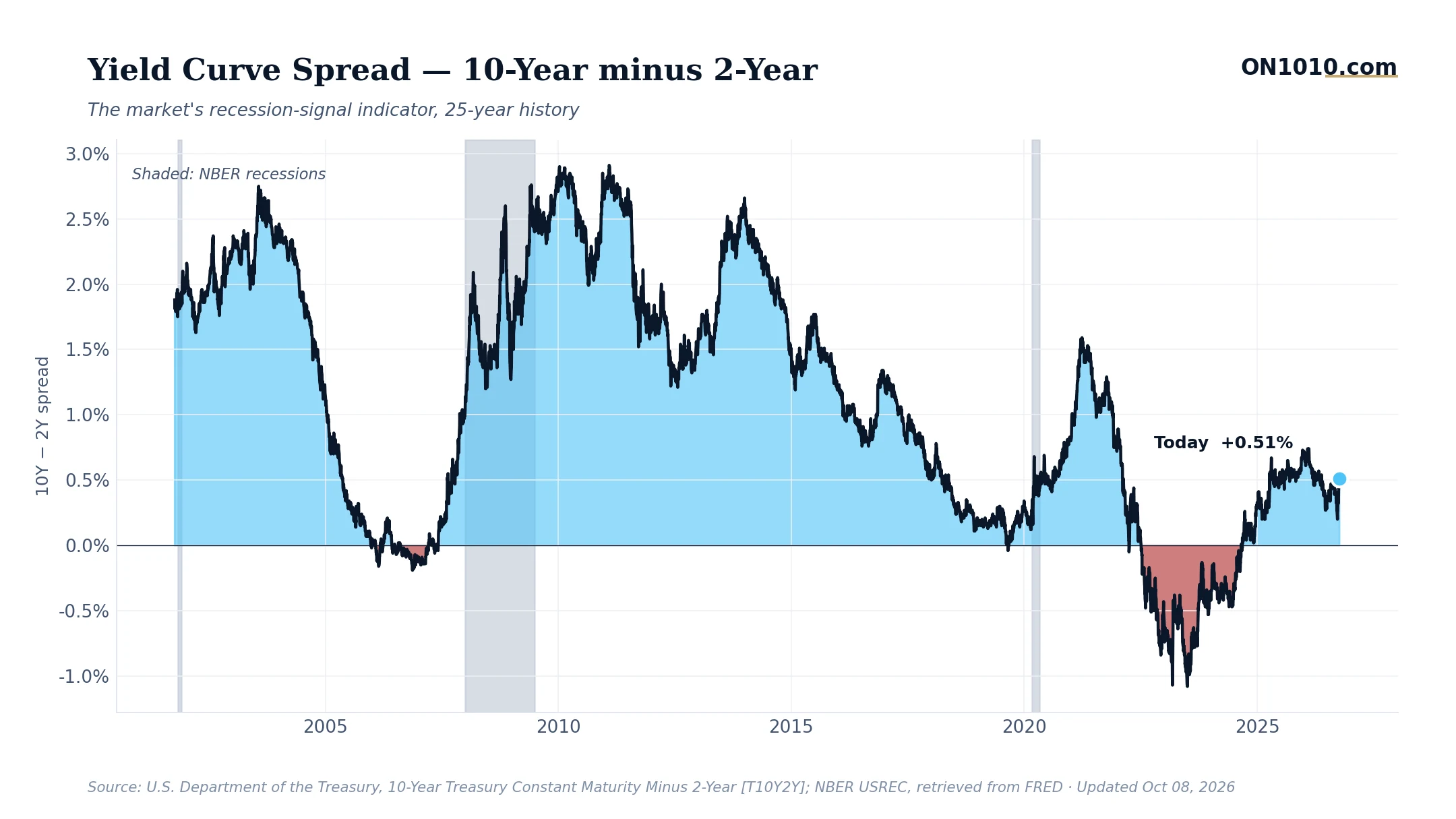
Historically, investors and business operators have watched tariff-driven price increases closely because of how they interact with central bank credibility. When inflation is elevated for structural reasons rather than demand reasons, the Fed faces a harder read on whether to hold rates higher for longer, potentially keeping real borrowing costs elevated even as the underlying economy softens. Long-term rates are already near the top of their historical range. Combining sticky tariff inflation with restrictive monetary policy raises the question of how long businesses can sustain investment plans built on lower rate assumptions.
Bottom Line: When 2.9 percentage points of inflation in dozens of product categories traces directly to a single policy lever, the economy is facing a price problem that higher interest rates cannot easily fix, and the burden lands first on corporate margins, then on hiring, then on growth.
Read more: CNBC Economy
ON1010 Research is an independent publisher of economic education and is not a registered investment adviser, broker-dealer, or investment company. This content is for educational and informational purposes only and is not investment advice or a recommendation to buy, sell, or hold any security. Published under the publisher exemption recognized by Section 202(a)(11)(D) of the Investment Advisers Act of 1940 (Lowe v. SEC). Always consult a qualified financial professional before making any financial decision.
Free Research
The economy moves fast. We make sure you move faster.
Economic data, policy shifts, and market signals — delivered to your inbox.
Subscribe Free