
Economic Wire: Labor market faltered in September as jobs increased by just
The Job Market Just Sent a Distress Flare. The Real Question Is Whether Anyone Was Watching.
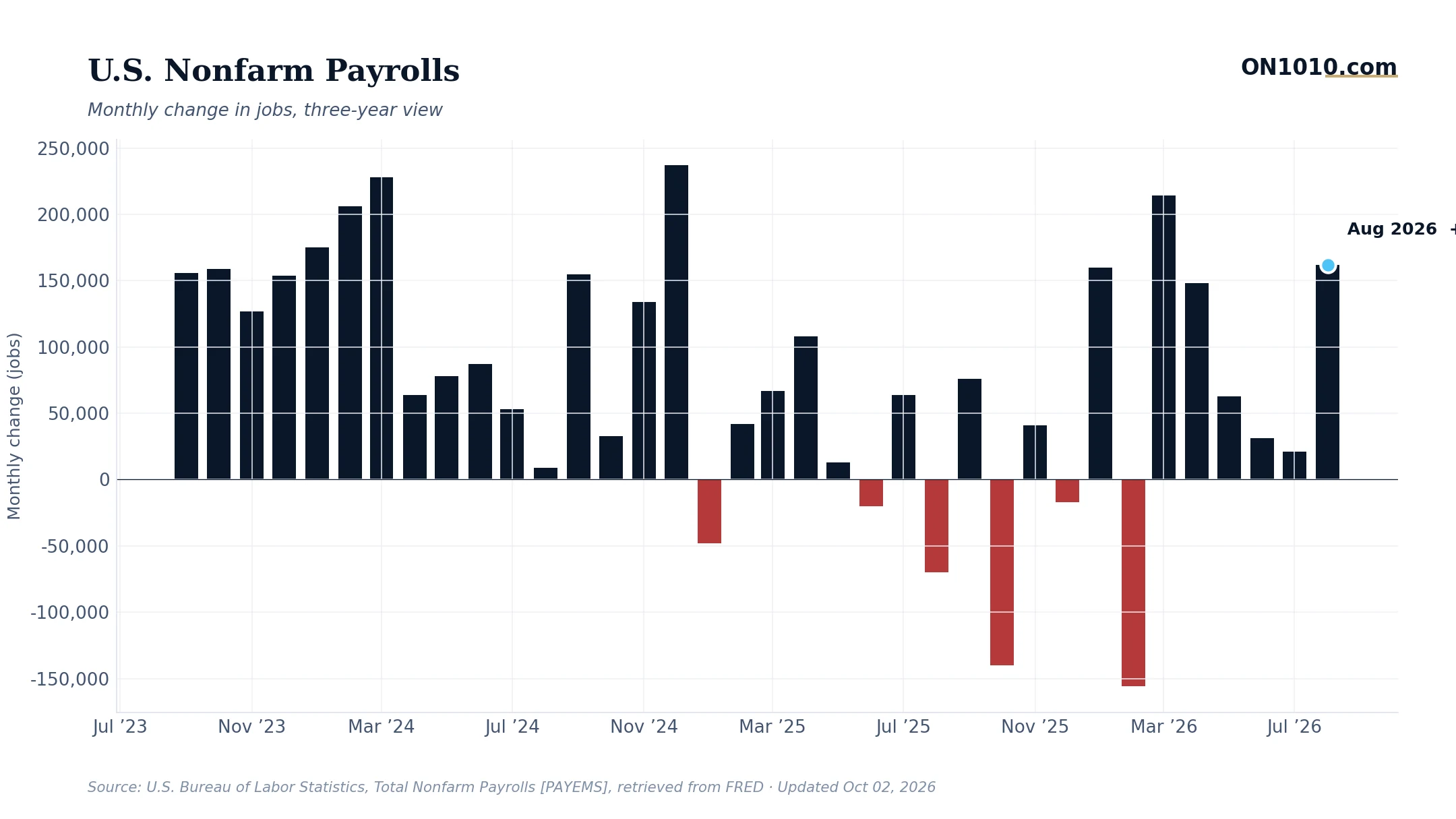
According to CNBC, nonfarm payrolls rose by just 29,000 in September, a fraction of the 84,000 economists expected, while the unemployment rate climbed to 4.2%. Against a backdrop of 159 million total nonfarm jobs on the payroll and growth that looked steady through August, this print lands like a cold bucket of water.
A miss this large deserves more than a headline. The consensus was already cautious, and the actual number came in at roughly one-third of even that modest forecast. That kind of gap between expectation and reality rarely happens in a vacuum. Either something broke in September specifically (weather, a strike, a statistical anomaly in the survey methodology), or the softness that’s been building quietly in consumer sentiment and hiring intentions finally showed up in the hard data. Both possibilities matter, and right now we don’t have enough to rule either out.
Here’s the economic context that makes this more than a single bad print. Monetary policy is sitting at historically restrictive levels in real terms, meaning after adjusting for inflation, the policy rate is genuinely tight by the standards of the last several decades. Long-term interest rates are similarly elevated relative to history. That combination raises the cost of capital for businesses, which compresses the incentive to invest and hire before the slowdown ever shows up in a payroll number. When you also see consumer sentiment near the bottom of its historical range, the spending foundation that keeps businesses investing gets shakier. Historically, when monetary policy stays this restrictive while hiring falters, the pressure on corporate margins tends to build, and margins lead hiring decisions, so the next few months of data matter enormously.
Historically, investors have treated a payroll miss of this magnitude as a reason to ask whether the Fed is holding rates too high for too long, and bond markets typically begin repricing the path of rate cuts faster than the Fed itself moves. The question worth asking is whether this is the beginning of a trend or a one-month aberration, because the policy response looks very different depending on the answer. One print doesn’t make a trend, and the economic gauges don’t yet show recession risk running hot. But restrictive monetary policy has, historically, produced delayed consequences that arrive unevenly and then all at once.
Bottom Line: A 29,000 payroll gain in a 159-million-job economy is a warning sign, and the backdrop of tight monetary policy and exhausted consumer sentiment means this one deserves a second and third look before writing it off as noise.
Read more: CNBC Top News
ON1010 Research is an independent publisher of economic education and is not a registered investment adviser, broker-dealer, or investment company. This content is for educational and informational purposes only and is not investment advice or a recommendation to buy, sell, or hold any security. Published under the publisher exemption recognized by Section 202(a)(11)(D) of the Investment Advisers Act of 1940 (Lowe v. SEC). Always consult a qualified financial professional before making any financial decision.
Free Research
The economy moves fast. We make sure you move faster.
Economic data, policy shifts, and market signals — delivered to your inbox.
Subscribe Free