
Economic Wire: Oil prices rise to 6-week high after Iran and U.S. trade blo
When the Strait of Hormuz Sends a Warning Shot
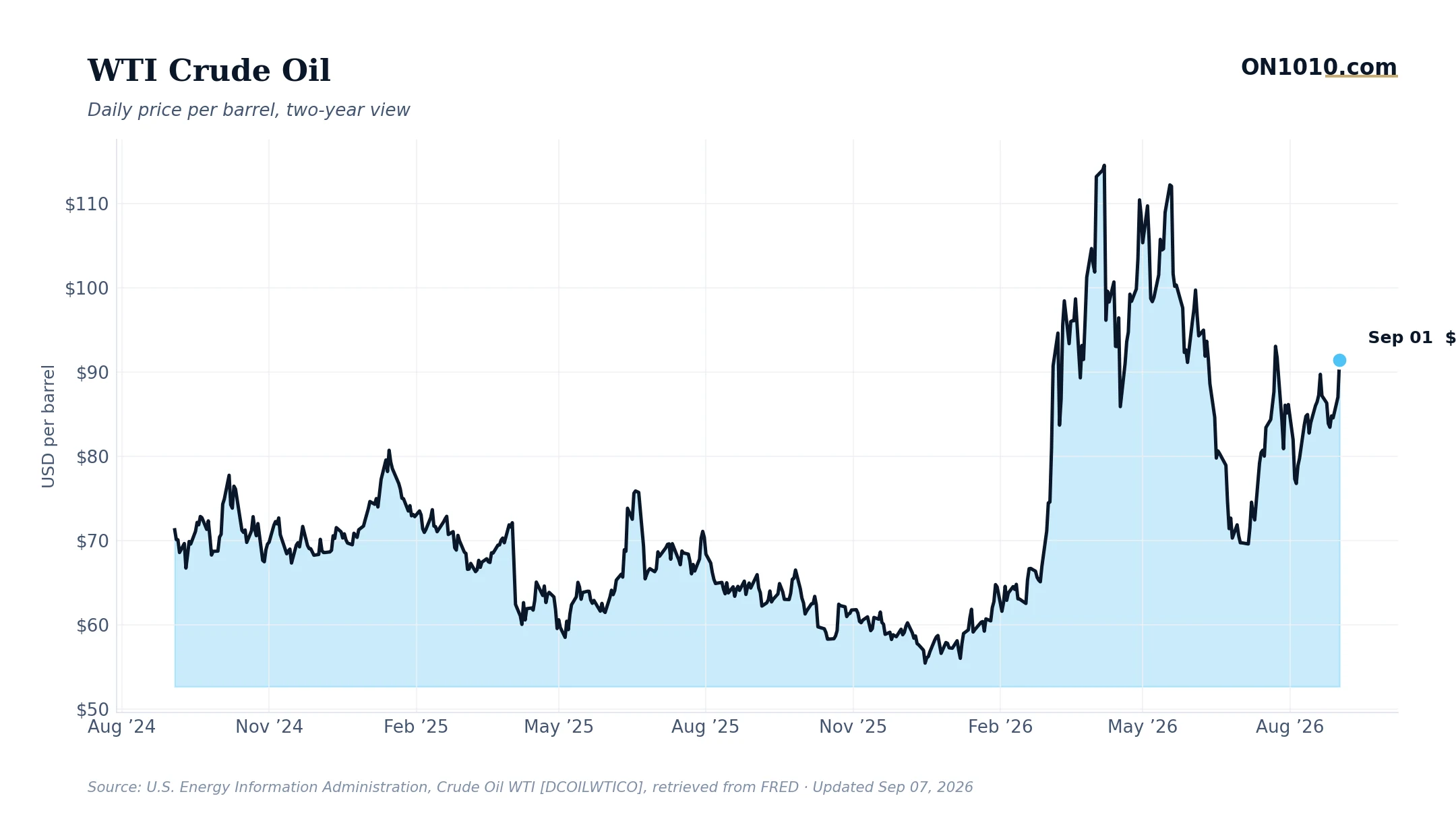
According to CNBC, renewed military exchanges between Iran and the United States pushed oil prices to a six-week high on Monday, with reports that Saudi Aramco facilities were struck in the conflict. The headline writes itself. The more interesting question is what the market is actually pricing in.
The immediate move in oil is a risk premium, not a supply signal. Aramco’s facilities are hardened, production outages tend to be short-lived absent a sustained blockade, and the global market has absorbed similar shocks before. But “tends to be short-lived” is doing a lot of work in that sentence. The real danger isn’t today’s barrel, it’s the scenario where escalation closes the Strait of Hormuz. Roughly 20% of global oil supply moves through that chokepoint. Even a partial disruption doesn’t produce a gentle price adjustment; it produces a spike that moves faster than any central bank can respond.
That’s the tension sitting underneath an already difficult macro backdrop. Core inflation is running hotter than at almost any point in the modern historical record. Long-term interest rates are elevated and rising. The last thing a margin-pressured corporate sector needs is an energy cost shock layered on top. Higher oil feeds directly into transportation, manufacturing, and logistics costs, and companies that can’t pass those costs along will see margins compress. Margins compress, and then, with a lag, hiring and investment follow.
Historically, investors and operators have treated Middle East supply disruptions as binary events: either they resolve quickly and the oil spike fades, or they escalate into something structural that reprices energy for years. The 1973 and 1979 oil shocks are the extreme historical anchors, and past performance offers no guarantee they rhyme today. But they are worth knowing. The question worth sitting with is whether the current conflict is a spike-and-fade or the opening act of something with longer legs.
Bottom Line: An oil price move alone is just a number. The real risk is a sustained supply disruption landing on an economy where inflation is already elevated, rates are already high, and corporate margins have little room to absorb another cost shock.
Read more: CNBC Top News
ON1010 Research is an independent publisher of economic education and is not a registered investment adviser, broker-dealer, or investment company. This content is for educational and informational purposes only and is not investment advice or a recommendation to buy, sell, or hold any security. Published under the publisher exemption recognized by Section 202(a)(11)(D) of the Investment Advisers Act of 1940 (Lowe v. SEC). Always consult a qualified financial professional before making any financial decision.
Free Research
The economy moves fast. We make sure you move faster.
Economic data, policy shifts, and market signals — delivered to your inbox.
Subscribe Free