
Economic Wire: Treasury sanctions operation targets Iran’s auto, rail indus
Washington Just Escalated Its Economic War on Iran. Here’s What That Actually Means.
According to CNBC, the U.S. Treasury Department has expanded “Operation Economic Outcast,” its sweeping sanctions campaign against Iran, to now target the country’s auto and rail industries. The campaign, framed by the Trump administration as Iran’s “economic D-Day” when it launched in August, is the latest escalation in what has become a systematic effort to squeeze every major sector of the Iranian economy.
The mechanics here are worth understanding. Sanctions on auto and rail aren’t just symbolic pressure. They target two of the most capital-intensive industries in any developing economy, sectors that require imported components, foreign financing, and access to international supply chains. Cut those off, and you don’t just slow the industries themselves. You starve the broader manufacturing base that depends on rail logistics and vehicle supply chains. The knock-on effects compound.
The global dimension matters too. Sanctions only work when other countries comply, and compliance is never guaranteed. China, in particular, has historically absorbed Iranian oil and industrial trade when Western sanctions tighten, giving Tehran a partial relief valve. The real question with Operation Economic Outcast is whether secondary sanctions (penalties on companies in third countries that continue doing business with Iran) have enough teeth to close that valve. If they don’t, the economic pressure on Iran stays real but incomplete.
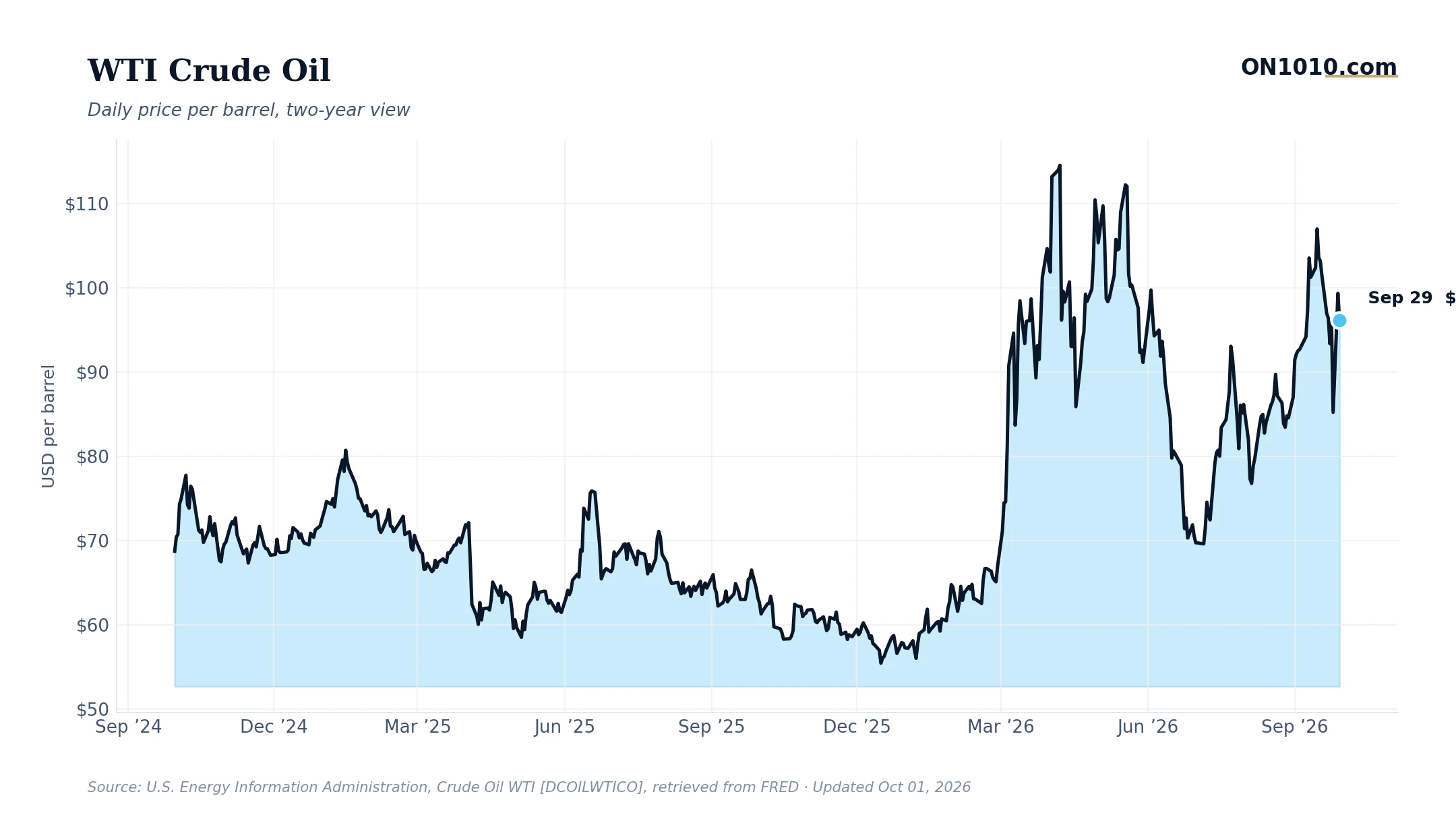
Historically, investors tracking geopolitical sanctions campaigns have watched energy markets most closely, since Iran is a significant oil producer and any disruption to supply routes through the Persian Gulf carries global price implications. The broader question this raises is how sustained economic pressure on a major energy exporter plays out against an already elevated inflation backdrop and restrictive monetary policy here at home.
Bottom Line: Sanctions are a policy tool, and like all policy tools, their real power lies in the incentives they create for third-party actors. The question is whether the economic architecture of Operation Economic Outcast is tight enough to change behavior in Beijing and Moscow, or whether Iran finds the seams.
Read more: CNBC Top News
ON1010 Research is an independent publisher of economic education and is not a registered investment adviser, broker-dealer, or investment company. This content is for educational and informational purposes only and is not investment advice or a recommendation to buy, sell, or hold any security. Published under the publisher exemption recognized by Section 202(a)(11)(D) of the Investment Advisers Act of 1940 (Lowe v. SEC). Always consult a qualified financial professional before making any financial decision.
Free Research
The economy moves fast. We make sure you move faster.
Economic data, policy shifts, and market signals — delivered to your inbox.
Subscribe Free