
Economic Wire: U.S. crude oil tops $100 per barrel as market braces for pro
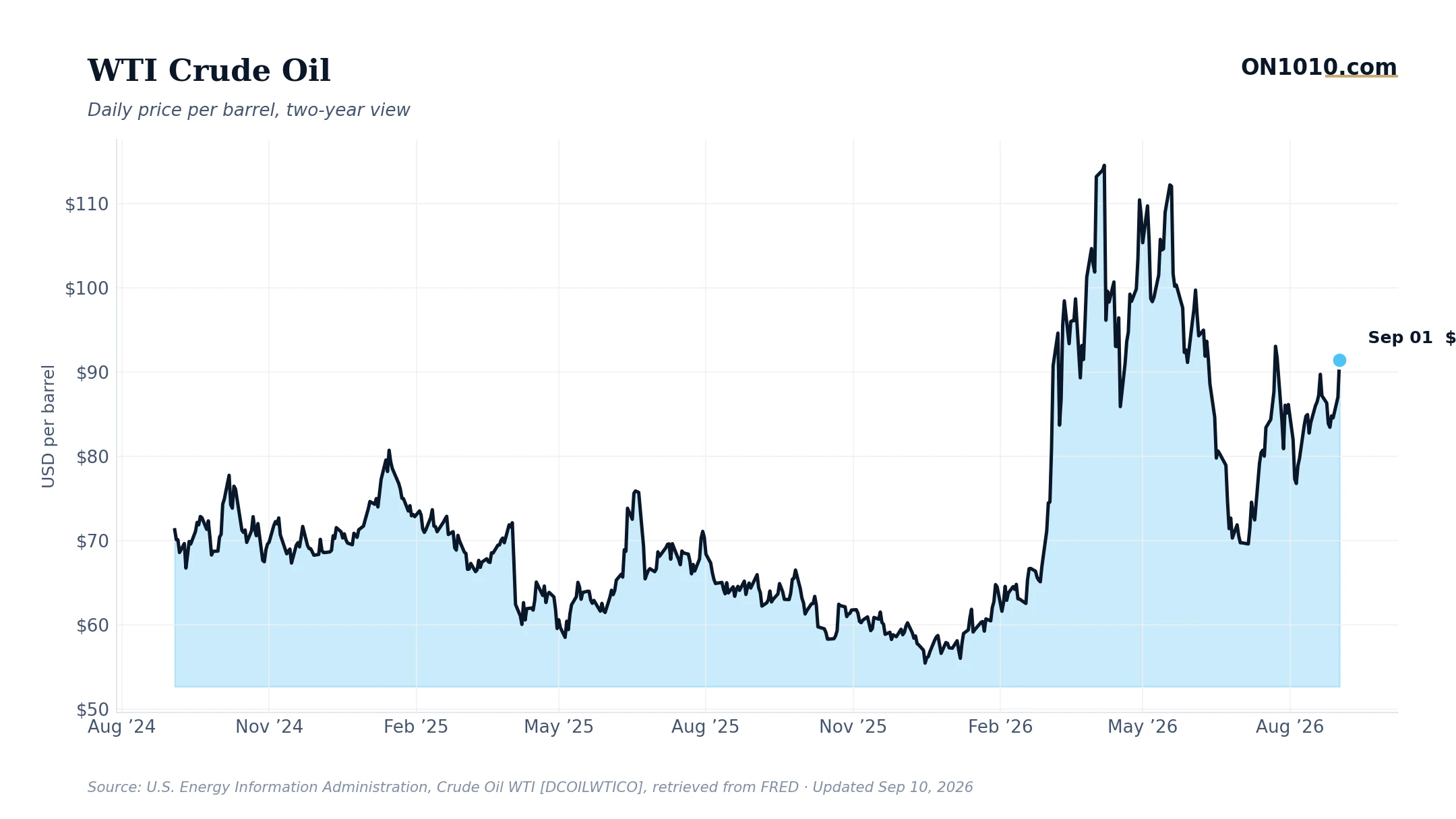
When $100 Oil Meets an Already Inflation-Stressed Economy
According to CNBC, U.S. crude oil has crossed $100 per barrel as markets price in the possibility that the U.S.-Iran conflict could drag on and further disrupt Middle East supply. The headline number is striking. The more important question is what it collides with.
The U.S. economy is walking into this energy shock already carrying elevated inflation, historically high long-term interest rates, and some of the weakest consumer sentiment on record. Oil at $100 is a tax on everyone who drives, heats a home, or buys anything that gets shipped. When that tax arrives on top of existing price pressure, the Federal Reserve faces a genuine dilemma: raise rates to fight inflation and risk cracking demand, or hold and risk letting an energy-driven price surge get embedded into broader expectations. Neither path is clean.
The corporate margin picture is where this gets particularly uncomfortable. Energy is a cost input for nearly every business. When oil spikes, margins compress first in transportation, manufacturing, and chemicals, then ripple outward. Businesses facing tighter margins typically pull back on hiring and investment. That sequence, margins down, then capex down, then hiring down, is worth tracking closely in the months ahead. The Strait of Hormuz risk isn’t theoretical: roughly 20% of the world’s oil passes through that chokepoint, and even partial disruption would amplify what’s already an elevated price.
Historically, investors have treated sustained oil spikes above $100 as a moment to re-examine the assumptions underneath their economic outlook, particularly in rate-sensitive sectors and consumer-facing businesses where margin cushions are thin. The 1973 and 1979 oil shocks, and to a lesser degree the 2011 Libya-driven spike, all showed that energy price surges don’t need to be permanent to change behavior. Even temporary spikes shift business investment timing and consumer spending patterns. Whether this one proves temporary or entrenched depends heavily on how the military situation resolves, and on that question, the market’s current VIX reading suggests investors are pricing in less fear than the headlines might imply.
Bottom Line: A $100 oil print landing on top of already-hot inflation and tight long-term rates is the kind of combination that forces both the Fed and corporate finance teams to revisit their plans. The direction of margins over the next two quarters will tell you more than the oil price itself.
Read more: CNBC Top News
ON1010 Research is an independent publisher of economic education and is not a registered investment adviser, broker-dealer, or investment company. This content is for educational and informational purposes only and is not investment advice or a recommendation to buy, sell, or hold any security. Published under the publisher exemption recognized by Section 202(a)(11)(D) of the Investment Advisers Act of 1940 (Lowe v. SEC). Always consult a qualified financial professional before making any financial decision.
Free Research
The economy moves fast. We make sure you move faster.
Economic data, policy shifts, and market signals — delivered to your inbox.
Subscribe Free