
Inflation Ticked Up in September. The Problem Is Where It’s Coming From.
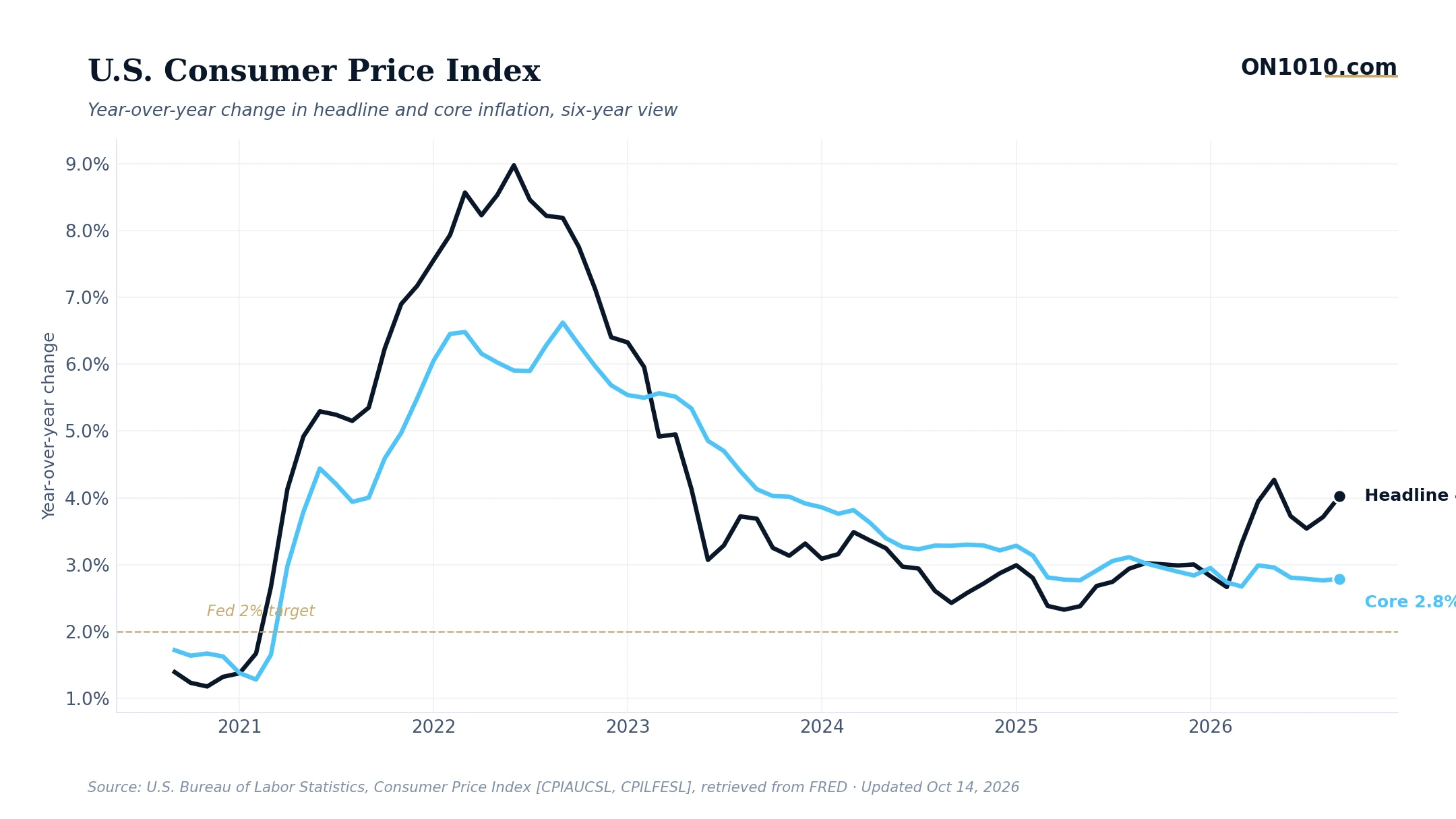
Consumer prices rose 0.65% in September, pushing the year-over-year rate to 3.46%. That’s not a catastrophic number, but it’s also not the “inflation is beaten” story the Fed has been hoping to tell. After three months of relative stability between April and June, prices have now risen for three consecutive months at an accelerating pace.
The context matters here. The Fed’s policy rate sits well above its historical norm, meaning the medicine has been administered. And yet inflation is running at nearly twice the Fed’s 2% target, with the monthly pace picking up. When restrictive monetary policy and sticky inflation coexist, the question stops being “when do rates come down?” and starts being “why isn’t the tightening working faster?”
One answer worth considering: productivity. If businesses are producing more output per hour worked, they can absorb cost pressures without raising prices. If they can’t, prices stay elevated even when borrowing is expensive. The 3.46% year-over-year reading suggests the disinflationary momentum that defined late 2024 and early 2025 has stalled.
Historically, periods when inflation held above 3% alongside restrictive monetary policy have created real pressure on business margins, because companies face higher input costs and borrowing costs simultaneously while demand softens. In past cycles, this combination compressed profit margins before it showed up in the unemployment data. Business operators watching financing costs and consumer spending trends at the same time are watching the right two dials. A qualified financial professional can help translate that macro backdrop into decisions specific to any individual situation.
Bottom Line: Inflation at 3.46% with monetary policy already tight is the kind of combination that raises the cost of being wrong, whether you’re a central banker, a CFO, or a consumer. The September acceleration is one month, not a trend confirmed, but it’s a month that moves in the wrong direction.
Source: Federal Reserve Economic Data (FRED)
ON1010 Research is an independent publisher of economic education and is not a registered investment adviser, broker-dealer, or investment company. This content is for educational and informational purposes only and is not investment advice or a recommendation to buy, sell, or hold any security. Published under the publisher exemption recognized by Section 202(a)(11)(D) of the Investment Advisers Act of 1940 (Lowe v. SEC). Always consult a qualified financial professional before making any financial decision.
Free Research
The economy moves fast. We make sure you move faster.
Economic data, policy shifts, and market signals — delivered to your inbox.
Subscribe Free