
Real Incomes Up, Poverty Down. The Fed May Be About to Test That Progress.
According to CNBC, the Census Bureau reported that American household incomes rose and poverty fell in 2025. The timing is what makes this interesting: the data lands just as the Federal Reserve is weighing interest rate increases that could slow the very growth producing these gains.
Here is the tension. Rising real incomes mean households have more purchasing power, which keeps consumer spending healthy, which supports corporate revenue and margins. Falling poverty typically reflects the same labor market strength that has kept the unemployment rate low. From a demand perspective, this is unambiguously good news.
But zoom out and the backdrop gets complicated. Core inflation is running hotter than it has in roughly nine of every ten months on record. That is exactly the environment that pushes a central bank toward tightening. Higher rates make borrowing more expensive for businesses, which compresses capital investment budgets, which eventually slows hiring. The income gains households are celebrating today were built, in part, by a tight labor market. Rate increases work by cooling that market.
There is also a distributional angle that often gets missed. Lower-income households spend a much higher share of their income than upper-income households do. Poverty declines, when real, translate into spending gains more quickly than median income increases do. That keeps consumer demand alive but also keeps the Fed’s inflation problem alive. The two effects are working against each other.
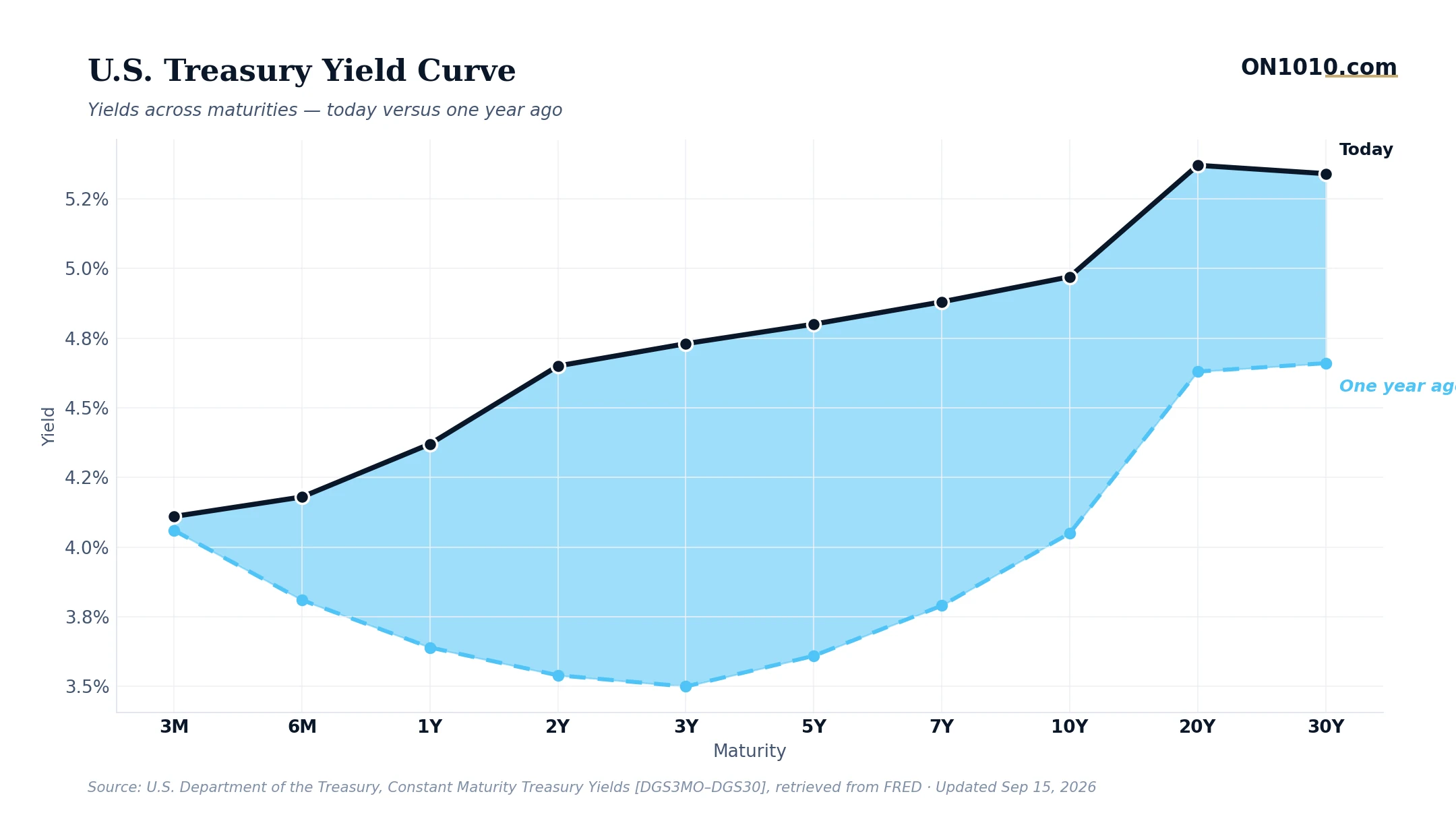
Historically, investors and business planners have watched income and poverty data as a lagging read on cycle strength, while treating Fed policy as the leading edge of what comes next. Long-term interest rates are already sitting in the upper range of their historical norms, and that kind of environment has historically coincided with a meaningful uptick in the probability of a growth slowdown within the following year.
Bottom Line: The Census data confirms the economy delivered real gains in 2025. Whether the Fed’s next move preserves them or unwinds them is the open question.
Read more: CNBC Top News
ON1010 Research is an independent publisher of economic education and is not a registered investment adviser, broker-dealer, or investment company. This content is for educational and informational purposes only and is not investment advice or a recommendation to buy, sell, or hold any security. Published under the publisher exemption recognized by Section 202(a)(11)(D) of the Investment Advisers Act of 1940 (Lowe v. SEC). Always consult a qualified financial professional before making any financial decision.
Free Research
The economy moves fast. We make sure you move faster.
Economic data, policy shifts, and market signals — delivered to your inbox.
Subscribe Free