
Small Caps Are Outperforming. That’s Worth Watching Carefully.
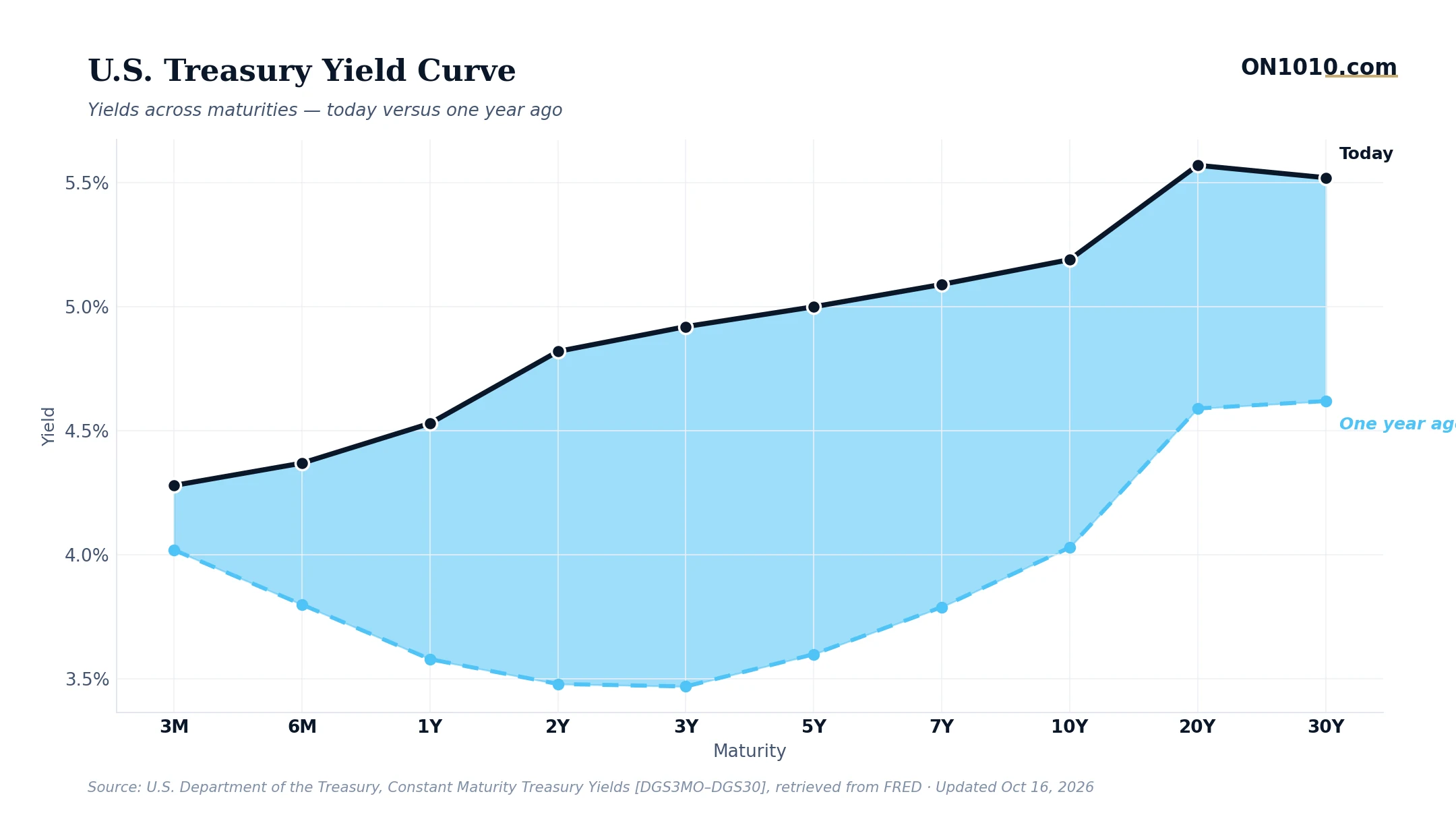
The Russell 2000 gained 1.38% Thursday, outpacing the S&P 500’s 0.33% move by a wide margin. Small companies tend to be more sensitive to domestic borrowing costs than their large-cap peers, so when they lead the rally, it usually means something about rate expectations is shifting under the hood.
Here’s the tension: the bond market is not cooperating with that story. The 10-year Treasury yield sits at 5.19%, and the spread between the 10-year and the 2-year has narrowed to 33 basis points. Credit conditions are widening, not easing. Two of four defensive sectors, consumer staples and health care, are beating the broader market this week. The market is sending two signals at once, and they point in different directions.
Oil pulled back to $95.74, down 2.28% on the session. The VIX dropped to 16.07, suggesting traders are not particularly alarmed right now. But the gauge on credit conditions is rising, and small caps borrow at floating rates more often than large caps do. A 5.19% long-term rate is real friction for companies that refinance frequently.
On deck today: No major economic releases are scheduled for Friday, October 16, 2026, which puts the focus squarely on how markets close out the week after a busy stretch of PPI, retail sales, and jobless claims data.
Why it matters: When participation broadens to small caps but credit spreads are simultaneously widening, the cycle is at a fork. Historically, monetary policy this restrictive has preceded softening conditions within a year about 18% of the time. That base rate is worth knowing, even when the equity tape looks calm.
The deeper read on what rising long-term rates mean for the next phase of the cycle lands Sunday in The Long View. It is free, and this week it is exactly the right moment to be reading it.
ON1010 Research is an independent publisher of economic education and is not a registered investment adviser, broker-dealer, or investment company. This content is for educational and informational purposes only and is not investment advice or a recommendation to buy, sell, or hold any security. Published under the publisher exemption recognized by Section 202(a)(11)(D) of the Investment Advisers Act of 1940 (Lowe v. SEC). Always consult a qualified financial professional before making any financial decision.
Free Research
The economy moves fast. We make sure you move faster.
Economic data, policy shifts, and market signals — delivered to your inbox.
Subscribe Free