
The 10-Year at 5.31% Is the Number Every CFO and Borrower Should Know Right Now
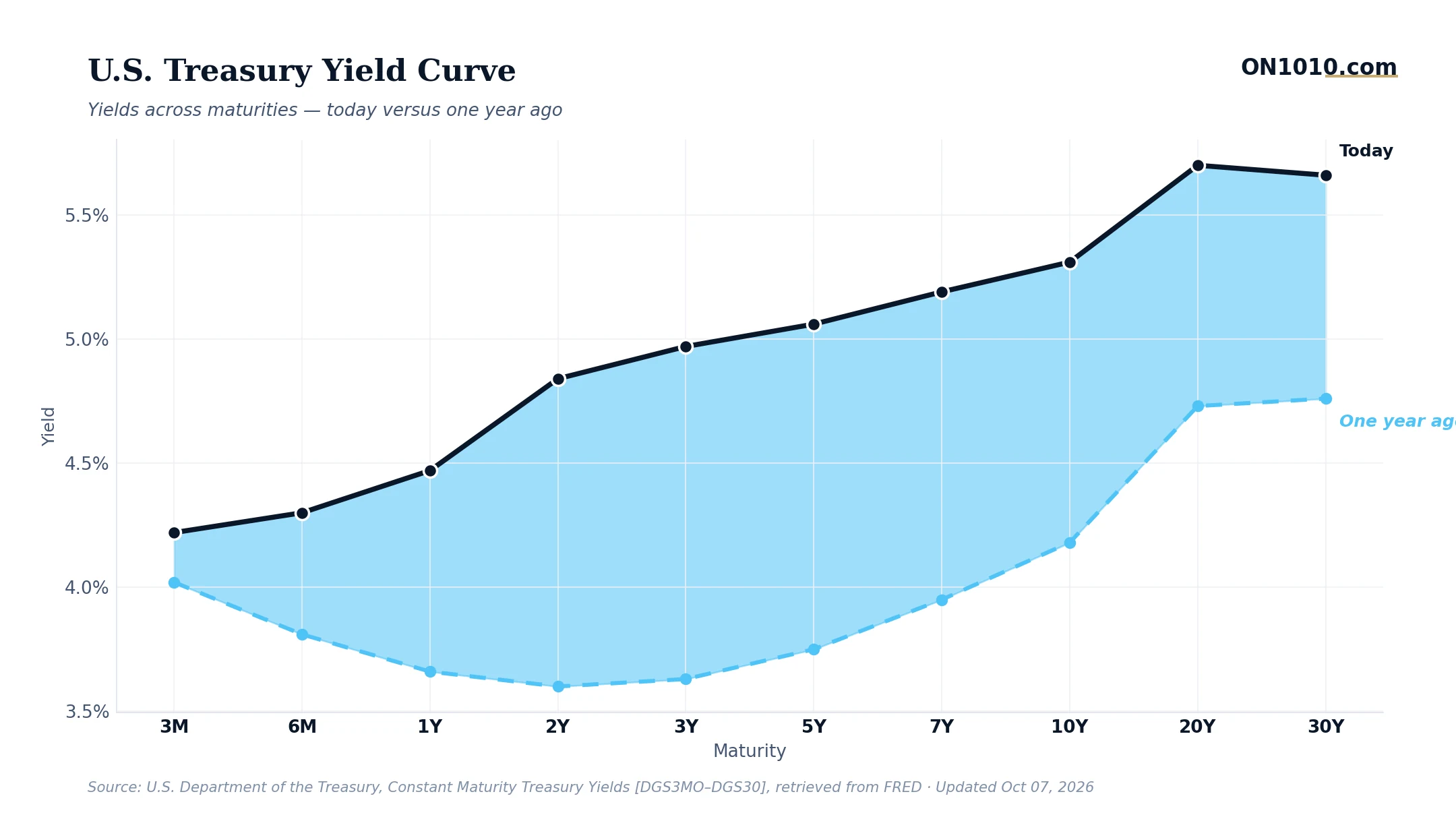
According to CNBC, Treasury yields climbed Wednesday as oil prices moved higher, with traders positioning ahead of a key U.S. bond auction and the release of FOMC minutes. The headline sounds routine. The context is anything but.
The 10-year Treasury yield sits at 5.31%, a level that puts long-term rates in the upper quarter of their entire modern history. That is the price of money for mortgages, corporate bonds, leveraged buyouts, and any capital project with a multi-year payback. When the cost of borrowing runs this high relative to history, the math on investment decisions changes. Projects that penciled out at 4% yields stop making sense at 5.31%. That is a direct drag on the business investment that drives real economic growth.
Here is the complication. Inflation is still running hot relative to history and monetary policy is already restrictive. The real policy rate (the Fed funds rate minus inflation) is elevated, which is precisely the environment that has historically preceded margin compression as financing costs eat into corporate profitability. Add an oil price move pushing energy costs higher, and you have two simultaneous pressures on business margins: more expensive debt and higher input costs.
The bond auction matters because it will reveal whether demand for U.S. debt at these yields is robust or reluctant. Weak demand forces yields higher to attract buyers, which tightens financial conditions further. Historically, investors have treated weak Treasury auctions at cycle-high yields as a signal to watch spread widening in corporate credit. The FOMC minutes arriving the same day add another layer: any language suggesting the Fed sees fewer reasons to cut rates could push yields higher still.
The economic gauges add texture here. Growth is near its historical midpoint. Consumer sentiment is near historical lows. Market participation is deteriorating even as equities remain technically above trend. That combination, historically, has not signaled imminent recession, but it has signaled that the economy is running on thinning margins for error.
Bottom Line: A 10-year yield in the upper quarter of its historical range, rising oil, a major bond auction, and FOMC minutes landing the same day is a crowded intersection. The question is whether demand for U.S. debt confirms that 5.31% is an attractive rate or whether the market needs to go higher to clear supply.
Read more: CNBC Top News
ON1010 Research is an independent publisher of economic education and is not a registered investment adviser, broker-dealer, or investment company. This content is for educational and informational purposes only and is not investment advice or a recommendation to buy, sell, or hold any security. Published under the publisher exemption recognized by Section 202(a)(11)(D) of the Investment Advisers Act of 1940 (Lowe v. SEC). Always consult a qualified financial professional before making any financial decision.
Free Research
The economy moves fast. We make sure you move faster.
Economic data, policy shifts, and market signals — delivered to your inbox.
Subscribe Free