
The 10-Year Just Crossed 5.18%. The Bond Market Is Sending a Message.
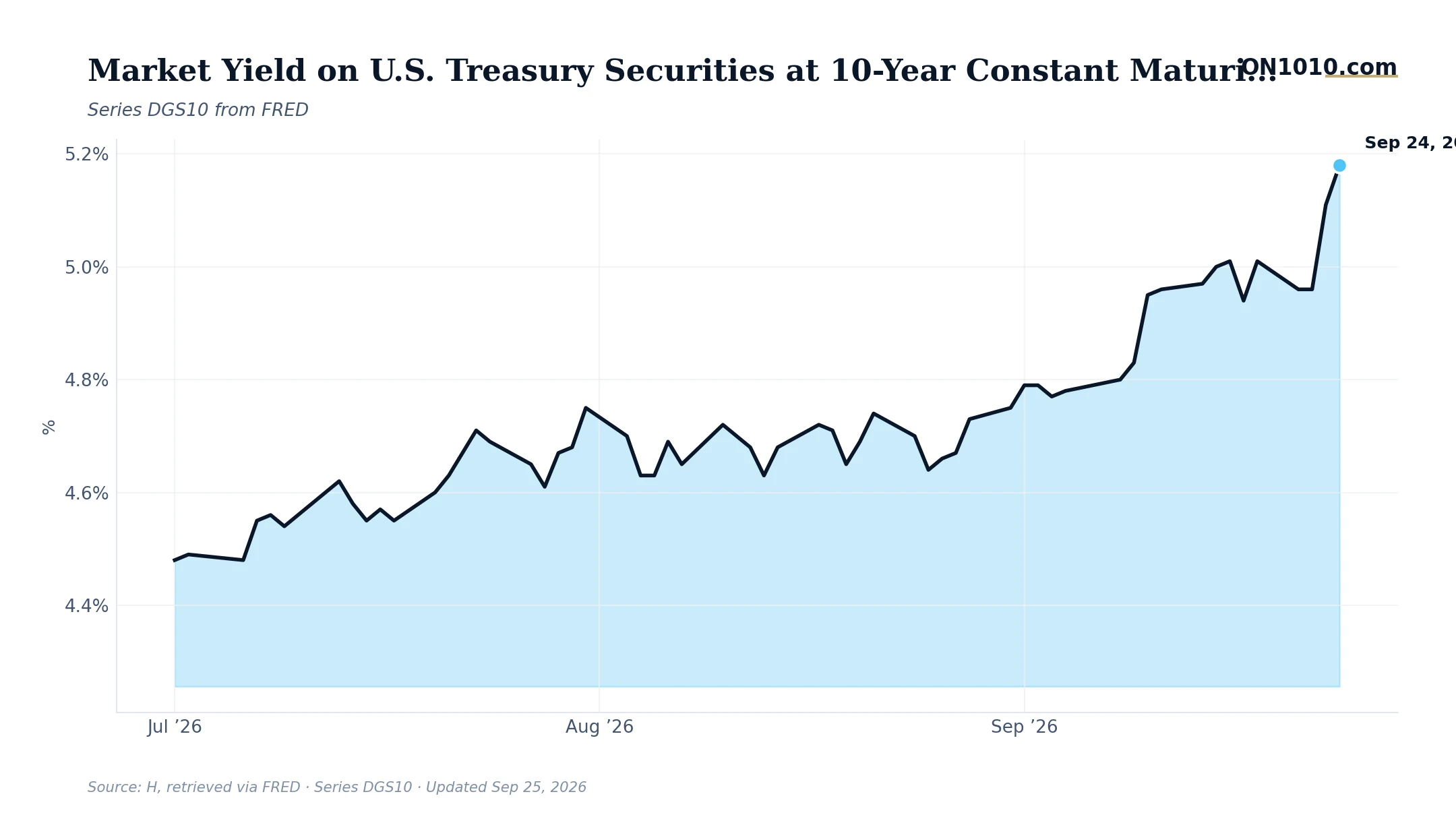
The 10-year Treasury yield jumped to 5.18% on Thursday, up from 4.94% just one week ago. That’s a 24-basis-point move in five trading sessions, and it’s the kind of acceleration that tends to get attention fast.
The Bigger Picture
Context matters here. Long-term rates are sitting in the upper quarter of their historical range, and the gauge that tracks them just shifted from steady to rising. The last time the 10-year sustained levels above 5% for any meaningful stretch was 2023, and before that you have to go back to 2006 and 2007. Historically, when long-term rates have run at these levels, a new recession began within the following 12 months about 19% of the time. One in five is worth knowing, even if it says nothing certain about what comes next.
The tension in the data is this: credit spreads remain unusually tight, meaning corporate bond investors are still pricing in relatively calm conditions despite the rate spike. Equities are calm too, with the VIX below its historical average and technology leading sector returns. The bond market and the credit market are telling different stories, and that disconnect is worth watching.
Why It Matters
Higher long-term rates raise the cost of capital for everyone, from a homebuilder financing a subdivision to a CFO evaluating whether to expand a factory. In past cycles, a sustained move above 5% on the 10-year compressed profit margins in rate-sensitive sectors first, then spread to broader business investment decisions. Historically, investors have watched whether earnings growth could outrun the rising discount rate. When it couldn’t, valuations reset. The question being priced right now is whether this rate move reflects a stronger economy (good) or sticky inflation forcing rates higher against a slowing growth backdrop (complicated).
Bottom Line: Rates rising this fast, this late in a cycle, with inflation still running hot historically, is the kind of setup that stress-tests the optimistic narrative. The real question is whether corporate earnings can carry the weight.
Source: Federal Reserve Economic Data (FRED)
ON1010 Research is an independent publisher of economic education and is not a registered investment adviser, broker-dealer, or investment company. This content is for educational and informational purposes only and is not investment advice or a recommendation to buy, sell, or hold any security. Published under the publisher exemption recognized by Section 202(a)(11)(D) of the Investment Advisers Act of 1940 (Lowe v. SEC). Always consult a qualified financial professional before making any financial decision.
Free Research
The economy moves fast. We make sure you move faster.
Economic data, policy shifts, and market signals — delivered to your inbox.
Subscribe Free