
The 10-Year Just Crossed 5.2%. Here’s Why That Line Matters.
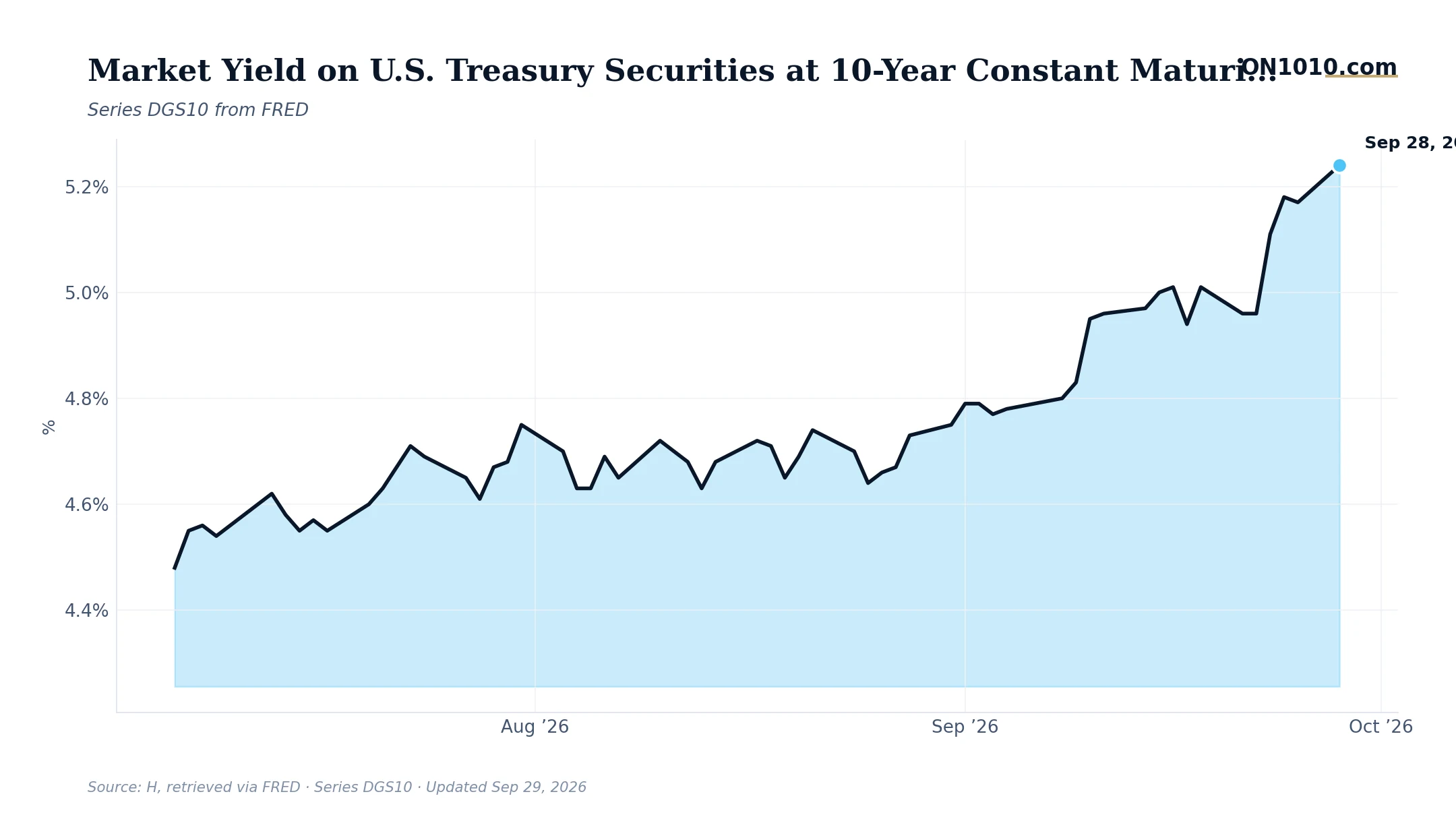
The 10-year Treasury yield hit 5.24% on Monday, up from 4.96% just six trading days ago. That 28-basis-point jump in less than two weeks is not normal background noise. It is a market saying something worth listening to.
The move arrives in a specific context. Core inflation is running near the top of its historical range. The Fed’s policy rate sits near its historical midpoint, meaning real rates (the policy rate minus inflation) are genuinely restrictive. When long-term rates rise on top of that, borrowing costs tighten from both ends of the yield curve. Businesses refinancing debt, homebuilders calculating project returns, CFOs weighing capital expenditures, they all run those numbers against the 10-year, and 5.24% changes the math in ways that 4.5% did not.
Historically, when long-term rates reached this level against a backdrop of still-elevated inflation, the question investors tracked closely was credit spreading: whether the additional cost of borrowing began pushing corporate spreads wider, which would signal margin pressure moving downstream. Credit conditions just shifted from accommodative to neutral in our gauges, which puts that question squarely on the table. In past cycles, the lag between rising rate environments and their full impact on business investment has run six to eighteen months, which means decisions made right now will play out in a very different cost environment than the one businesses planned around two years ago.
Consumer sentiment is already historically weak, and now the rate environment is tightening further. That is a combination worth watching across any business with a long investment horizon or significant debt rollover needs. Past performance does not predict future results, and anyone weighing capital decisions against this backdrop should work through the specifics with a qualified financial professional.
Bottom Line: At 5.24%, the 10-year is near levels last seen before the 2008 financial crisis. The real question is whether margins can hold as refinancing costs catch up to where rates already are.
Source: Federal Reserve Economic Data (FRED)
ON1010 Research is an independent publisher of economic education and is not a registered investment adviser, broker-dealer, or investment company. This content is for educational and informational purposes only and is not investment advice or a recommendation to buy, sell, or hold any security. Published under the publisher exemption recognized by Section 202(a)(11)(D) of the Investment Advisers Act of 1940 (Lowe v. SEC). Always consult a qualified financial professional before making any financial decision.
Free Research
The economy moves fast. We make sure you move faster.
Economic data, policy shifts, and market signals — delivered to your inbox.
Subscribe Free