
The 10-Year Yield Hits 4.97%: The Economy’s Borrowing Benchmark Is Knocking on 5%
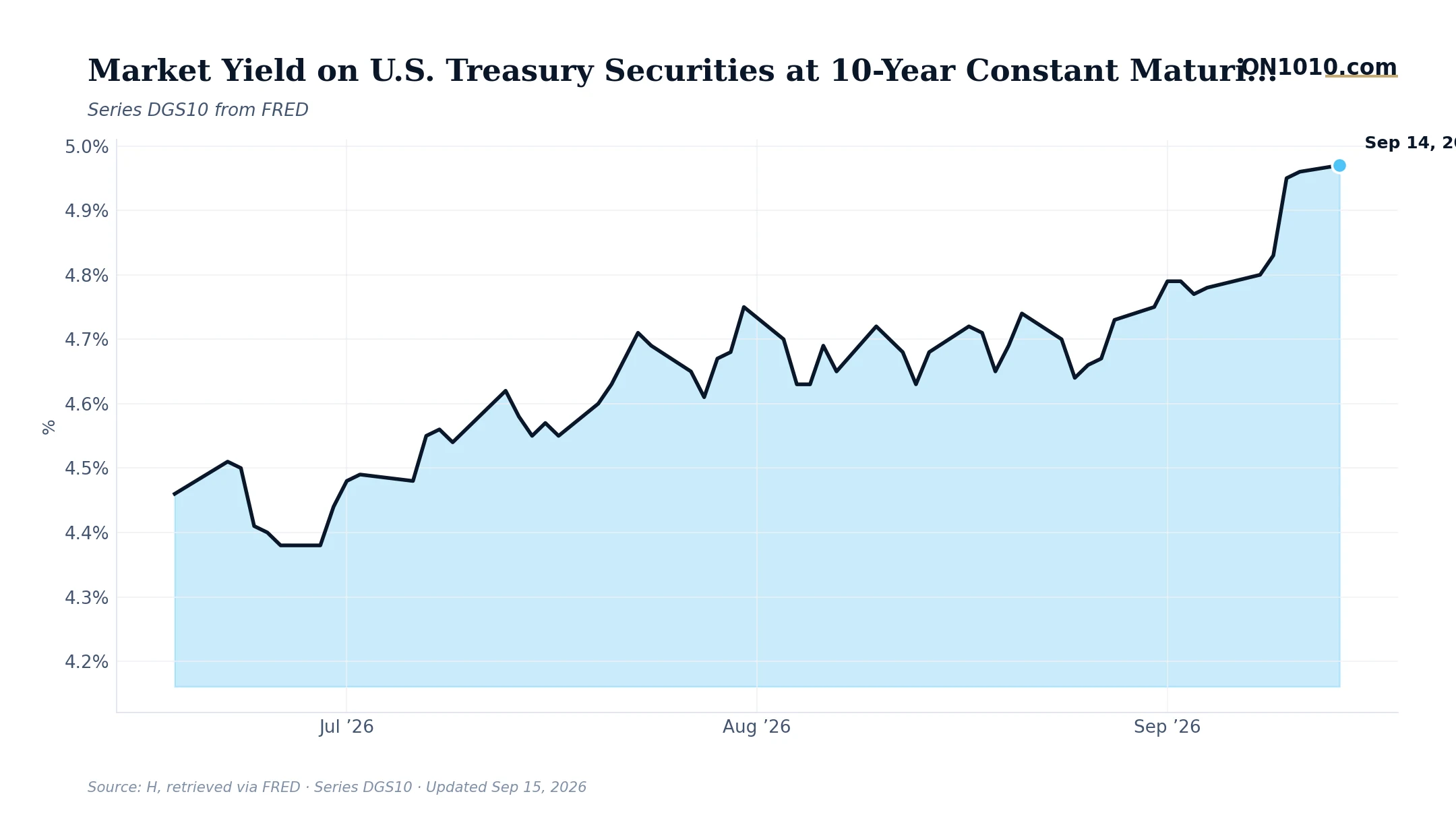
The 10-year Treasury yield closed at 4.97% on September 14, up from 4.78% just two weeks earlier. A 19-basis-point move in ten trading days is not noise. The benchmark rate that prices everything from 30-year mortgages to corporate bonds is now a single tick away from the psychologically significant 5% mark.
What makes this notable is the backdrop. Core inflation sits well above its historical norm. Growth is near its long-run midpoint but drifting lower. The Fed’s policy rate is roughly in line with historical norms. In that environment, the bond market pushing long rates higher is a signal worth reading carefully: the market may be demanding more compensation for holding long-duration debt, which is exactly what happens when investors question how quickly inflation returns to target.
This is the balance sheet story in plain view. When long rates rise, the cost of refinancing debt goes up for everyone: homebuyers, small businesses, leveraged corporations, and the federal government. Higher rates compress profit margins by raising interest expense, which is one reason the relationship between the 10-year yield and equity valuations runs so tight. In past cycles, periods where long rates sat in the upper quarter of their historical range carried roughly a 19% frequency of a recession beginning within the following year. That is not a forecast; it is the base rate worth knowing.
For business decision-makers, the practical question is duration. Historically, when the 10-year yield has risen sharply in a short window, operators and capital allocators have focused on the cost and timeline of any upcoming debt they need to issue or refinance. The rate environment now is meaningfully different from the 2010s, and planning assumptions built in that era may need revisiting alongside a qualified financial professional.
Bottom Line: The 10-year yield is one basis point from 5%, credit spreads are historically tight, and long rates are rising despite slowing growth. The bond market and the credit market are telling two different stories right now. Which one is right matters enormously for what comes next.
Source: Federal Reserve Economic Data (FRED)
ON1010 Research is an independent publisher of economic education and is not a registered investment adviser, broker-dealer, or investment company. This content is for educational and informational purposes only and is not investment advice or a recommendation to buy, sell, or hold any security. Published under the publisher exemption recognized by Section 202(a)(11)(D) of the Investment Advisers Act of 1940 (Lowe v. SEC). Always consult a qualified financial professional before making any financial decision.
Free Research
The economy moves fast. We make sure you move faster.
Economic data, policy shifts, and market signals — delivered to your inbox.
Subscribe Free