
THE 10-YEAR YIELD IS STUCK NEAR 5.2%
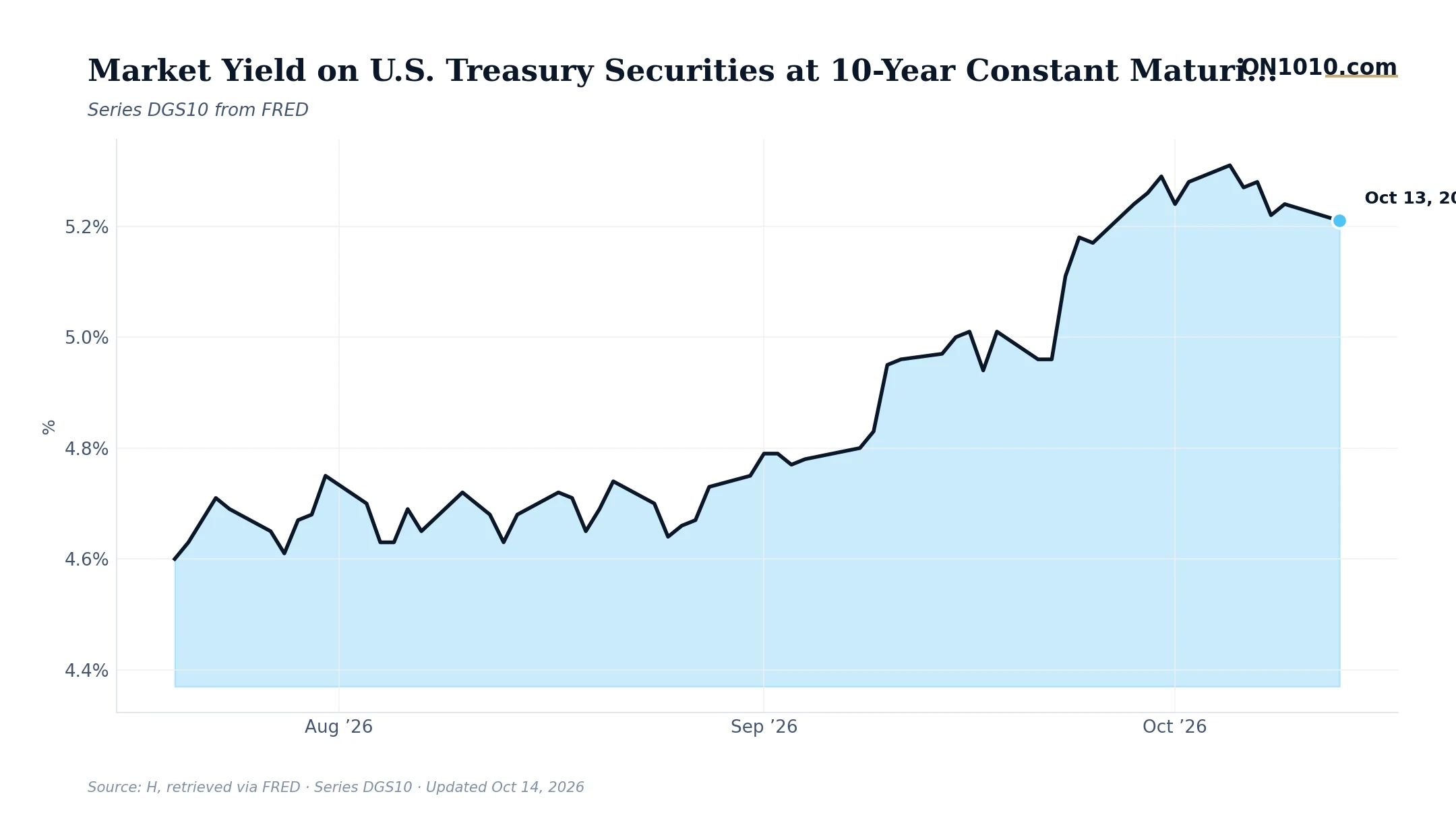
The 10-year Treasury yield slipped 3 basis points to 5.21% on Tuesday, a small move that barely registers on its own. But zoom out and the real story becomes clear: yields have barely budged for two weeks, hovering in a tight band between 5.21% and 5.31% since early October.
The market is not deciding. It is waiting.
That kind of stall at an elevated level is worth paying attention to. Long-term rates are sitting in the upper range of their historical history, a zone that has historically preceded slower economic activity as the cost of capital works its way through corporate balance sheets, mortgage markets, and business investment decisions. This is the lag that makes monetary policy so difficult to calibrate: rates bite, but they bite slowly. Growth looks neutral against historical norms right now, inflation remains hot, and the real policy rate (the Fed’s rate minus inflation) is running restrictive. That combination puts a meaningful weight on borrowing-dependent businesses.
Historically, when long-term rates have held at elevated levels for extended periods, the pressure tends to show up first in rate-sensitive sectors like real estate and capital-intensive industrials, and then more broadly in corporate margins as refinancing costs climb on existing debt. In past cycles, investors and capital allocators have watched whether high long rates trigger credit stress or whether strong nominal growth absorbs the cost. Right now, credit conditions sit near their historical midpoint, which suggests the stress is not yet systemic. The question is whether that holds.
Bottom Line: At 5.21%, the 10-year yield is not a crisis. It is a sustained headwind. The clock that matters is how long businesses and consumers can absorb borrowing costs at this level before it shows up in spending, hiring, and margins.
Source: Federal Reserve Economic Data (FRED)
ON1010 Research is an independent publisher of economic education and is not a registered investment adviser, broker-dealer, or investment company. This content is for educational and informational purposes only and is not investment advice or a recommendation to buy, sell, or hold any security. Published under the publisher exemption recognized by Section 202(a)(11)(D) of the Investment Advisers Act of 1940 (Lowe v. SEC). Always consult a qualified financial professional before making any financial decision.
Free Research
The economy moves fast. We make sure you move faster.
Economic data, policy shifts, and market signals — delivered to your inbox.
Subscribe Free