
The 10-Year Yield Just Crossed 4.95%. The Bond Market Is Sending a Message.
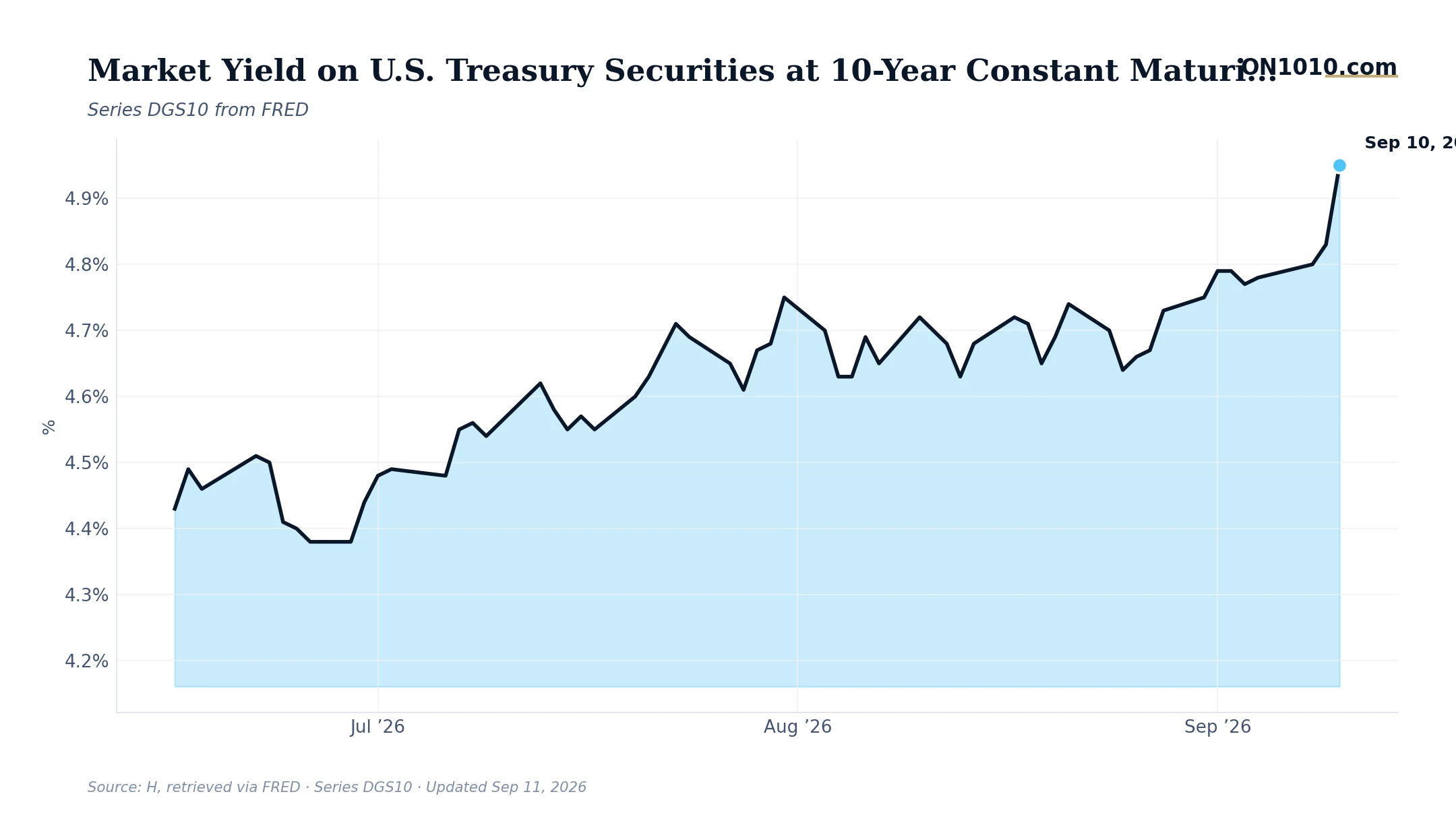
The 10-year Treasury yield jumped from 4.83% to 4.95% in a single session on September 10, a 12-basis-point move that pushed it to the highest point in this recent run. Over just eight trading days, the yield has climbed 18 basis points, rising in nearly every session. Bond prices fall when yields rise, and this market is selling off in a straight line.
The bigger picture here is a collision of signals. Core inflation is sitting in the upper tier of its historical range, running hotter than roughly nine out of every ten months on record. The Fed’s policy rate is near its historical midpoint. That combination means real rates (the policy rate minus inflation) are not nearly as restrictive as the nominal numbers suggest. When the bond market starts pushing long-term yields higher in that environment, one interpretation is that investors are demanding more compensation for the risk of holding long-duration debt. Another is that they are losing confidence the Fed will get inflation durably lower.
Historically, when long-term rates have been in their upper range, a new recession began within the following 12 months about 19% of the time. That is roughly one in five. Worth knowing, and worth keeping in proportion: four out of five of those setups resolved without a downturn. But the direction matters as much as the level. Credit spreads remain tight, which tells you corporate bond investors are not yet pricing in serious stress. When yields rise and spreads widen simultaneously, that is when the pressure on business borrowing costs becomes acute. Operators and capital allocators watching refinancing timelines will want to track that spread carefully.
Bottom Line: The 10-year approaching 5% while inflation stays hot is the economy’s version of a slow leak: nothing breaks all at once, but every month that rates stay elevated tightens the screws on long-duration assets, corporate borrowing costs, and consumer credit. The question is whether the bond market is repricing for “higher for longer” or starting to price in something more unsettling.
Source: Federal Reserve Economic Data (FRED)
ON1010 Research is an independent publisher of economic education and is not a registered investment adviser, broker-dealer, or investment company. This content is for educational and informational purposes only and is not investment advice or a recommendation to buy, sell, or hold any security. Published under the publisher exemption recognized by Section 202(a)(11)(D) of the Investment Advisers Act of 1940 (Lowe v. SEC). Always consult a qualified financial professional before making any financial decision.
Free Research
The economy moves fast. We make sure you move faster.
Economic data, policy shifts, and market signals — delivered to your inbox.
Subscribe Free