
The 10-Year Yield Just Crossed 5%. Here’s Why That Number Has Weight.
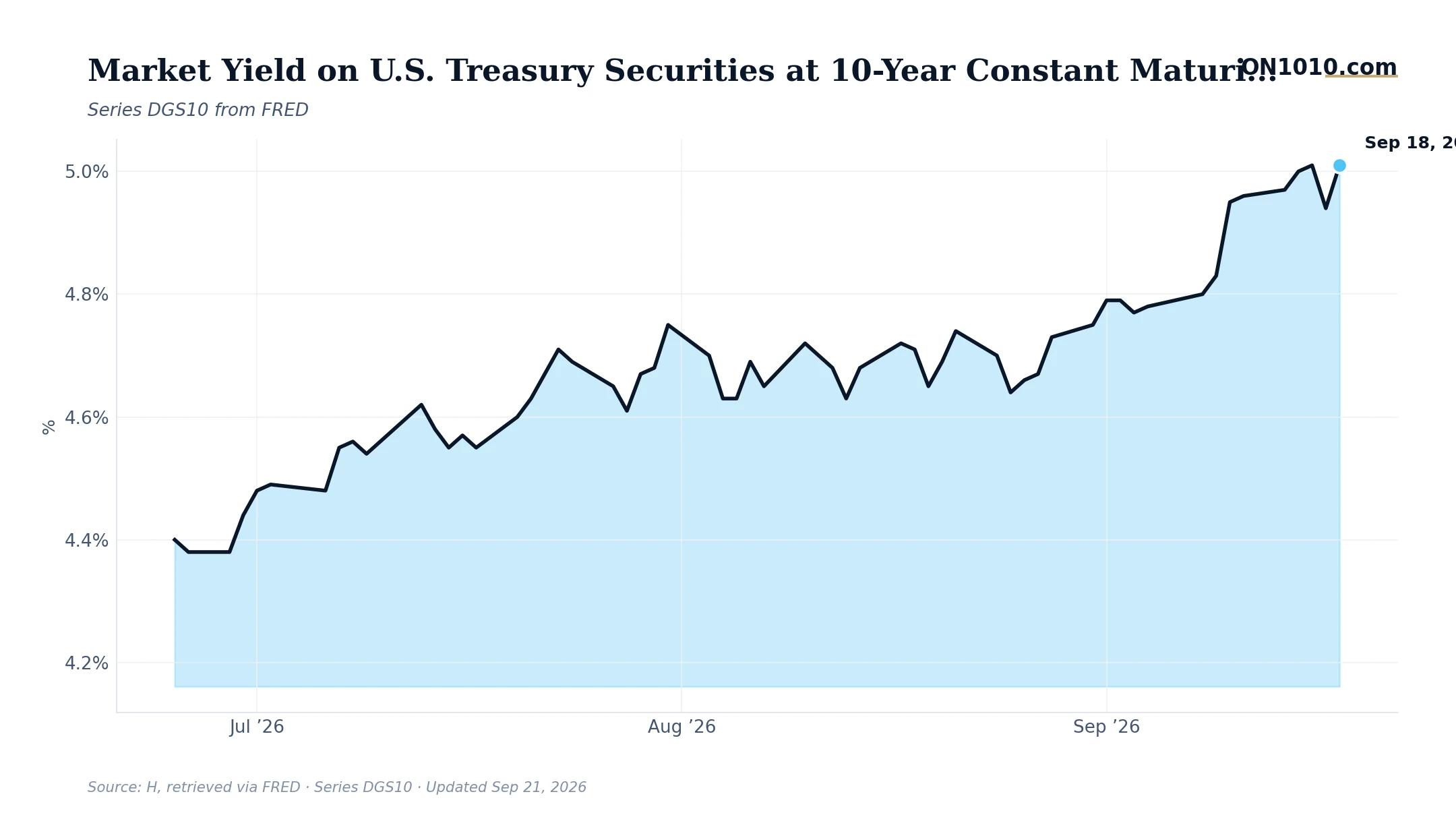
The 10-year Treasury yield closed at 5.01% on September 18, ticking back above the 5% threshold after briefly touching it earlier in the week. That half-percentage-point mark is less a technical line and more a psychological one. Every major asset class gets repriced when long-term borrowing costs reach this level.
The backdrop makes this reading harder to dismiss. Core inflation remains historically hot, monetary policy sits near its historical midpoint, and long-term rates are already in the upper quarter of their historical range. That combination means the Fed has limited room to cut without reigniting price pressure, and the bond market appears to be pricing that constraint in. Yields have held in a tight band between 4.94% and 5.01% for the past week, which looks less like drift and more like the market finding an uncomfortable equilibrium.
The tension in the dashboard is real. Credit spreads are historically tight, which signals calm in corporate lending markets. VIX is low and falling. Equity markets are above both their 50-day and 200-day moving averages, with technology leading. On the surface, that is a healthy picture. But the economy’s balance sheet tells a slower story: every business refinancing debt, every household taking a mortgage, and every government rolling over bonds does so at rates that are high by the standards of the past two decades.
Historically, when long-term rates have held in this zone, a recession began within the following 12 months about 19% of the time, and rates typically drifted lower a year later. That is worth knowing as a base rate, but past cycles are not predictions. The question this raises for anyone allocating capital or managing a balance sheet is straightforward: if rates stay near 5% longer than the market expects, which businesses have the pricing power to absorb higher financing costs, and which ones are quietly carrying more duration risk than their income statements show?
Bottom Line: A 5% 10-year yield with sticky inflation and calm credit spreads is an unusual combination. History says something eventually has to give.
Source: Federal Reserve Economic Data (FRED)
ON1010 Research is an independent publisher of economic education and is not a registered investment adviser, broker-dealer, or investment company. This content is for educational and informational purposes only and is not investment advice or a recommendation to buy, sell, or hold any security. Published under the publisher exemption recognized by Section 202(a)(11)(D) of the Investment Advisers Act of 1940 (Lowe v. SEC). Always consult a qualified financial professional before making any financial decision.
Free Research
The economy moves fast. We make sure you move faster.
Economic data, policy shifts, and market signals — delivered to your inbox.
Subscribe Free