
The 2-Year Yield Just Climbed 28 Basis Points in Eight Days. The Fed Hasn’t Moved.
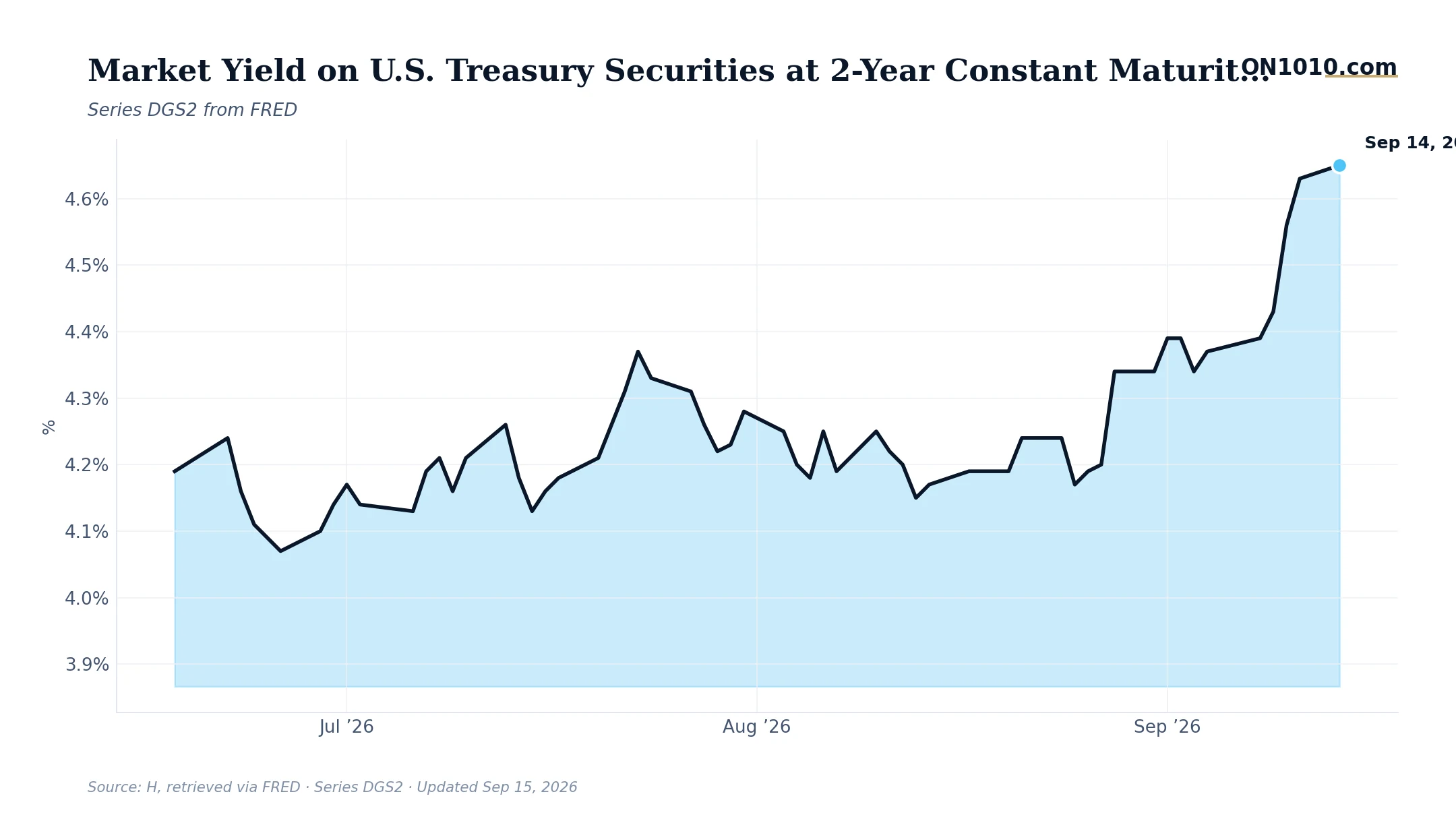
The 2-year Treasury yield closed at 4.65% on September 14, up from 4.37% just eight trading days earlier. That’s a 28 basis point swing with no Fed meeting, no rate change, and no dramatic policy announcement driving it.
The market moved. The Fed stayed put.
The Bigger Picture
The 2-year yield is the bond market’s most direct read on where it thinks the Fed funds rate is headed over the next 12 to 24 months. When it rises sharply like this, the market is repricing its expectations for cuts. Investors are collectively saying: “We thought the Fed would ease sooner. We no longer believe that.”
Context from the gauges makes this more pointed. Core inflation is running hotter than roughly nine of every ten months in the historical record. Monetary policy sits near its historical midpoint. Long-term rates are already in the upper quarter of their history. The system doesn’t have much cushion for the market to demand even more.
Why It Matters
The 2-year yield is where rate expectations live. When it climbs this fast without a policy catalyst, it often signals that fresh economic data, whether jobs, inflation, or growth, quietly shifted the Fed’s implied path in investors’ minds. Historically, rapid moves in the 2-year have rippled quickly into adjustable-rate borrowing costs, corporate credit decisions, and capital allocation timelines. Business owners watching refinancing windows or planning equipment purchases have historically used the 2-year as their early warning system for how long “higher for longer” actually means.
One tension worth watching: credit spreads remain historically tight, signaling that credit markets are calm even as rate expectations climb. Those two things don’t usually point the same direction for long.
Bottom Line: The bond market just told us it thinks rate cuts are further off than it did a week ago. The question is whether the economic data that drove that repricing keeps coming in hot, or whether this move gets reversed just as quickly.
Source: Federal Reserve Economic Data (FRED)
ON1010 Research is an independent publisher of economic education and is not a registered investment adviser, broker-dealer, or investment company. This content is for educational and informational purposes only and is not investment advice or a recommendation to buy, sell, or hold any security. Published under the publisher exemption recognized by Section 202(a)(11)(D) of the Investment Advisers Act of 1940 (Lowe v. SEC). Always consult a qualified financial professional before making any financial decision.
Free Research
The economy moves fast. We make sure you move faster.
Economic data, policy shifts, and market signals — delivered to your inbox.
Subscribe Free