
The 2-Year Yield Just Hit Its Highest Point in Weeks. The Bond Market Has a Message.
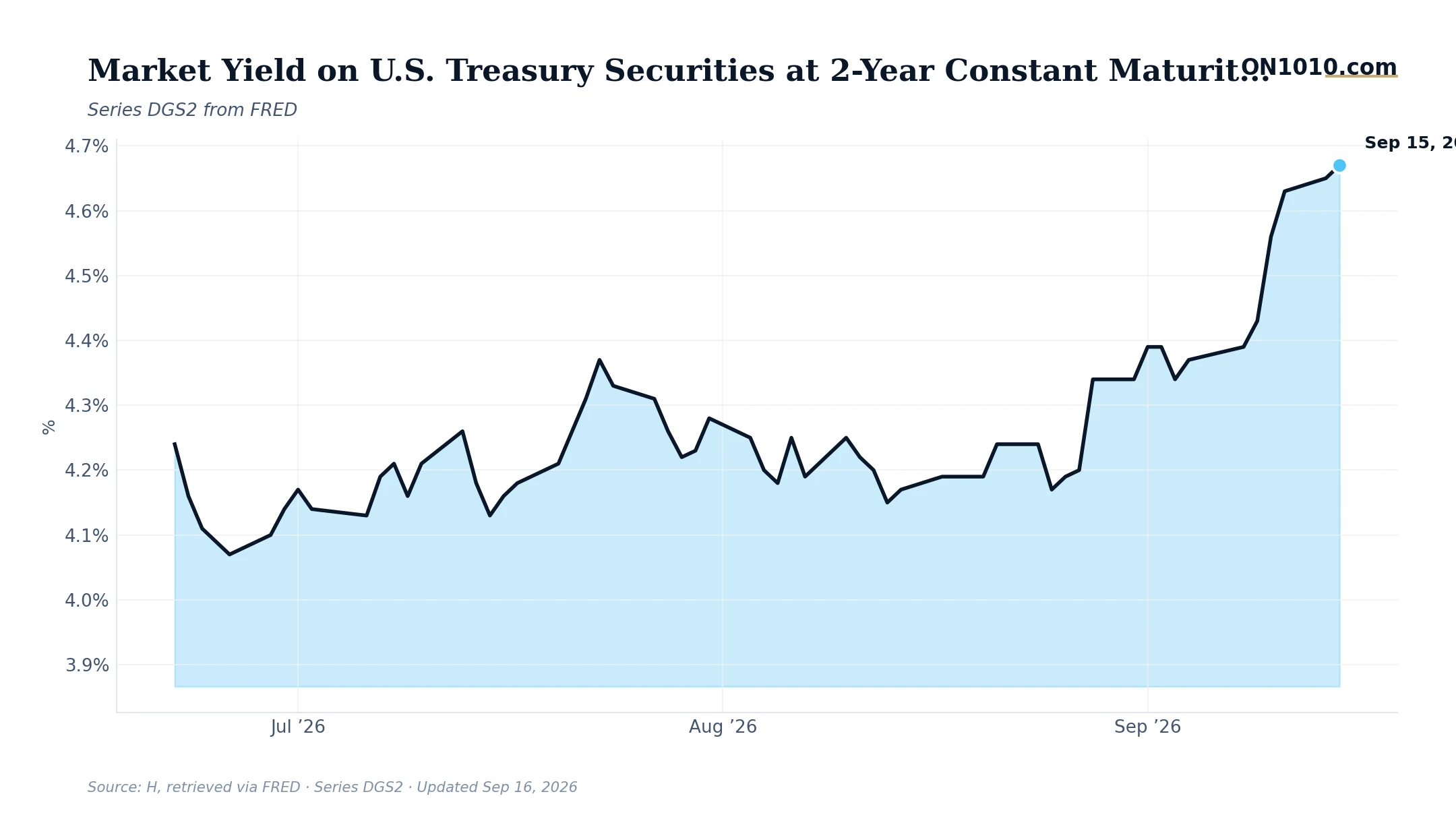
The 2-year Treasury yield climbed to 4.67% on September 15, up from 4.39% just six trading days earlier. That’s a 28 basis point surge in little over a week, the kind of move that tends to mean the market is repricing its expectations for Federal Reserve policy, and not in the direction of easier money.
The 2-year yield is the bond market’s clearest real-time read on where traders think the Fed’s benchmark rate is headed over the next year or two. When it rises sharply and quickly like this, the market is signaling that rate cuts, if they come at all, are further away than recently assumed. Context makes this more striking: inflation is running high relative to most of the post-1990 record, long-term interest rates are already sitting in their upper historical range, and yet credit spreads remain unusually tight. That combination, hot inflation, elevated rates, calm credit, is a tension worth watching.
Historically, when the 2-year yield has climbed sharply over a short window in an environment where the Fed is still holding rates elevated, it has compressed the window businesses have to plan around cheaper borrowing costs. In past cycles, capital-intensive businesses, particularly those with variable-rate debt or near-term refinancing needs, have had to reassess project economics quickly when these repricing episodes occur. The questions a business leader or capital allocator would reasonably ask: Is this move durable, or is it noise? And if the market is right that cuts are delayed, how does that change the math on decisions already in motion?
Bottom Line: The bond market just nudged its Fed outlook meaningfully hawkward in less than two weeks. Whether the inflation data eventually pulls rates back down, or the economy proves resilient enough that cuts stay on hold, the 2-year yield is the first place that answer will show up.
Source: Federal Reserve Economic Data (FRED)
ON1010 Research is an independent publisher of economic education and is not a registered investment adviser, broker-dealer, or investment company. This content is for educational and informational purposes only and is not investment advice or a recommendation to buy, sell, or hold any security. Published under the publisher exemption recognized by Section 202(a)(11)(D) of the Investment Advisers Act of 1940 (Lowe v. SEC). Always consult a qualified financial professional before making any financial decision.
Free Research
The economy moves fast. We make sure you move faster.
Economic data, policy shifts, and market signals — delivered to your inbox.
Subscribe Free