
The 2-Year Yield Just Jumped. The Market Is Repricing the Fed.
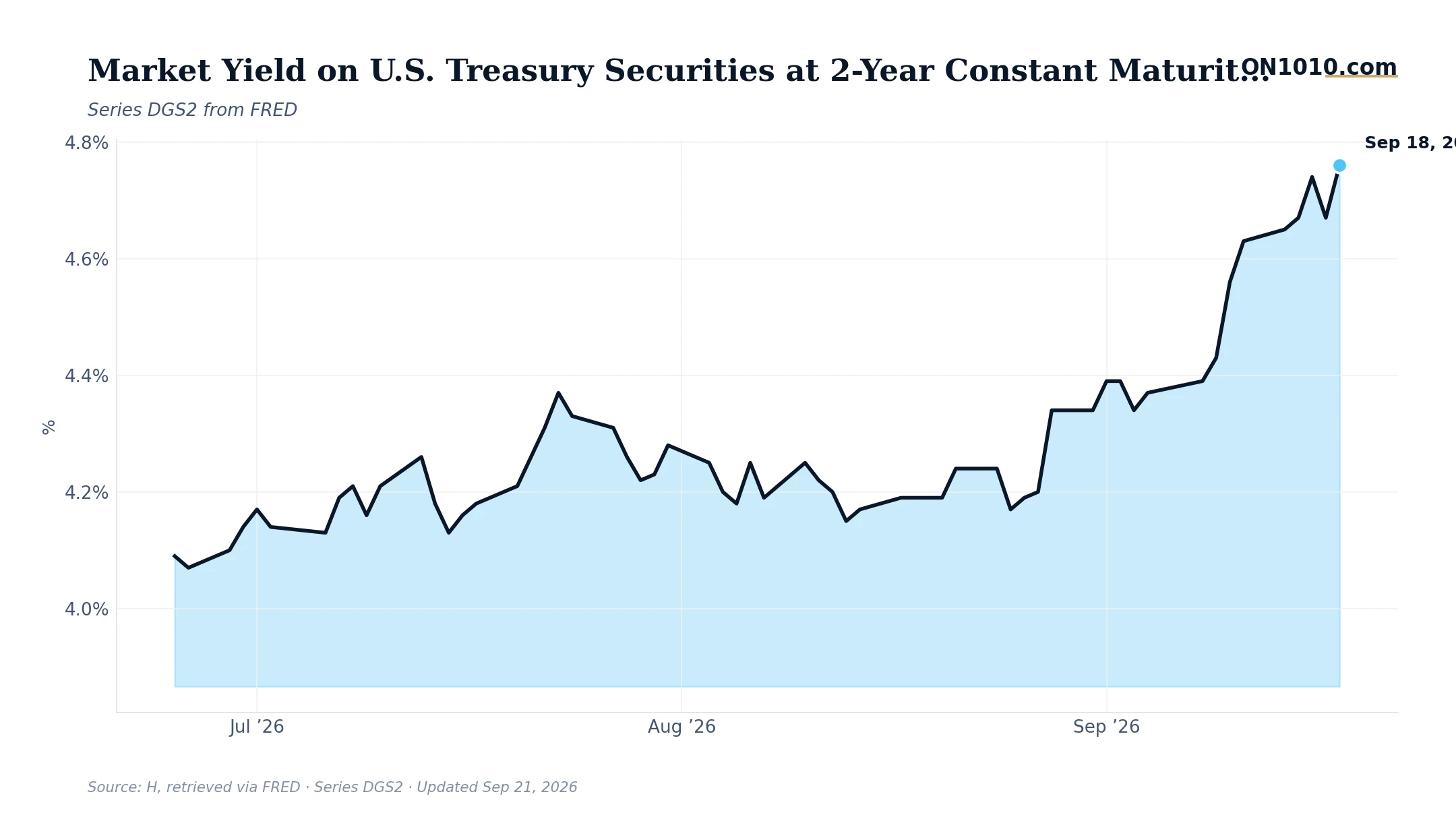
The 2-year Treasury yield climbed to 4.76% on September 18, up from 4.67% the day before, a 9 basis point move in a single session. That is not routine noise. The 2-year is the bond market’s most direct read on where it thinks the Fed will keep rates over the next couple of years, and a jump like this means expectations just shifted.
Look at the recent trend: the 2-year has moved from 4.63% on September 11 to 4.76% in just one week. The direction is consistent. The market is telling you that the probability of near-term rate cuts is being priced out, not in.
That fits the broader backdrop. Core inflation remains hot relative to nearly all of the historical record. Monetary policy sits near its historical midpoint, meaning the Fed has neither fully tightened nor fully eased relative to past cycles. Credit spreads are tight, which signals that corporate bond markets see little immediate distress. Together, those readings describe an economy that is not breaking, which gives the Fed room to stay higher for longer. The 2-year yield moving up is the bond market adjusting to that reality.
Historically, when short-term rates hold elevated and the Fed defers cuts, two things have tended to follow: financing costs for businesses stay sticky, and the gap between what companies earn on cash and what they pay to borrow narrows or widens depending on their balance sheet structure. In past cycles, operators and capital allocators have watched the 2-year closely because it sets the floor for borrowing costs across commercial loans, floating-rate debt, and short-duration credit. The question worth tracking is whether the current rate level starts showing up in refinancing decisions or capital expenditure plans over the next few quarters.
Bottom Line: The bond market spent the past week quietly repricing the Fed’s path, and the 2-year yield is the clearest evidence of it. The next question is whether inflation data gives the Fed a reason to change course, or confirms what the 2-year is already saying.
Source: Federal Reserve Economic Data (FRED)
ON1010 Research is an independent publisher of economic education and is not a registered investment adviser, broker-dealer, or investment company. This content is for educational and informational purposes only and is not investment advice or a recommendation to buy, sell, or hold any security. Published under the publisher exemption recognized by Section 202(a)(11)(D) of the Investment Advisers Act of 1940 (Lowe v. SEC). Always consult a qualified financial professional before making any financial decision.
Free Research
The economy moves fast. We make sure you move faster.
Economic data, policy shifts, and market signals — delivered to your inbox.
Subscribe Free