
The 2-Year Yield Ticked Up. The Fed’s Room to Cut Just Got Smaller.
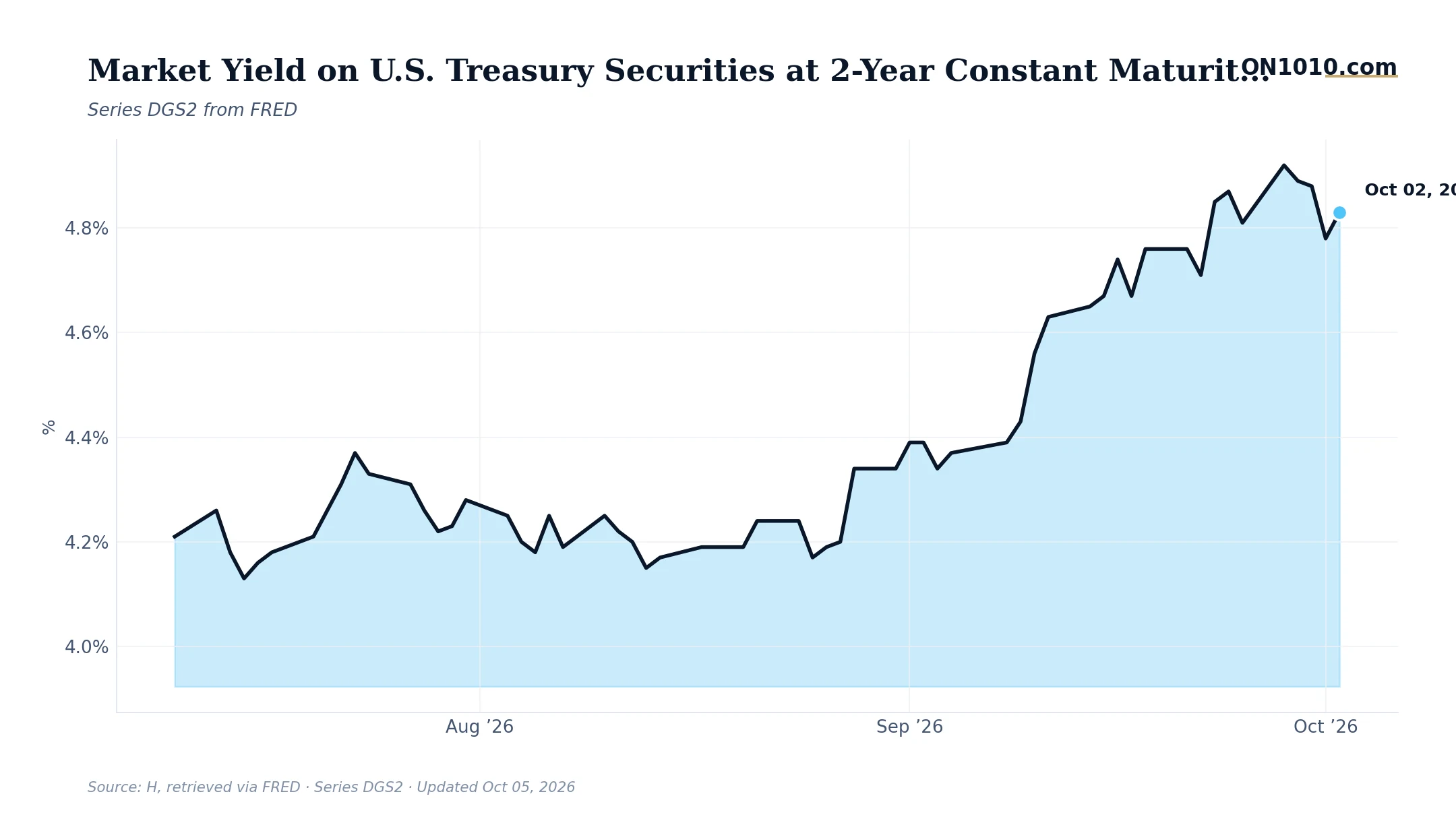
The 2-year Treasury yield rose to 4.83% on Friday, up from 4.78% the day before. That 5 basis point move sounds small, but zoom out to the past week and the picture gets more interesting: yields actually fell from 4.92% earlier in the week before bouncing back. The bond market is wrestling with itself.
The 2-year yield is essentially the market’s best guess at where the Fed funds rate will average over the next two years. At 4.83%, the market is saying it doesn’t expect aggressive rate cuts anytime soon. Layer that against the economic gauges and a pattern emerges: inflation still runs hot relative to history, monetary policy is already restrictive, and long-term interest rates sit in the upper quarter of their historical range. The Fed is holding a tight policy stance against an economy where growth is holding near its historical midpoint. That’s a narrow corridor to navigate.
In past cycles, when the 2-year yield stayed stubbornly elevated while the Fed held rates steady, credit conditions tightened gradually rather than all at once. Businesses with variable-rate debt or near-term refinancing needs felt it first. Historically, sustained restrictive monetary policy like this has preceded a new recession within 12 months about 18% of the time. Worth knowing, even if it is far from a certainty.
The question worth watching: credit spreads are already wide and moving wider. When the cost of borrowing stays high and the risk premium on corporate debt rises at the same time, the pressure on business margins compounds from both directions.
Bottom Line: The 2-year yield isn’t collapsing, which means the bond market sees no urgent case for the Fed to pivot. With credit stress building and consumer sentiment near historic lows, the durability of the current growth picture deserves more scrutiny than the stock market’s narrow technology-led rally might suggest.
Source: Federal Reserve Economic Data (FRED)
ON1010 Research is an independent publisher of economic education and is not a registered investment adviser, broker-dealer, or investment company. This content is for educational and informational purposes only and is not investment advice or a recommendation to buy, sell, or hold any security. Published under the publisher exemption recognized by Section 202(a)(11)(D) of the Investment Advisers Act of 1940 (Lowe v. SEC). Always consult a qualified financial professional before making any financial decision.
Free Research
The economy moves fast. We make sure you move faster.
Economic data, policy shifts, and market signals — delivered to your inbox.
Subscribe Free