
The 30-Year Mortgage Rate Just Crossed 7% Again. The Timing Is Awkward.
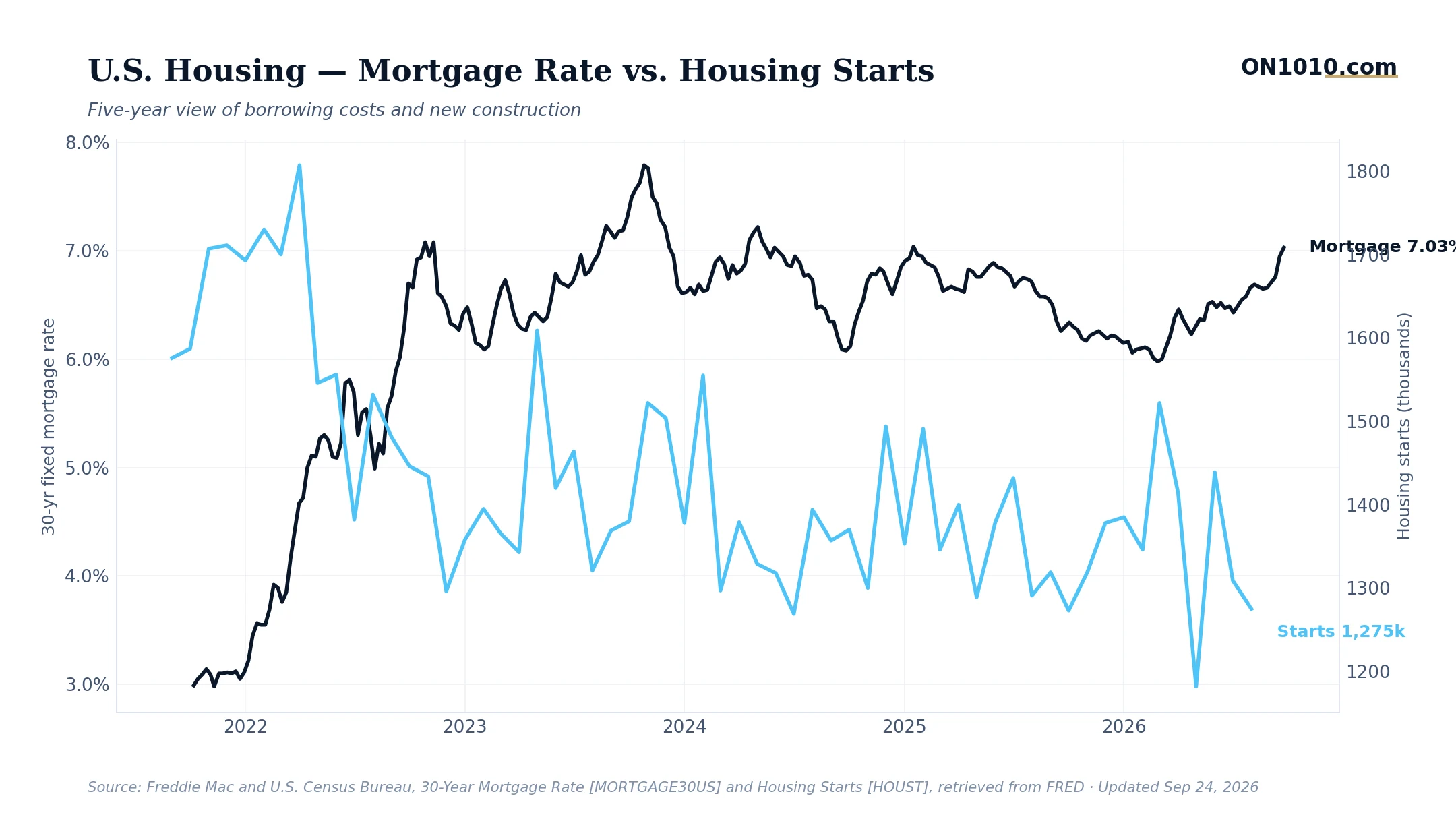
The 30-year fixed mortgage rate climbed to 7.03% this week, up from 6.95% the prior week, crossing back above the psychologically significant 7% threshold. What makes this move notable is its speed: rates have risen nearly 0.4 percentage points in just five weeks, reversing a stretch of gradual improvement that had buyers cautiously re-engaging with the market.
This isn’t happening in isolation. Long-term interest rates are running in the upper range of their historical history, and core inflation remains hotter than roughly nine of every ten months on record. That combination matters because the 30-year mortgage rate tracks long-term bond yields, not the Fed’s overnight rate. Even if the Fed cuts short-term rates, mortgage rates can stay elevated or move higher if bond investors remain skeptical that inflation is truly defeated. The bond market is telling a different story than the rate-cut optimists.
The broader economic gauges add a useful wrinkle here. Consumer sentiment is near its weakest historical levels, yet credit spreads are extremely tight, meaning corporate credit markets are pricing in very little stress. That divergence, ordinary people feeling squeezed while institutional credit markets stay calm, is one of the defining tensions of this cycle.
Historically, sustained mortgage rates above 7% have compressed existing home sales sharply, because homeowners locked into 3% loans have little incentive to sell and give up that rate. That dynamic tightens supply, keeps prices elevated, and effectively freezes the market from both sides. In past cycles, capital has often rotated toward rental markets, home improvement, and build-to-rent development when the purchase market locked up this way. Whether that pattern holds in today’s structurally different housing market is one of the more important open questions.
Bottom Line: The mortgage market is caught between a Fed trying to ease and a bond market that isn’t fully convinced. Watch whether the 7% level holds or keeps climbing, because the direction from here shapes the housing market through at least the first half of 2027.
Source: Federal Reserve Economic Data (FRED)
ON1010 Research is an independent publisher of economic education and is not a registered investment adviser, broker-dealer, or investment company. This content is for educational and informational purposes only and is not investment advice or a recommendation to buy, sell, or hold any security. Published under the publisher exemption recognized by Section 202(a)(11)(D) of the Investment Advisers Act of 1940 (Lowe v. SEC). Always consult a qualified financial professional before making any financial decision.
Free Research
The economy moves fast. We make sure you move faster.
Economic data, policy shifts, and market signals — delivered to your inbox.
Subscribe Free