
The Bond Market Is Sending a Signal the Fed Can’t Ignore
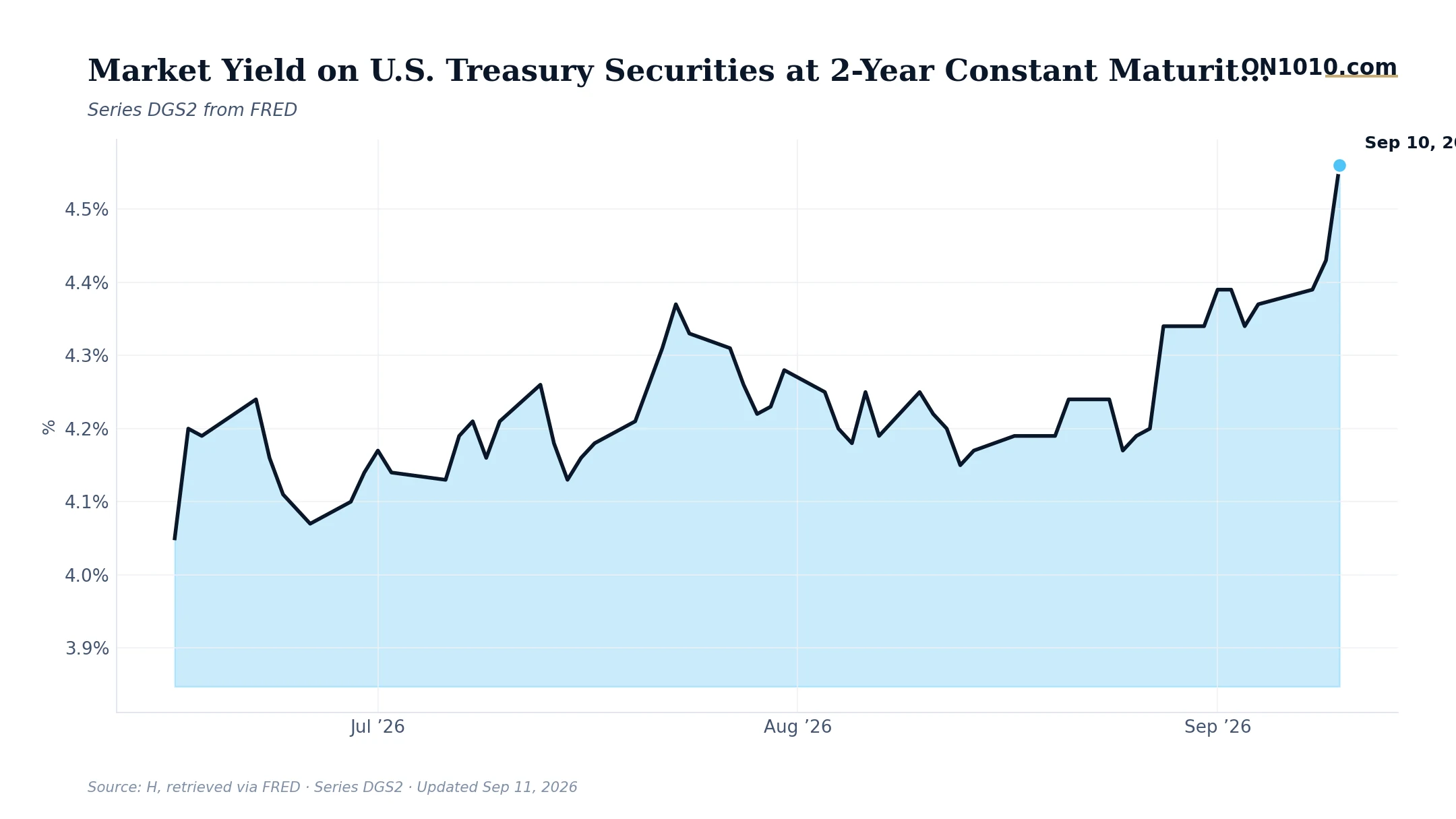
The 2-year Treasury yield jumped from 4.43% to 4.56% in a single session on September 10, a 13-basis-point move that snapped a quiet drift lower and put the rate back at its highest level in weeks. One-day moves like this happen, but this one landed in a context that makes it worth watching closely.
The 2-year yield is the bond market’s real-time vote on Fed policy. When it rises sharply, it means traders are pricing out cuts, or pricing in the possibility that the Fed stays higher for longer than the consensus expected. Right now, core inflation sits at a historically elevated level, and monetary policy sits near its historical midpoint. The math here is blunt: if inflation runs hotter than the policy rate can cool, the Fed doesn’t have the room to ease that many investors assumed it did. That tension is exactly what the 2-year is reflecting.
Long-term interest rates are already in the upper range of their historical record, and they moved from steady to rising this week. Historically, when rates have been this elevated, a new recession began within the following 12 months about 19% of the time. That is one in five, not a prediction, but not noise either. Business operators and capital allocators have historically used this kind of setup to examine their refinancing timelines, debt duration, and how exposed their balance sheets are to rates staying elevated.
When two-year yields spike while credit spreads stay tight (as they are now), the bond market is saying something specific: credit risk feels manageable, but rate risk is repricing. Those are two different stories, and right now they’re running in parallel.
Bottom Line: The 2-year yield’s sharp one-day move is the bond market flagging that “cuts are coming” may have been priced in too aggressively. The question worth watching is whether next week’s data gives the Fed any reason to push back, or confirm it.
Source: Federal Reserve Economic Data (FRED)
ON1010 Research is an independent publisher of economic education and is not a registered investment adviser, broker-dealer, or investment company. This content is for educational and informational purposes only and is not investment advice or a recommendation to buy, sell, or hold any security. Published under the publisher exemption recognized by Section 202(a)(11)(D) of the Investment Advisers Act of 1940 (Lowe v. SEC). Always consult a qualified financial professional before making any financial decision.
Free Research
The economy moves fast. We make sure you move faster.
Economic data, policy shifts, and market signals — delivered to your inbox.
Subscribe Free