
The Economy Says “Fine.” The Bond Market Is Charging a Premium Anyway.
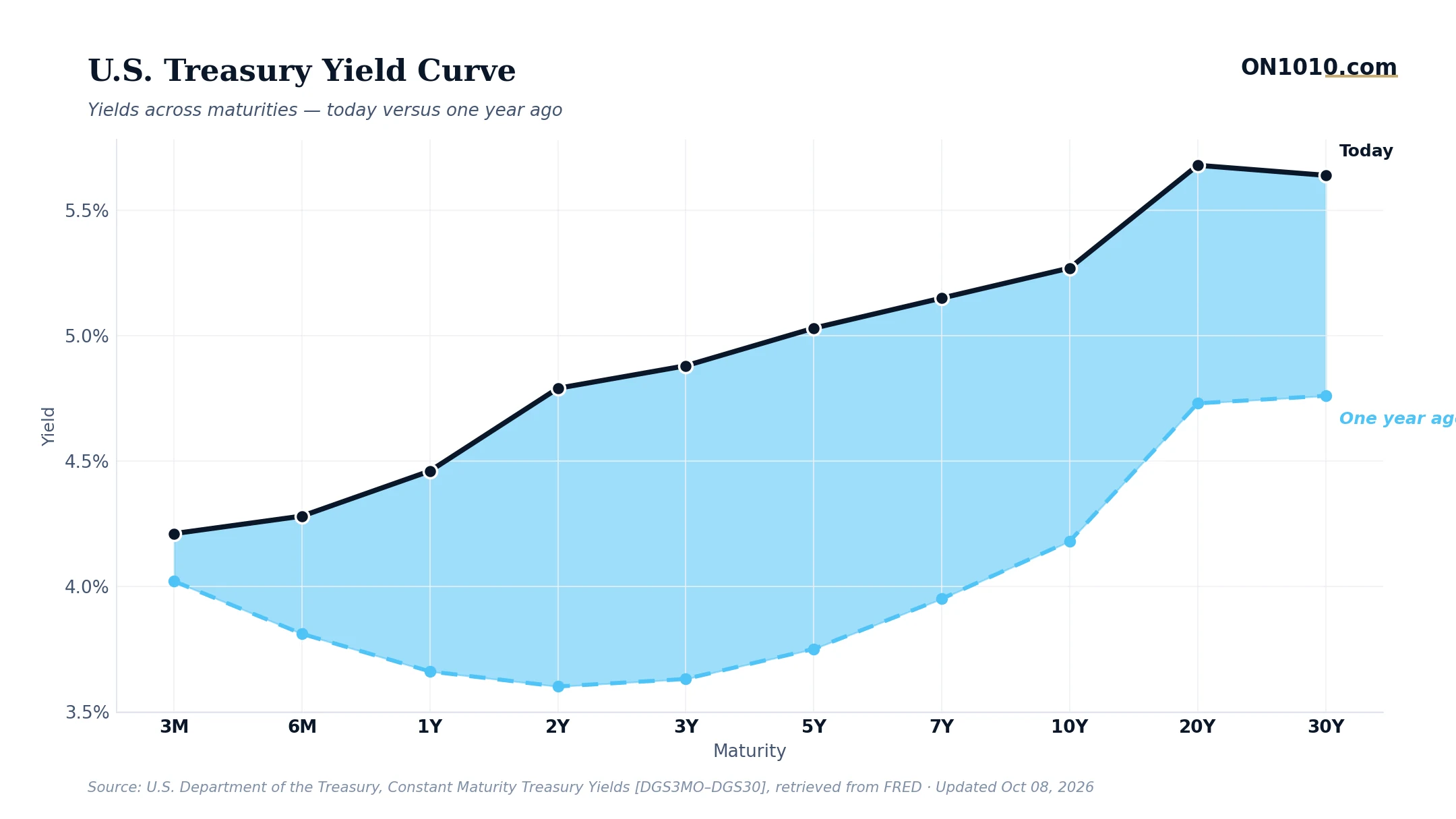
Growth is sitting right at its historical midpoint, recession odds from this zone historically run around 7%, and there is no recession signal in the hard data. So why is the 10-year Treasury yield at 5.27%, a full 48 basis points above the 2-year at 4.79%, and pushing borrowing costs to levels that are high by any historical measure?
That gap is the puzzle worth understanding this morning.
What moved. Equities slipped Wednesday, with the S&P 500 closing at 7,801.77 and small caps (Russell 2000) leading the pullback at -1.31%. WTI crude jumped $3.72 to $92.00 per barrel, adding fresh fuel to the inflation conversation. The 10-year breakeven sits at 2.36%, meaning bond investors are pricing moderate long-run inflation. But the 10-year yield at 5.27% is doing something else entirely: it is pricing in fiscal risk, term premium, and a supply wall of Treasury issuance that the market has to absorb. Monetary policy is still restrictive, with the Fed funds target at 3.75% to 4.0%, and the real policy rate remains a genuine headwind for investment.
On deck today. Weekly jobless claims print this morning, giving the freshest read on whether the labor market is holding its ground under that rate pressure.
Why it matters. When long-term rates are high versus history but growth is steady and recession risk is low, the economy is not breaking, but the cost of doing business is rising. Companies refinancing debt, households carrying mortgages, and businesses planning capital projects are all running the numbers against a 5.27% benchmark.
The deeper read on what the bond market is actually signaling lands Sunday in The Long View. It is free, and the timing is good.
ON1010 Research is an independent publisher of economic education and is not a registered investment adviser, broker-dealer, or investment company. This content is for educational and informational purposes only and is not investment advice or a recommendation to buy, sell, or hold any security. Published under the publisher exemption recognized by Section 202(a)(11)(D) of the Investment Advisers Act of 1940 (Lowe v. SEC). Always consult a qualified financial professional before making any financial decision.
Free Research
The economy moves fast. We make sure you move faster.
Economic data, policy shifts, and market signals — delivered to your inbox.
Subscribe Free