
The Fed Chair Who Might Not Care What Markets Think
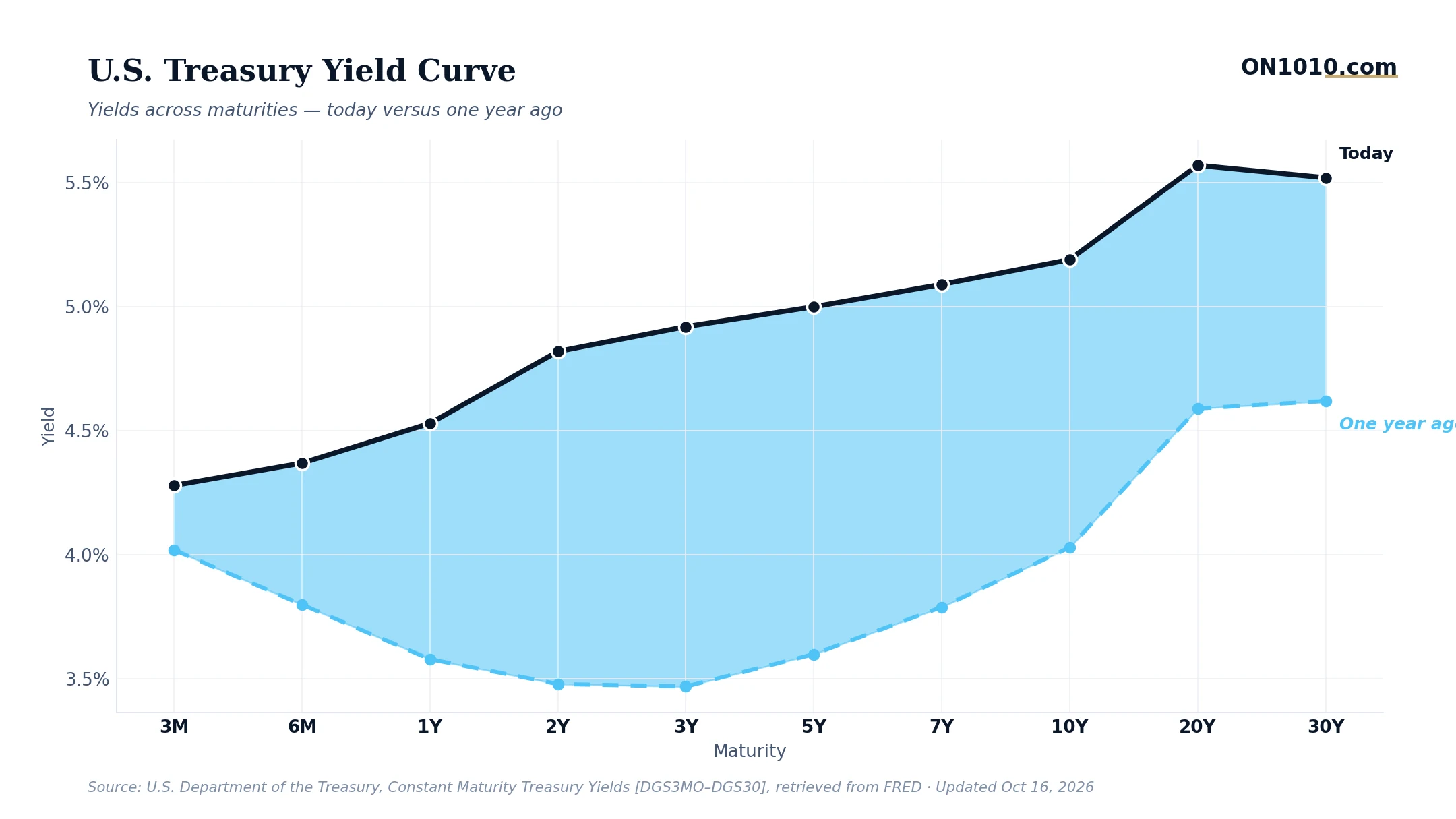
According to CNBC, investors are almost universally pricing in a Fed pause at the October meeting. The wrinkle: Kevin Warsh has made clear he does not feel bound by the forward-guidance playbook that markets have leaned on for years, and inflation remains well above historical norms.
This is where it gets interesting. The consensus “hold” bet rests on a communications contract that Warsh may simply not honor. Traditional Fed chairmanship involves heavy signposting, so markets rarely get surprised at the meeting itself. Warsh has rejected that framework. When the person running the meeting does not send signals, the meeting becomes genuinely uncertain again, and uncertain Fed meetings are something most active investors have not had to price in since the pre-Bernanke era.
The economic backdrop makes this more than academic. Inflation is running in the upper range of its historical record, even as growth sits near its long-run midpoint. That combination, hot prices without a booming economy, is precisely the environment where a central banker with an inflation-first mindset might decide that waiting is its own risk. Real policy rates are already restrictive by historical standards, but restrictive does not mean sufficient if inflation expectations start to drift. Credit spreads have been widening recently, and long-term interest rates remain very elevated by historical comparison. The bond market, which tends to price the economy’s future more soberly than equities, is already sending a message that conditions are tight.
Historically, investors have treated surprise Fed tightening as a double compression event: multiples contract as the discount rate rises, and margins come under pressure as borrowing costs climb faster than pricing power. The question this setup raises is whether Warsh sees October as a moment to re-establish the Fed’s credibility on inflation, or whether he reads the widening credit spreads as reason enough to hold and watch.
Bottom Line: When the Fed chair rewrites the communications rules, the market’s near-certain “hold” price is doing a lot of work on very little signal. That gap between certainty and information is where surprises live.
Read more: CNBC Economy
ON1010 Research is an independent publisher of economic education and is not a registered investment adviser, broker-dealer, or investment company. This content is for educational and informational purposes only and is not investment advice or a recommendation to buy, sell, or hold any security. Published under the publisher exemption recognized by Section 202(a)(11)(D) of the Investment Advisers Act of 1940 (Lowe v. SEC). Always consult a qualified financial professional before making any financial decision.
Free Research
The economy moves fast. We make sure you move faster.
Economic data, policy shifts, and market signals — delivered to your inbox.
Subscribe Free