
The Fed Is Holding Steady. The Bond Market Isn’t.
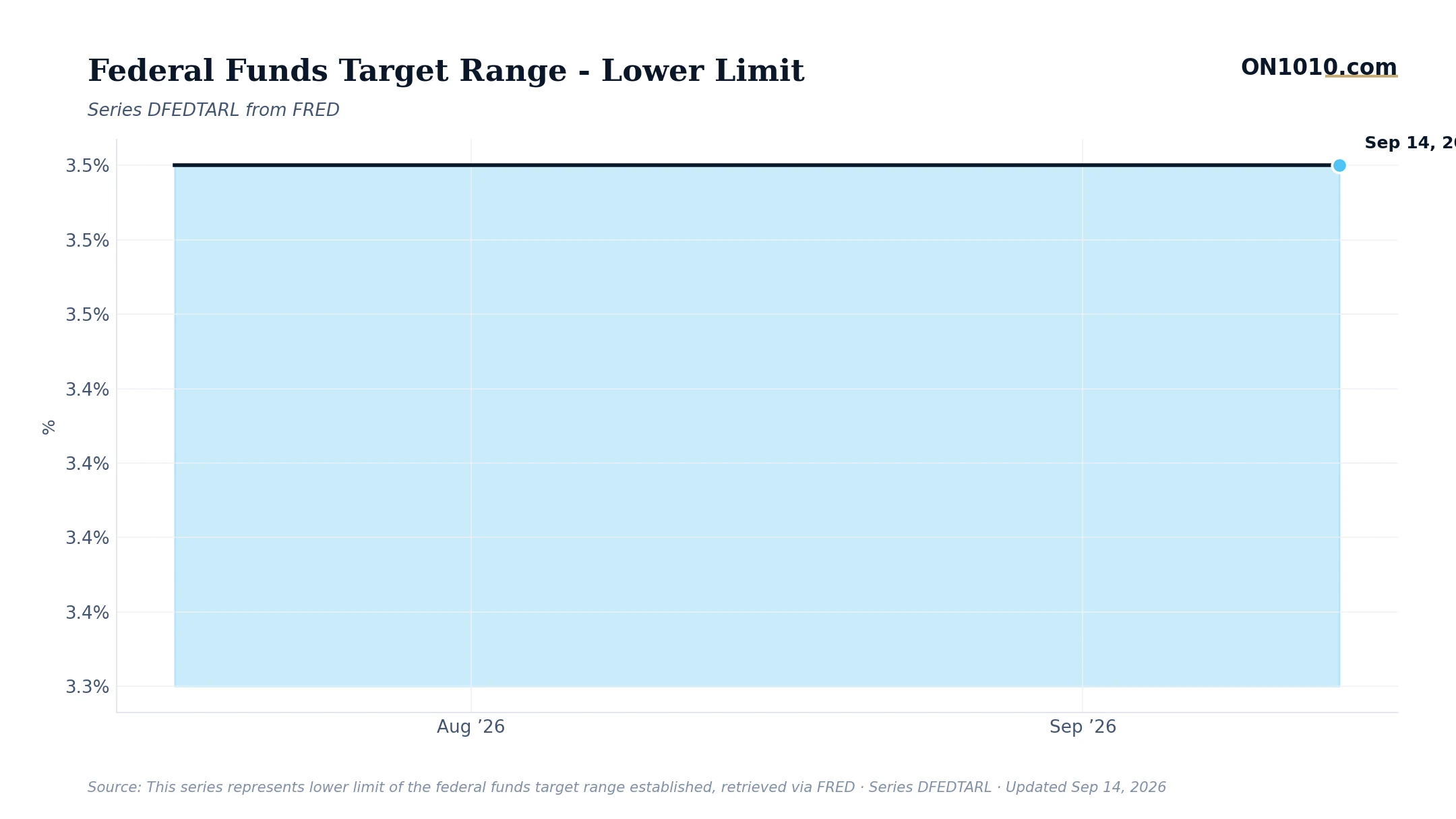
The federal funds rate lower bound sits at 3.5%, unchanged since the Fed’s last move. But “unchanged” is doing a lot of heavy lifting right now, because the rest of the rate environment is anything but still.
Long-term interest rates are sitting in the upper quarter of their historical range and still rising. That creates a widening gap between the rate the Fed controls and the rates that actually govern mortgages, corporate loans, and business investment decisions. The Fed sets the overnight rate. The market sets everything else, and right now, the market is sending a different signal.
Here’s the tension worth watching: core inflation is running hotter than roughly nine out of every ten months in the modern historical record, yet the Fed has paused. That means the real (inflation-adjusted) policy rate is tighter than the nominal number suggests, but long-term bond yields are also climbing, which means financial conditions are tightening in the background without the Fed doing anything at all. Credit spreads remain tight, which typically signals that corporate bond markets see manageable default risk. But consumer sentiment is sitting near historic lows. Those two readings usually don’t travel together for long.
Historically, when long-term rates have been elevated like this, a recession followed within twelve months about 19% of the time. That’s not a prediction, and the base rate means four out of five similar setups didn’t produce a downturn. But it’s the kind of number that changes how a CFO thinks about refinancing timing or how a business owner weighs a capital commitment. In past cycles, operators and capital allocators have paid close attention to whether the spread between short and long rates is widening or narrowing, because it shapes the cost of doing business for months before it shows up in earnings.
Bottom Line: The Fed hasn’t moved, but the rate environment is still shifting around it. The real question is whether rising long-term yields become a brake on growth before inflation gives the Fed room to respond.
Source: Federal Reserve Economic Data (FRED)
ON1010 Research is an independent publisher of economic education and is not a registered investment adviser, broker-dealer, or investment company. This content is for educational and informational purposes only and is not investment advice or a recommendation to buy, sell, or hold any security. Published under the publisher exemption recognized by Section 202(a)(11)(D) of the Investment Advisers Act of 1940 (Lowe v. SEC). Always consult a qualified financial professional before making any financial decision.
Free Research
The economy moves fast. We make sure you move faster.
Economic data, policy shifts, and market signals — delivered to your inbox.
Subscribe Free