
The Fed Is Holding Steady. The Rest of the Dashboard Is Not.
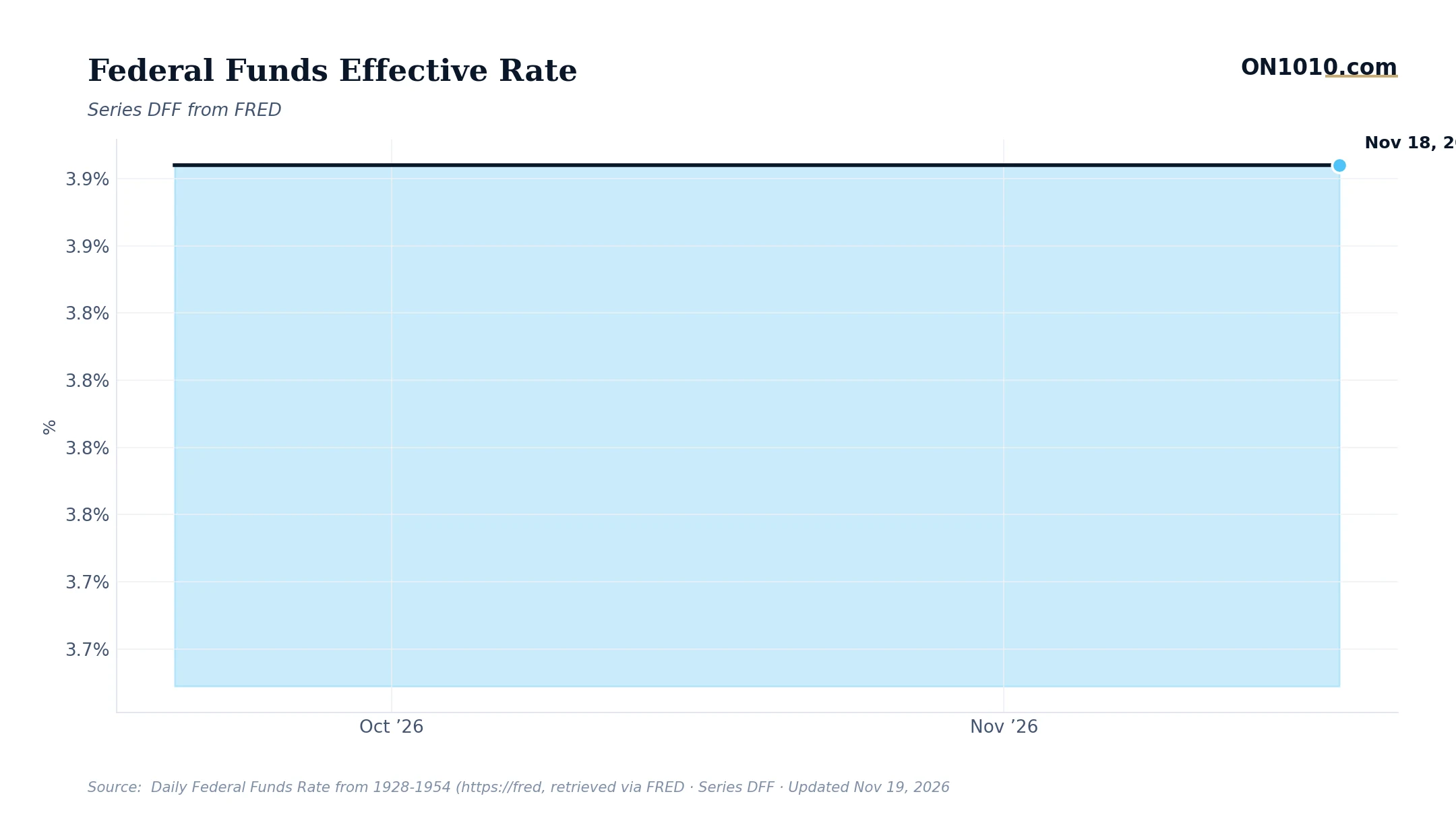
The effective federal funds rate has sat at 3.88% for six straight days, right in the center of the Fed’s 3.75%-4.00% target range. The number itself is unremarkable. What surrounds it is not.
The Fed is parked. But the economy around that parked rate is sending signals worth reading carefully.
The Bigger Picture
Monetary policy is restrictive by historical standards, sitting above its historical midpoint after years of rate hikes. At the same time, core inflation remains very high relative to its own long-run history and is still rising. That combination, a high policy rate that hasn’t yet fully cooled a hot inflation reading, is exactly the scenario that makes the Fed’s next move difficult. Cut too soon and inflation re-accelerates. Hold too long and something in the credit markets breaks.
Credit spreads are now wide and widening, which tells you the bond market is already pricing in some stress. That matters because credit conditions typically tighten before businesses feel it in their cost of capital and hiring plans. Long-term interest rates remain in the upper quarter of their historical range, even after a slight easing this week. Businesses refinancing debt or financing capital projects are still doing so at rates that compress margins.
Why It Matters
Historically, when the real policy rate (the fed funds rate minus inflation) has been this elevated for this long, the probability of a recession starting within the following year has run around 18%. That is worth knowing as context, though context is all it is. The more immediate question is whether a Fed that is frozen in place can respond quickly enough if credit stress starts spreading into the real economy. In past cycles, the lag between credit spread widening and actual business investment pullbacks has often been six to twelve months.
Bottom Line: The fed funds rate sitting quietly at 3.88% is the calm part of the picture. Widening credit spreads, elevated long-term rates, and a rotation out of growth stocks into defensives suggest the market is quietly asking whether that calm will last.
Source: Federal Reserve Economic Data (FRED)
ON1010 Research is an independent publisher of economic education and is not a registered investment adviser, broker-dealer, or investment company. This content is for educational and informational purposes only and is not investment advice or a recommendation to buy, sell, or hold any security. Published under the publisher exemption recognized by Section 202(a)(11)(D) of the Investment Advisers Act of 1940 (Lowe v. SEC). Always consult a qualified financial professional before making any financial decision.
Free Research
The economy moves fast. We make sure you move faster.
Economic data, policy shifts, and market signals — delivered to your inbox.
Subscribe Free