
The Fed Is Holding Steady. The Rest of the Dashboard Isn’t.
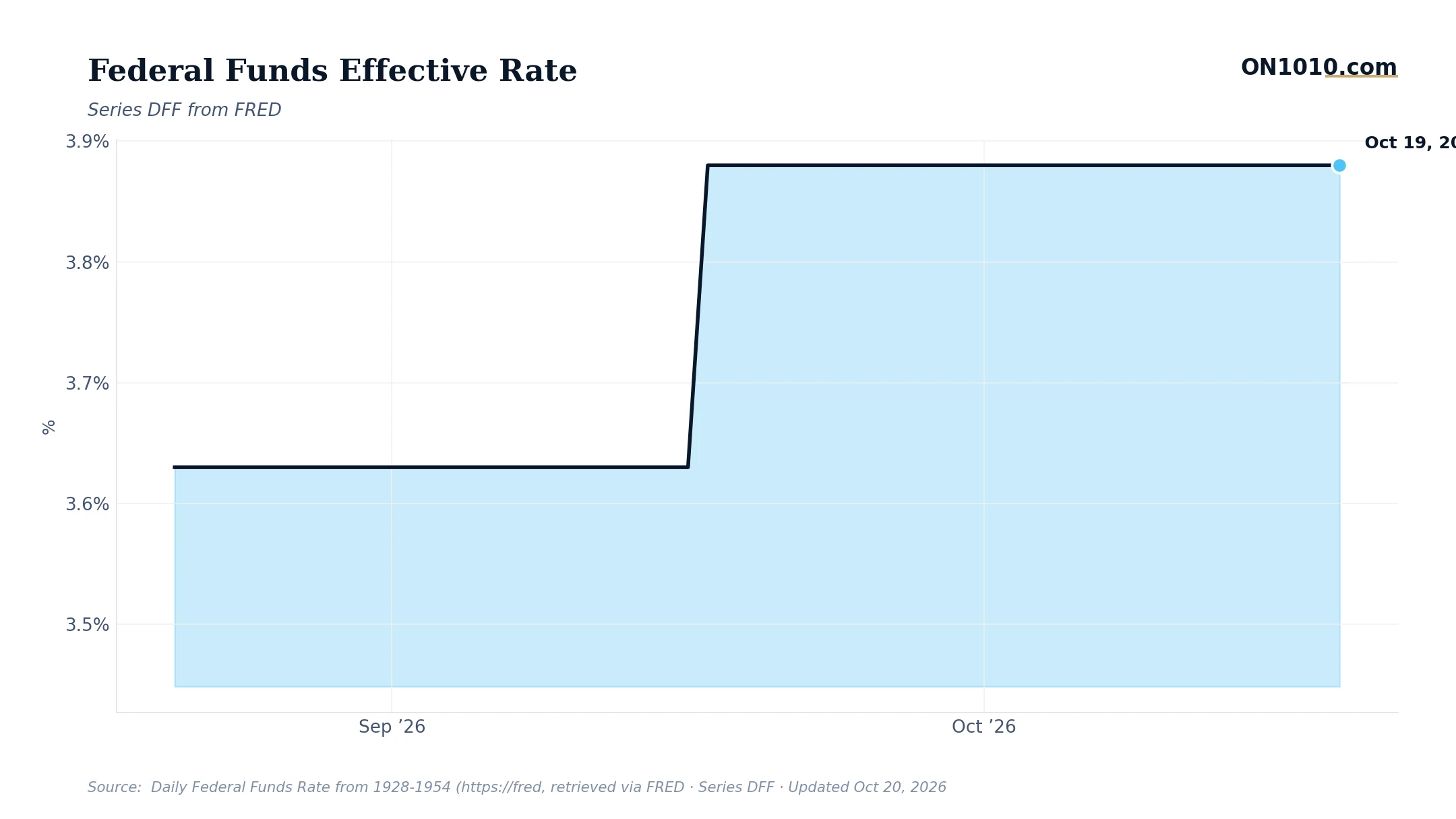
The effective federal funds rate has sat at 3.88% for six consecutive trading days. Banks are borrowing from each other overnight at exactly the rate the Fed intends, and the plumbing is working as designed. So why does the broader economic picture feel less calm?
Because the rate itself is only half the story.
The real policy rate, the fed funds rate minus inflation, is what actually measures how tight monetary conditions are. With inflation still running hot relative to history, 3.88% nominal translates into a real rate that is historically restrictive. The economy is not just paying 3.88%. It is paying that rate on top of an inflation environment where the Fed has less room to ease than the headline number suggests. From similar monetary policy setups in the historical record, a new recession began within the following 12 months about 18% of the time. That is not a forecast. It is the base rate worth knowing.
Meanwhile, two gauges that matter for where things go next have moved in the same direction at the same time. Credit spreads, which measure the extra yield investors demand to hold riskier debt over safe government bonds, just shifted from elevated to very elevated. And market uncertainty, as measured by volatility pricing, moved from neutral to elevated. When credit and volatility tighten together, it typically signals that lenders and investors are repricing risk simultaneously, a combination that, historically, has preceded slower business investment and tighter lending standards. Sector rotation data shows money moving away from technology, financials, and industrials toward consumer staples and health care, which is consistent with that repricing in real time.
For business owners and capital allocators, the question the data raises is practical: if the Fed holds rates here while real borrowing costs remain high and credit conditions tighten further, how does that affect the refinancing calendar and investment appetite heading into 2027?
Bottom Line: The fed funds rate is exactly where the Fed wants it. The tension is in what surrounds it, rising credit stress, elevated uncertainty, and a market quietly rotating toward defense while the policy rate holds still.
Source: Federal Reserve Economic Data (FRED)
ON1010 Research is an independent publisher of economic education and is not a registered investment adviser, broker-dealer, or investment company. This content is for educational and informational purposes only and is not investment advice or a recommendation to buy, sell, or hold any security. Published under the publisher exemption recognized by Section 202(a)(11)(D) of the Investment Advisers Act of 1940 (Lowe v. SEC). Always consult a qualified financial professional before making any financial decision.
Free Research
The economy moves fast. We make sure you move faster.
Economic data, policy shifts, and market signals — delivered to your inbox.
Subscribe Free