
The Fed Is Holding. The Question Is Whether Holding Is Still Enough.
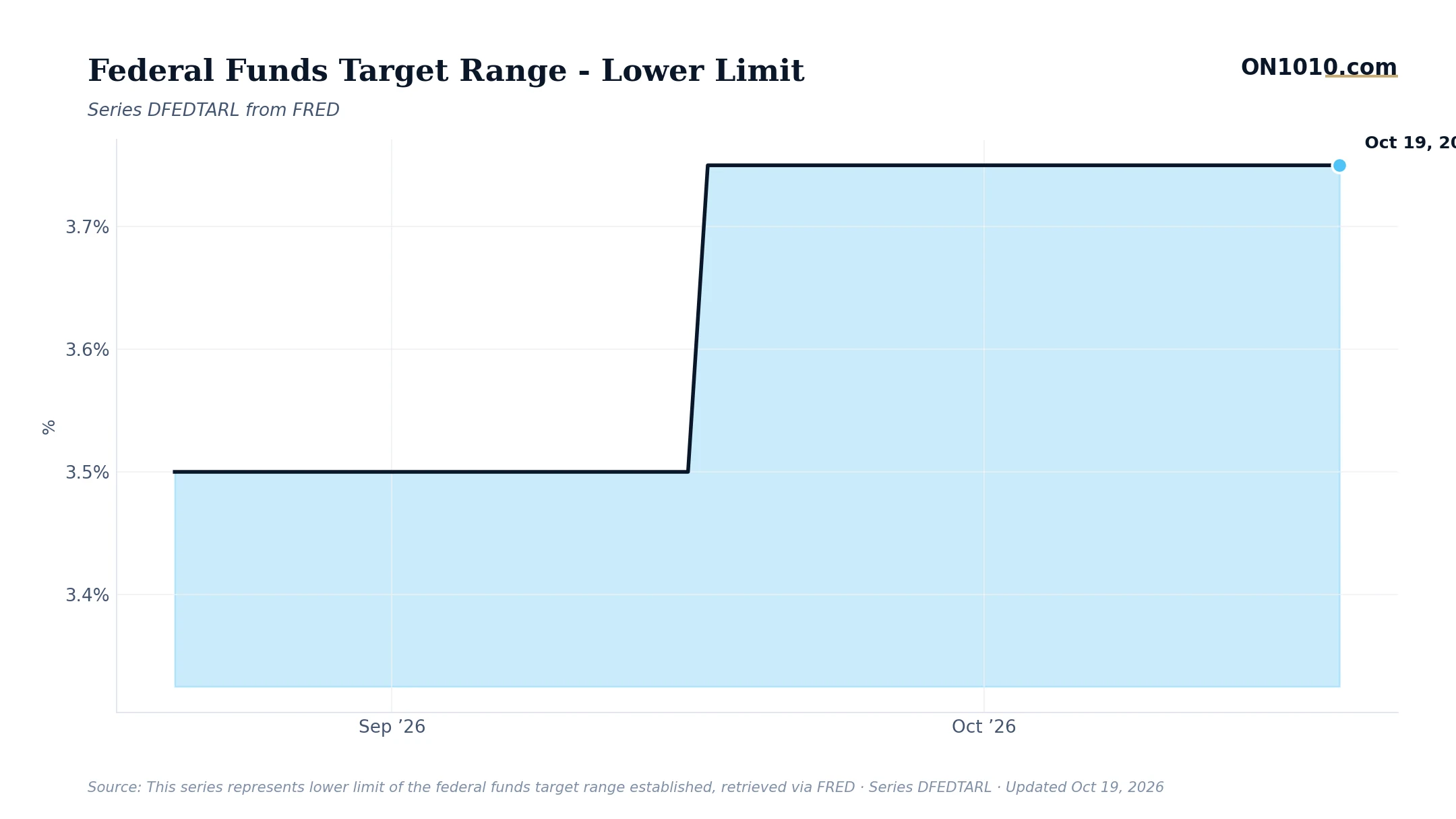
The federal funds rate sits at 3.75% to 4.00%, exactly where it has been. No cut. No hike. The Fed is in a wait-and-see posture, and that posture is starting to cost something.
Here is the tension worth understanding. Inflation is still running hot relative to its historical range, which means the Fed has a clear reason to stay put. But the real policy rate (the fed funds rate minus inflation) is among the most restrictive in decades. That combination, high nominal rates and still-elevated inflation, puts the Fed in an uncomfortable middle seat: too tight to be neutral, too cautious to ease.
The broader backdrop sharpens the picture. Long-term interest rates are in the upper quarter of their historical range and still falling slowly. Credit spreads are wide and widening, a sign that lenders are demanding more compensation for risk. Consumer sentiment is near historic lows. Defensive sectors like consumer staples and health care have been outperforming growth sectors by a meaningful margin over the past month, which historically has been a sign that institutional money is repositioning toward caution. The economy’s growth gauge sits near its historical midpoint, which sounds reassuring, but monetary policy at this level of restriction has been followed by a new recession within a year about 18% of the time in past cycles. That is not a prediction; it is the base rate.
In past tightening cycles, the lag between the Fed’s last hike and the first real crack in the economy has ranged from six months to nearly two years. That lag makes the current holding pattern particularly hard to read. Businesses that need to refinance debt or make long-horizon capital commitments are effectively paying full-cycle rates for an economy growing at a mid-cycle pace.
Bottom Line: The Fed holding at 3.75% looks like patience. Whether it is patience or delay depends entirely on where inflation goes next, and the bond market’s behavior suggests that question is far from settled.
Source: Federal Reserve Economic Data (FRED)
ON1010 Research is an independent publisher of economic education and is not a registered investment adviser, broker-dealer, or investment company. This content is for educational and informational purposes only and is not investment advice or a recommendation to buy, sell, or hold any security. Published under the publisher exemption recognized by Section 202(a)(11)(D) of the Investment Advisers Act of 1940 (Lowe v. SEC). Always consult a qualified financial professional before making any financial decision.
Free Research
The economy moves fast. We make sure you move faster.
Economic data, policy shifts, and market signals — delivered to your inbox.
Subscribe Free