
The Fed Is Holding. The Real Question Is Whether It Can Afford To.
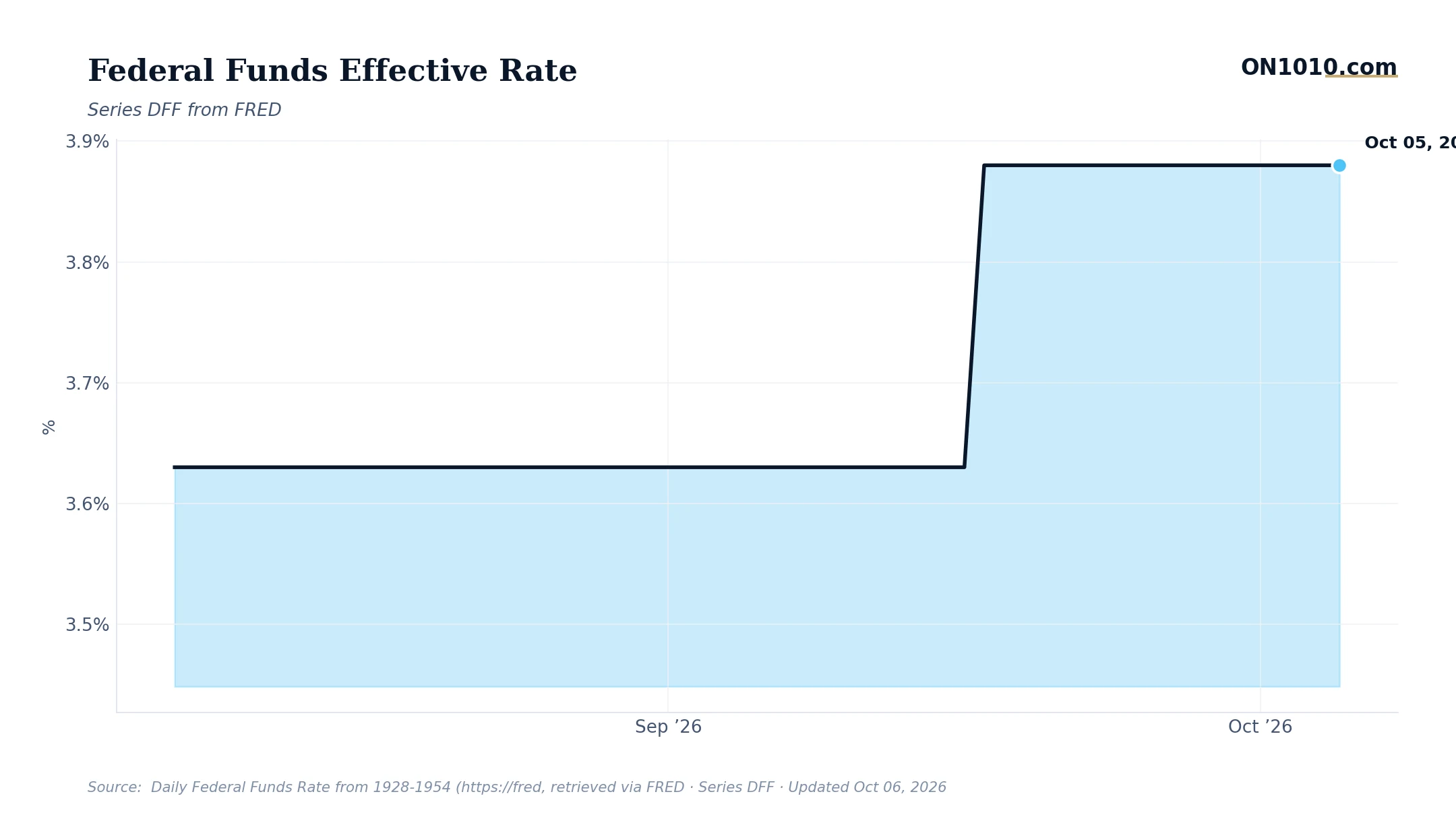
The effective federal funds rate has sat at 3.88% every single day since at least September 30. No drift, no surprise. The Fed said it would hold, and the market is holding with it, tracking the target with the precision of a metronome.
But steady is not the same as comfortable.
Here is the tension worth paying attention to: monetary policy is sitting in the upper range of its historical norm, and it has been there long enough that the pressure is building in the background. Inflation is still running hot by historical standards, which means the Fed has legitimate cover to stay put. But long-term rates are also elevated compared to most of recent history, which means every borrower rolling over debt, every business financing a capital project, and every homeowner eyeing a refinance is paying a price for each month the Fed does not move.
The gap between what inflation is doing and what the policy rate is doing determines how “tight” conditions actually feel in the real economy. When the real policy rate (the fed funds rate minus inflation) is high, borrowing slows, margins can compress, and business investment decisions get harder to justify. The gauge on monetary policy has historically been associated with a recession beginning within 12 months about 18% of the time when sitting where it is today. That is not a majority outcome. It is, however, a meaningful share that most people are not pricing.
In past cycles, long periods of elevated real rates have eventually shifted the calculus for capital-intensive businesses first, then hiring, then spending. The lag is real, and it is long.
Bottom Line: The Fed is not moving, and the market is not fighting it. The more important question is how much longer the economy’s balance sheet can absorb rates at this level before something in the real economy starts to bend.
Source: Federal Reserve Economic Data (FRED)
ON1010 Research is an independent publisher of economic education and is not a registered investment adviser, broker-dealer, or investment company. This content is for educational and informational purposes only and is not investment advice or a recommendation to buy, sell, or hold any security. Published under the publisher exemption recognized by Section 202(a)(11)(D) of the Investment Advisers Act of 1940 (Lowe v. SEC). Always consult a qualified financial professional before making any financial decision.
Free Research
The economy moves fast. We make sure you move faster.
Economic data, policy shifts, and market signals — delivered to your inbox.
Subscribe Free