
The Fed Is Holding. The Real Question Is Why.
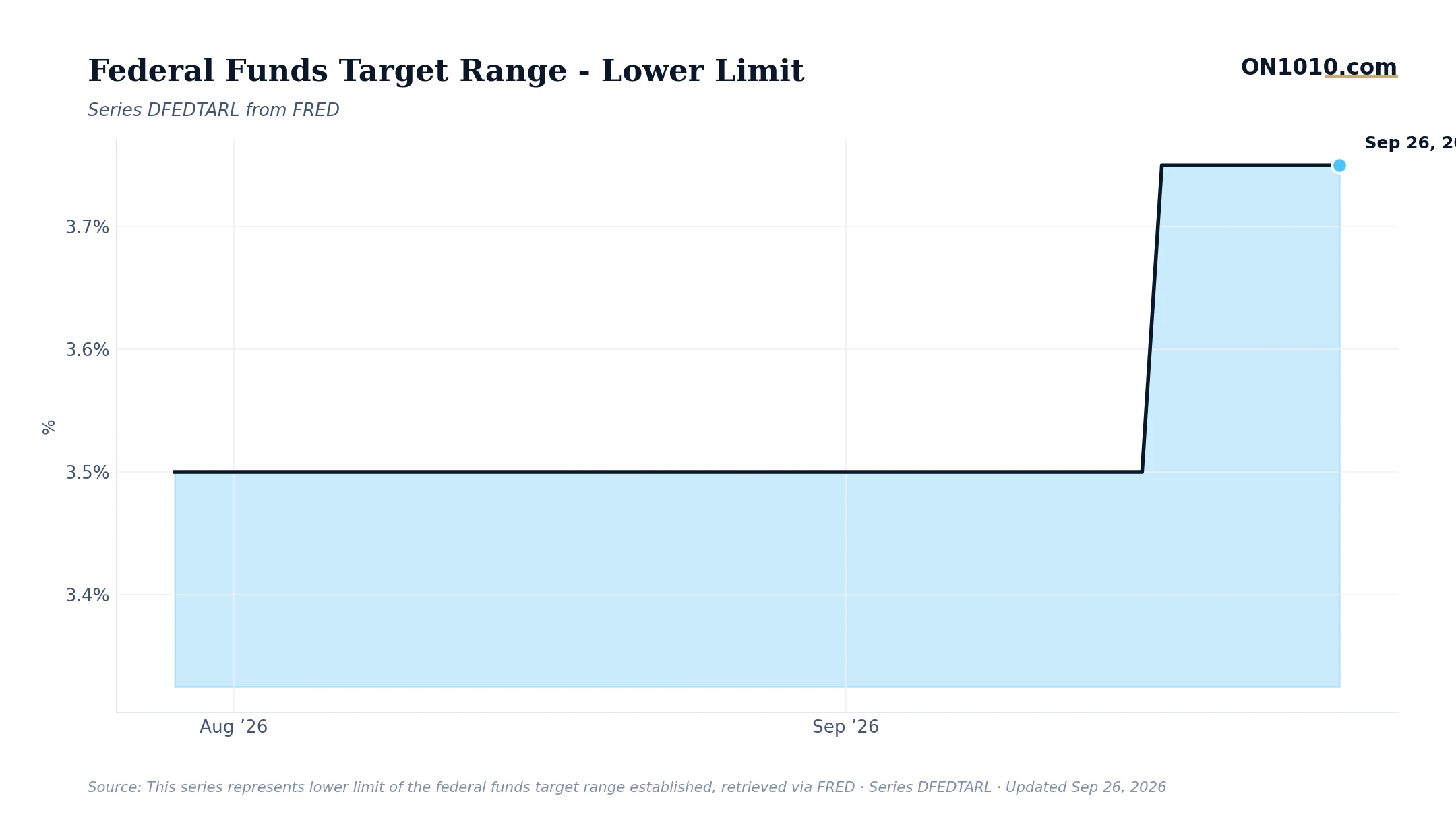
The Federal Reserve’s target rate lower bound sits at 3.75%, unchanged from where it has been all week. No surprise there. But “no change” is never as simple as it sounds.
Holding rates steady is a policy decision, and every time the Fed holds, it is implicitly saying the same thing: current rates are appropriate for current conditions. With core inflation still running very hot by historical standards, that claim deserves scrutiny.
Here is the tension. The policy rate is at roughly its historical midpoint. Inflation is in the upper tier of its entire modern history. That gap, between where rates are and where inflation is, is what some analysts call the real policy rate, and when inflation outpaces the nominal policy rate, money is still, in a practical sense, cheap. The economy is not as restricted as the headline rate might suggest. Meanwhile, long-term interest rates have moved into the upper tier of their own historical range, tightening conditions at the mortgage and corporate borrowing level even while the Fed holds pat. The Fed may be sitting still, but the bond market is doing its own tightening.
Historically, when the Fed has paused in a cycle while core inflation remained elevated, it has faced one of two eventual paths: inflation moderated on its own, giving the Fed cover to ease, or inflation stayed sticky, forcing a resumption of hikes. In past cycles, business leaders and capital allocators have watched the spread between short-term policy rates and actual inflation carefully, because that spread determines whether holding cash or extending into longer-term assets makes economic sense. That calculus looks different today than it did when rates were rising.
Bottom Line: The Fed holding at 3.75% is the easy part to track. The harder question is whether 3.75% is actually restrictive when inflation is this elevated, and the bond market, with long-term rates near historical highs, seems to be casting its own vote.
Source: Federal Reserve Economic Data (FRED)
ON1010 Research is an independent publisher of economic education and is not a registered investment adviser, broker-dealer, or investment company. This content is for educational and informational purposes only and is not investment advice or a recommendation to buy, sell, or hold any security. Published under the publisher exemption recognized by Section 202(a)(11)(D) of the Investment Advisers Act of 1940 (Lowe v. SEC). Always consult a qualified financial professional before making any financial decision.
Free Research
The economy moves fast. We make sure you move faster.
Economic data, policy shifts, and market signals — delivered to your inbox.
Subscribe Free