
The Fed Is Holding. The Rest of the Economy Isn’t Standing Still.
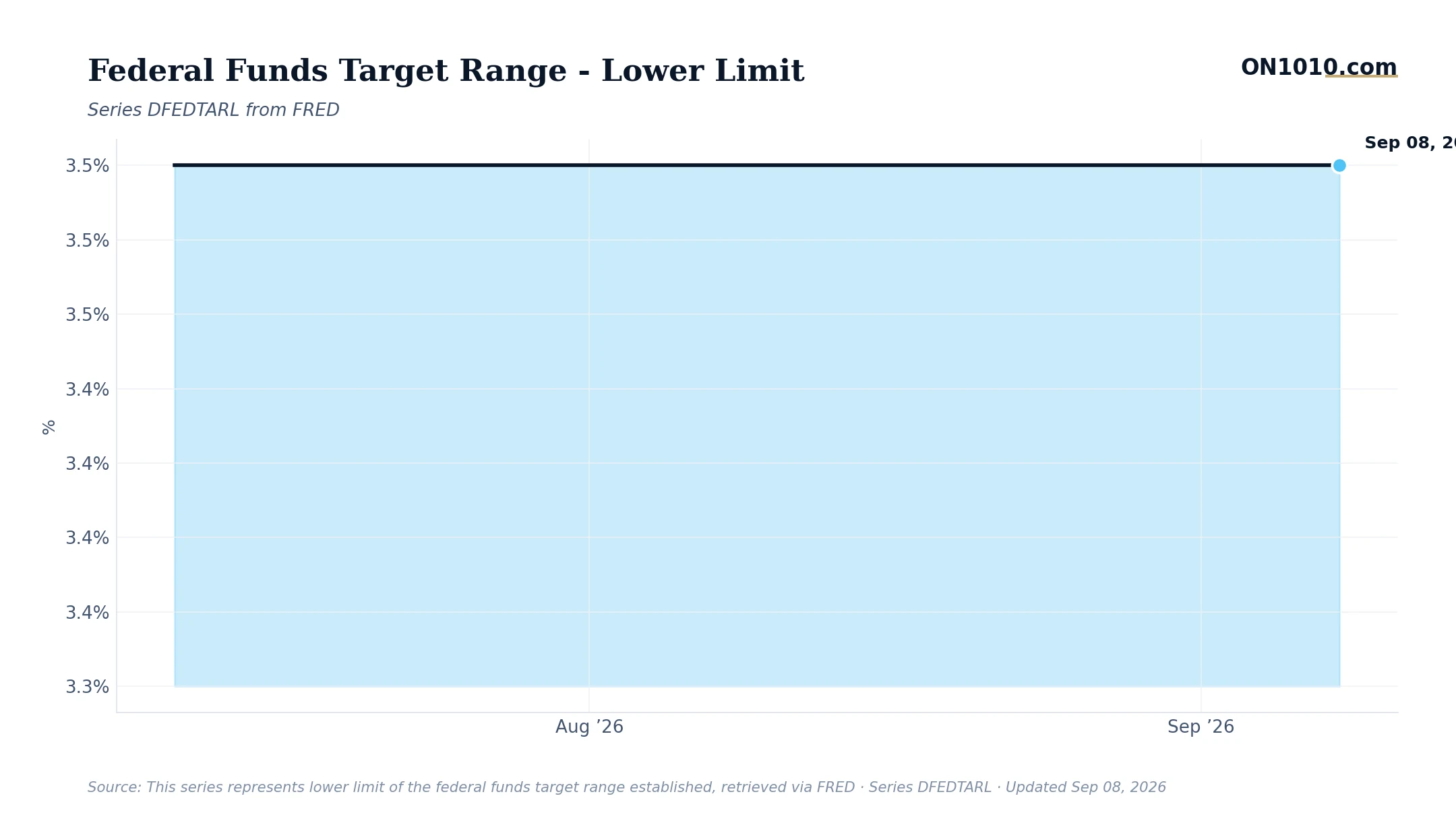
The Fed funds rate sits at 3.5%, right where it has been all week, and likely for longer than that. No drama in the number itself. The drama is in what surrounds it.
Holding rates steady sounds neutral. It rarely is. Every day the Fed keeps rates at 3.5% while inflation remains historically high is a day the central bank is making an active bet: that the economy can absorb this level of restriction without breaking, and that inflation will eventually come down without another push. That bet may be right. It may not be. But it is a bet.
Here is the tension worth sitting with. Core inflation is running hotter than roughly nine out of ten months in the historical record. Long-term interest rates are elevated above their historical norm and still rising. Credit spreads are tight, suggesting corporate bond markets are calm. And consumer sentiment is near historic lows. These four gauges are telling different stories simultaneously, which is exactly the environment where a single indicator can mislead you. The credit market says no crisis is coming. Sentiment says households feel like one already arrived. Both can be true at once, for different income groups, at the same moment in time.
Historically, when the Fed has parked rates in a range while inflation ran hot, the transmission worked through business borrowing costs and capital allocation decisions long before it showed up in unemployment numbers. Companies facing high financing costs tend to tighten investment first, headcount second. The question worth tracking is whether the current pause reflects confidence that inflation is cooling, or simply a recognition that the next move carries real political and market risk.
Bottom Line: The rate is unchanged, but the ground beneath it keeps shifting, inflation still hot, long rates still rising, and market participation quietly deteriorating. The Fed can hold a number steady while financial conditions do the moving for them.
Source: Federal Reserve Economic Data (FRED)
ON1010 Research is an independent publisher of economic education and is not a registered investment adviser, broker-dealer, or investment company. This content is for educational and informational purposes only and is not investment advice or a recommendation to buy, sell, or hold any security. Published under the publisher exemption recognized by Section 202(a)(11)(D) of the Investment Advisers Act of 1940 (Lowe v. SEC). Always consult a qualified financial professional before making any financial decision.
Free Research
The economy moves fast. We make sure you move faster.
Economic data, policy shifts, and market signals — delivered to your inbox.
Subscribe Free